PHC orders ‘fair policy’ for ex-Fata reserved seats in medical and dental colleges
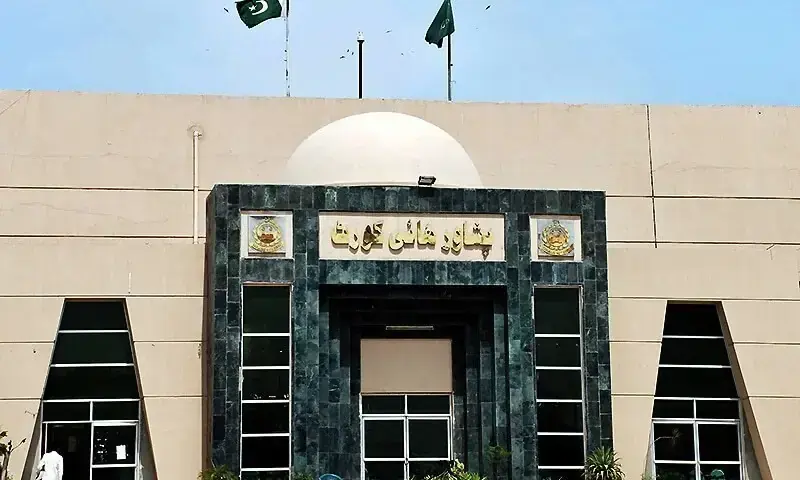
PESHAWAR: The Peshawar High Court has directed the Khyber Pakhtunkhwa home department to reconsider its present policy and formulate a “fair and non-discriminatory” one for the allocation of reserved seats for the merged tribal districts (the erstwhile Fata) in public medical and dental colleges.
A bench consisting of Justice Syed Arshad Ali and Justice Farah Jamshed partially accepted a petition, filed jointly by 42 students from Lower South Waziristan tribal district against the medical and dental colleges reserved seat policy, observing that it expects that the revised policy would be finalised before the commencement of admissions to the medical and dental colleges for the forthcoming academic session.
It directed the home department to reconsider the impugned policy, after meaningful consultation with all relevant stakeholders, and to formulate a “fair, reasonable, rational and non-discriminatory” policy for the allocation of reserved seats for tribal districts.
The bench added that the proposed policy should be placed before the provincial cabinet for approval.
Observes revised policy will hopefully be finalised before start of admissions for next academic session
The petitioners had requested the court to declare illegal and unconstitutional the report and recommendations of a sub-committee formed by the government and the Dec 29, 2025, decision of the provincial cabinet regarding allocation of seats for Upper and Lower South Waziristan districts by maintaining status quo.
They had sought the court’s orders for the government to enact a uniform policy of allocation of seats based on clear, transparent and meaningful guidelines, be it population or any other reasonable factor before applying it uniformly across all tribal districts.
The petitioners also requested the court to direct the provincial cabinet to frame and approve a fresh, comprehensive and uniform policy for allocation of medical and dental college seats for all tribal districts in accordance with constitutional principles and the earlier court judgements within a stipulated time frame.
‘The grievance raised by the petitioners appears to be justified. The continued application of the seat allocation policy formulated prior to the bifurcation of South Waziristan into Upper and Lower districts can no longer be justified on territorial or population considerations,’ the bench observed in its six-page judgement.
It said that the objective of reserving seats in medical and dental colleges for the erstwhile Fata was to compensate the residents of areas severely affected by terrorism and that it was a matter of common knowledge that South Waziristan had been among the regions most severely affected by terrorism compared to many other districts.
“We are mindful of the limits of our constitutional jurisdiction and are conscious that constitutional courts ordinarily refrain from interfering in matters of governmental policy. However, where a policy, on the face of it, appears to be arbitrary or discriminatory, the court is competent to issue appropriate directions requiring the Government to revisit and rationalise such policy so that similarly situated persons are treated equally and fairly in accordance with the constitutional guarantee of equality before the law,” the bench pointed out.
The lawyer for petitioners, Ali Gohar Durrani, said that the controversy related to allocation of reserved medical and dental college seats or quota for the permanent residents of the erstwhile Fata.
He said that according to the policy of the government, circulated for admissions to the MBBS/BDS session 2022-2023, a total of 333 seats were allocated to the residents of tribal districts, with 42 seats earmarked for the residents of South Waziristan.
Mr Durrani said that through a notification on Oct 13, 2022, the provincial government bifurcated South Waziristan into two separate districts, namely Upper South Waziristan and Lower South Waziristan.
He, however, said that despite that bifurcation, the number of the 42 allocated seats remained unchanged and continued to be shared jointly by the residents of both districts.
Published in Dawn, July 5th, 2026