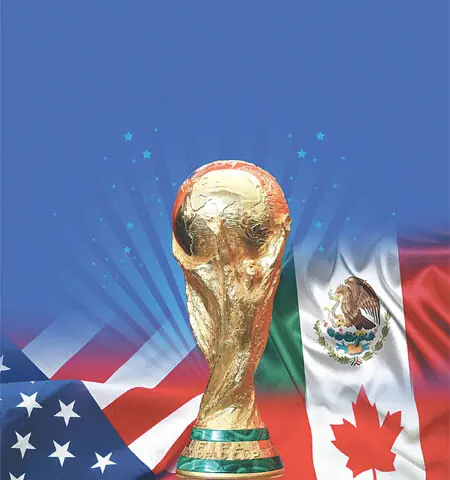
The FIFA World Cup is the most-watched, most-anticipated and most-followed sports event in the world. The latest edition of the mega event, the FIFA World Cup 2026, will be historic in many ways, as it will be the first World Cup to feature an expanded format and to be hosted by three countries.
Fans around the world are already counting down to the tournament, promising unforgettable moments and thrilling competition. The mega event, which kicks off on June 11 and runs through July 19, will be held across 16 cities in three countries, with 48 teams competing for the coveted trophy.
A bigger and newer format
The FIFA World Cup, held every four years, will return to the Americas for the first time since 1994, and there is a clear reason for that. First, the US has grown exponentially as a soccer-loving nation since 1994 and has the infrastructure to support 48 teams. Secondly, its proximity to Mexico and Canada also played in its favour, as they are the co-hosts of the event.
Why was the tournament expanded from 32 to 48 teams? The football governing body wanted to expand the tournament to make the game more popular worldwide, and there was no better way to do so than by increasing the number of teams. This expansion will bring more matches, more participants and more opportunities for teams that previously struggled to qualify.
FIFA World Cup 2026 is taking football into a bold new era with 48 nations set to battle across the United States, Mexico and Canada. Dive inside for a quick preview of the tournament’s new structure, the fresh debutants, the giants missing out and the young talent ready to shine
The tournament will feature 12 groups of four teams each, with the top two teams from each group advancing to the knockout stage. However, this will not be the end for many teams, as the eight teams that finish third in their groups will also qualify for the second round, reducing the tournament to the usual 32 teams after the first round.
To accommodate the 48 participants and their fans, FIFA decided to share the venues among three neighbouring countries, the United States, Mexico and Canada, a first for the FIFA World Cup.

Mexico is not only the most experienced host among the three countries but will also become the first nation to host the mega event three times, having hosted the World Cup in 1970 and 1986.
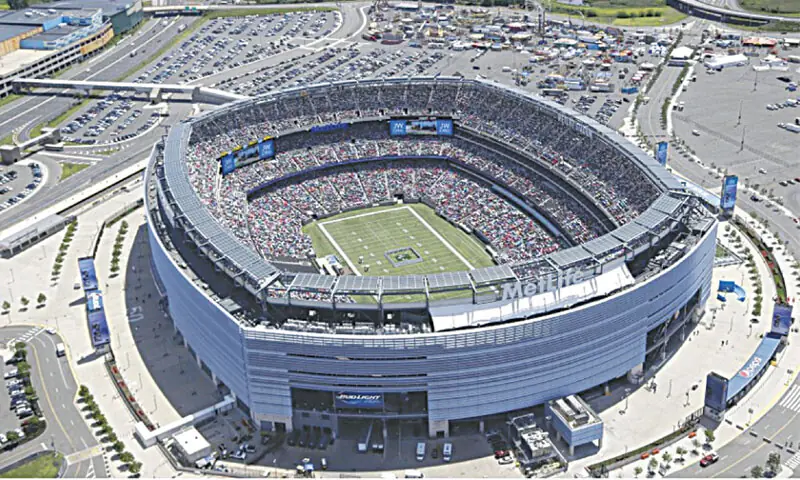
The event will be held at modern stadiums across 16 cities — 11 in the US, three in Mexico and two in Canada — making it one of the largest sporting events ever organised. In total, 104 matches will be played at the mega event, with the final in New Jersey on July 19.
The legacy of champions
The World Cup takes place every four years, but so far, only eight countries have managed to lift it in 22 attempts.
Brazil currently leads the race with five titles, followed by Germany and Italy, each with four. Defending champions Argentina won the title for the third time in 2022, while two-time champions France remain among the strongest contenders.
Uruguay was also crowned world champions twice, but hasn’t won the title since 1950, whereas Spain and England would like to add the trophy to their cupboards, having won it once each in 2010 and 1966, respectively.
Every World Cup writes a new story, and 2026 could either crown a new champion or continue the dominance of football’s traditional powers.
New nations, new dreams
Of the final 48 qualified teams, only 26 appeared at the last mega event in Qatar in 2022, meaning 22 new or returning teams have reached the FIFA World Cup 2026. One of the most exciting aspects of this edition is the number of debutants. Nations such as Cape Verde, Curaçao, Jordan and Uzbekistan will make their first-ever appearances on football’s biggest stage.
For these countries, qualification is more than a sporting success — it is a historic achievement that will inspire future generations. Another notable story is Qatar, which has qualified for the tournament for the first time via the regular qualification process after hosting in 2022.
The return of familiar faces
Several nations return in 2026 after long absences in the tournament. DR Congo and Haiti return after their only previous appearance in 1974, while Iraq returns after last appearing in 1986. Austria, Norway and Scotland are all back for the first time since 1998.
The last time Türkiye played in a World Cup was in 2002, when they won the bronze medal. The Czech Republic returns for the first time since 2006 and other returning sides include New Zealand, Paraguay and South Africa, all of whom last appeared in 2010.
Meanwhile, Algeria, Bosnia and Herzegovina and the Ivory Coast will also have a chance to make their presence felt, returning to the mega event for the first time since 2014. Teams such as Colombia, Egypt, Panama and Sweden are also back after missing the 2022 edition. The giants are missing out
This will be the third consecutive World Cup the Italians will miss, making them the first former champions to suffer such a fate. Bosnia and Herzegovina knocked them out in the European play-off finals on penalties, ending their dream of adding to their four titles.
Other notable absentees include Costa Rica, which is missing for the first time since 2010, as well as Cameroon, Denmark, Poland, Serbia and Wales. These absences underscore how competitive international football has become.

Rising stars to watch
Every World Cup introduces a new generation of stars, and the 2026 edition will be no different. Alongside already established young talents like Kylian Mbappé, Neymar, Jude Bellingham, Erling Haaland and Vinícius Júnior, several fresh faces are expected to light up football’s biggest stage.
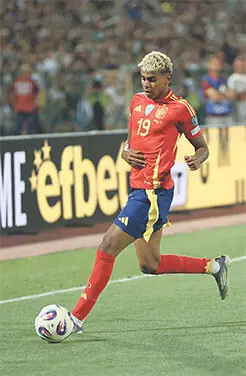
One such name is Spain’s 18-year-old Lamine Yamal, whose pace, dribbling and confidence make him capable of changing a match in seconds. Then there is Argentina’s Nico Paz, known not only for his calmness but also for his ability to glide past defenders.
With his vision and technical ability, Türkiye’s Arda Güler also emerges as a key figure for his country. England’s Nico O’Reilly has impressed with his versatility and attacking instincts, making him a potential breakout star.

Africa will also showcase exciting young talent, especially Yan Diomande of the Ivory Coast. Known for his explosive pace and quick dribbling, he has the qualities to trouble defenders on the biggest stage.
Farewell to the legends
For some football icons, including Argentina’s Lionel Messi and Portugal’s Cristiano Ronaldo, the 2026 World Cup could be their final appearance on the global stage.
The 38-year-old Messi might still be playing when the next World Cup is held, but it will definitely be the end of the road for the 41-year-old Ronaldo, who defined an era of football and inspired millions worldwide.
And then there are Croatian skipper Luka Modric and German goalkeeper Manuel Neuer, both 40, who are the elder statesmen of the FIFA World Cup 2026.
Why 2026 will be special
The FIFA World Cup 2026 represents a new era for the sport — bigger, more inclusive and more global than ever before.
With debutant nations chasing dreams, returning teams seeking redemption, iconic venues, rising stars and perhaps the final chapter for football’s greatest legends, the tournament promises everything fans could hope for.

For Pakistan, the 2026 World Cup holds special significance. Though not on the pitch, Pakistan will still be part of football’s biggest stage through Sialkot’s world-renowned football manufacturing industry. With the official 2026 match ball produced by a Sialkot-based company, Pakistan’s craftsmanship will once again help make World Cup history.
WORLD CUP WINNERS BY YEAR
1930 — Uruguay
1934 — Italy
1938 — Italy
1950 — Uruguay
1954 — West Germany
1958 — Brazil
1962 — Brazil
1966 — England
1970 — Brazil
1974 — West Germany
1978 — Argentina
1982 — Italy
1986 — Argentina
1990 — West Germany
1994 — Brazil
1998 — France
2002 — Brazil
2006 — Italy
2010 — Spain
2014 — Germany
2018 — France
2022 — Argentina
MOST WORLD CUP TITLES
5 Titles: Brazil (1958, 1962, 1970,1994, 2002)
4 Titles: West Germany/Germany (1954, 1974, 1990, 2014)
4 Titles: Italy (1934, 1938, 1982, 2006)
3 Titles: Argentina (1978, 1986, 2022)
2 Titles: France (1998, 2018)
2 Titles: Uruguay (1930, 1950)
1 Title: England (1966)
1 Title: Spain (2010)
Published in Dawn, Young World, June 6th, 2026