• Prolonged agitation threatens AJK’s upcoming elections
• Abolishing 12 assembly seats for Pakistan-based refugees remains key stumbling block
• Govt says talks still on
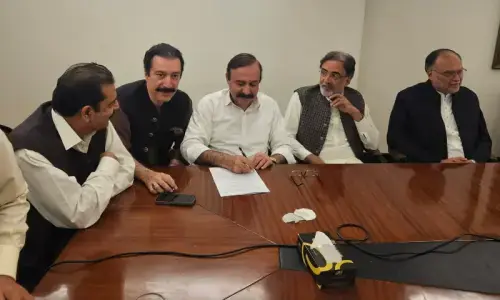
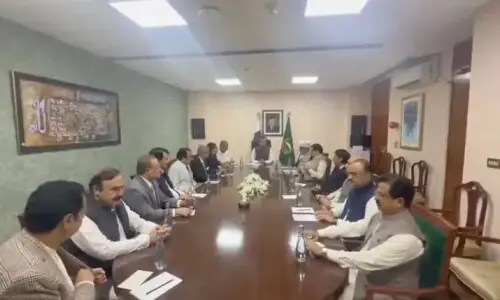
MUZAFFARABAD: Marathon talks between a federal ministerial team and the core leadership of the Jammu Kashmir Joint Awami Action Committee (JAAC) ended without a breakthrough late on Saturday night, prompting the latter to announce that its June 9 strike would proceed as planned.
The lengthy dialogue, convened to persuade the JAAC to withdraw its strike call and resolve differences over its charter of demands, stretched for more than nine hours with intermittent breaks. The outcome has heightened concerns over political stability in Azad Jammu and Kashmir (AJK), where general elections are expected in the last week of July.
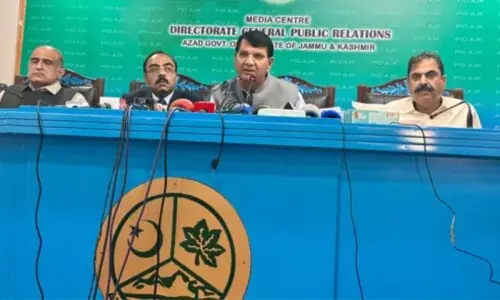
“Today, we held talks with the representatives of the governments of Pakistan and Azad Jammu and Kashmir throughout the day on all issues, including the 12 refugee seats,” JAAC core member Shaukat Nawaz Mir told reporters after the talks ended at 11:20pm.
“Despite the breach of trust, we had detailed discussions, and proposals were exchanged as well,” he said, adding that government representatives had requested them to postpone the planned strike. “But we have decided to keep our strike call intact,” he said.
However, he added, the JAAC remained open to future engagement.
The talks assumed added significance amid growing fears that any prolonged agitation could affect preparations for the upcoming elections. Although the election schedule has yet to be announced, political observers believe sustained unrest could complicate the polling process.
The federal delegation included cabinet members Rana Sanaullah, Tariq Fazal Chaudhry and Ahsan Iqbal of the PML-N, as well as former prime minister Raja Pervaiz Ashraf and former minister Qamar Zaman Kaira representing the PPP. AJK Prime Minister Faisal Mumtaz Rathore, PPP regional president Chaudhry Muhammad Yasin, PML-N regional president Shah Ghulam Qadir and party regional secretary general Chaudhry Tariq Farooq also attended.
Minister for Kashmir Affairs Amir Muqam did not participate in the talks. His absence came amid repeated JAAC demands that he be excluded from the process over allegations of bias. Members of the federal team, however, said he was occupied with matters relating to the GB elections.
The JAAC side comprised 16 core members, including Shaukat Nawaz Mir, Raja Amjad Ali Khan, Anjum Zaman Awan, Umar Nazir Kashmiri, Saad Ansari and Imtiaz Aslam.
The first session began shortly before 2pm and continued until 4pm. Participants said 37 of the 38 points in the JAAC’s charter of demands were discussed. The sole unresolved issue — and the most contentious one — remained the abolition of 12 legislative assembly seats reserved for Pakistan-based refugees from India-held Kashmir.
The refugee seats have emerged as the principal stumbling block in the negotiations. The PML-N’s AJK chapter opposes their abolition, partly because it expects to perform strongly in the 10 refugee constituencies located in Punjab. The PPP, which currently enjoys the support of five refugee lawmakers, is considered less invested in retaining the arrangement.
After a break, the second round of talks resumed at 6:10pm and lasted till 11:20pm.
Speaking to reporters afterwards, Rana Sanaullah insisted the dialogue process remained alive. “The negotiations have absolutely not failed; this process will continue,” he said. He added that discussions had taken place in a positive atmosphere and that both sides had exchanged proposals.
According to him, the AJK government and the opposition PML-N have agreed to convene an all-parties conference on the situation and the JAAC’s demands. Another round of talks is expected on June 6 or 7 following the conference.
He expressed confidence that the dispute would be resolved before the elections, which he said would be held in accordance with the Constitution.
Published in Dawn, May 31st, 2026