• Hamas calls plan ‘a dangerous escalation’
• Unicef says seizing more of Gaza means ‘more children will suffer’
• United Kingdom, Germany voice concern as France stays silent
GAZA/ GENEVA: Hamas said on Friday that Israeli Prime Minister Benjamin Netanyahu’s declaration that his country would expand its area of control in Gaza was a dangerous escalation, as European states and residents of the Palestinian territory also voiced alarm at the plan.
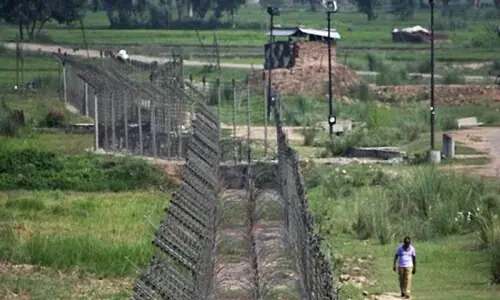
Under a ceasefire deal struck in October 2025, Israel’s military was to remain in control of 53 per cent of Gaza, but Netanyahu said on Friday that it would expand that area to an initial 70pc, without giving details or laying out a timeline.
The Palestinian group described his comments as a plan for ethnic cleansing and forced displacement of Palestinians.
Major disputes postponed
“Any attempt to impose a new reality of occupation in Gaza is null and illegitimate,” said Ismail al-Thawabta, head of the Hamas-run Gaza government media office, adding that Netanyahu’s statement “represents a dangerous escalation”.
More than eight months into the ceasefire, and with global attention fixed on the war in Iran, Gaza’s underlying conflict remains stubbornly unresolved with continued Israeli attacks, little aid reaching civilians and the risk of major new violence.
Israel has already expanded its area of control in Gaza from the 53pc lying behind a “yellow line” mapped into the ceasefire deal up to around 64pc, with an area it has designated as restricted in maps shared with aid groups.
Last year’s deal brokered by US President Donald Trump established a Board of Peace to oversee a phased ceasefire, and was ratified by the United Nations Security Council.
However, many of the toughest areas of dispute including the disarmament of Hamas, a full Israeli withdrawal and the make-up of a Gaza government were postponed to later in the process.
A spokesperson for the Board of Peace said it would not have a comment on Netanyahu’s statement.
A British foreign ministry spokesperson said any further expansion of Israeli control in Gaza would be unacceptable and risk exacerbating an already dire humanitarian situation.
Fellow permanent UN Security Council member France did not immediately respond to requests for comment.
A German foreign ministry spokesperson said Germany was concerned about Israeli plans to take more of Gaza and opposed a permanent division of the Palestinian territory.
Facing elections this year and under pressure for Israel’s failure to secure its strategic goals in wars in Iran and Lebanon, Netanyahu may be seeking to bolster his standing with voters.
Unicef warning
The UN warned on Friday that an Israeli plan to take control of 70pc of Gaza is sure to increase suffering among children already hit by the impacts of severe overcrowding.
But Unicef warned that such a move would deepen the health crisis among children in the war-ravaged Palestinian territory, already suffering from a lack of food, water and access to hygiene.
Even before the October 7, 2023 attacks on Israel, it was “already one of the most densely populated places in the world”, Unicef spokesman Salim Oweis told reporters in Geneva, speaking from Gaza.
“This will just mean that more children will suffer.
Today, “people have been crammed into around 40pc of the space left to them, sheltering among broken buildings, rubble and mounting solid waste”, he said, adding “there is no accessible space left to clear” the waste.
“The effects of this are now widely apparent: children with respiratory infections, acute watery diarrhoea, and more than half of all households reporting skin diseases.”
Published in Dawn, May 30th, 2026