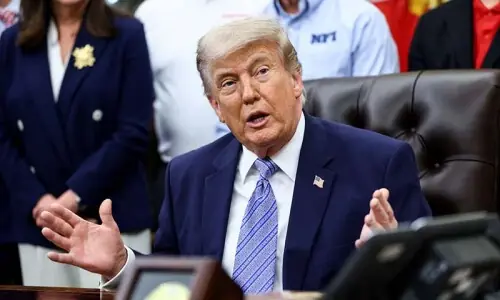
THE Abraham Accords were presented as a historic peace initiative in the Middle East. In reality, they were agreements brokered during US President Donald Trump’s first presidency under which several Arab states normalised ties with Israel without resolving the Palestinian issue.
Mr Trump now appears keen to expand the Accords again, pushing more Muslim countries to join after the recent Iran conflict. It is a dangerous and deeply dishonest move, driven less by regional peace than by pressure from Israel’s supporters in Washington and America’s hard-line pro-Israel right. The attempt to connect the Iran conflict with the Abraham Accords makes little sense.
The tensions involving Iran are rooted in long-running regional rivalries and military escalation. They do not suddenly erase the central issue that has shaped Middle Eastern politics for decades, which is the denial of Palestinian rights and the absence of a Palestinian state.
Yet this latest push appears designed to do exactly that — use regional instability to revive a process that asks Muslim countries to normalise relations with Israel while Palestinians continue to live under occupation. That is why many Muslim-majority countries remain unconvinced by the Accords.
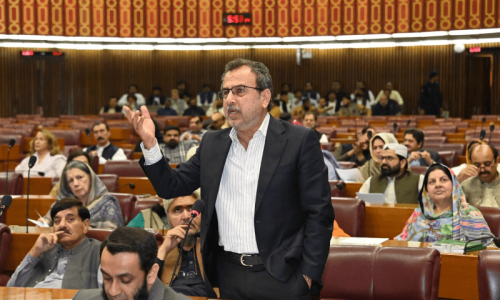
Pakistan’s position has been consistent for years: there can be no recognition of Israel until there is a fair settlement for Palestinians and clarity on the creation of an independent Palestinian state. This must not be mistaken for an extreme position. It is a practical recognition that lasting peace cannot be built by ignoring the grievances of millions of Palestinians. Israel, meanwhile, has shown little willingness to move towards a genuine settlement. Illegal settlements continue to expand in occupied territory. Gaza has been devastated by war, bombardment and humanitarian collapse.
Violence in the West Bank continues. In such circumstances, expecting Muslim countries to deepen ties with Israel without demanding any accountability or political solution is unjustified. Mr Trump’s renewed interest in expanding the Accords reflects the influence of the Israeli lobby and the American ultra-right, both of which have long pushed Washington to protect Israel from international pressure. For these groups, the goal has never really been peace. It has been to strengthen Israel’s regional standing while pushing the Palestinian issue further into the background.
Washington also risks misreading public opinion across the Muslim world. Governments may engage in diplomacy for strategic reasons, but ordinary people continue to view the Palestinian cause as central to justice in the Middle East. Ignoring that sentiment may secure temporary political wins, but it cannot create durable legitimacy for such agreements. The issue cannot be brushed aside through diplomatic ceremonies and political deals. Any arrangement that ignores Palestinian statehood may produce headlines and handshakes, but it will not bring genuine stability to the Middle East.
Published in Dawn, May 27th, 2026