Attempt to link Israel ties with Iran deal puts region in a bind
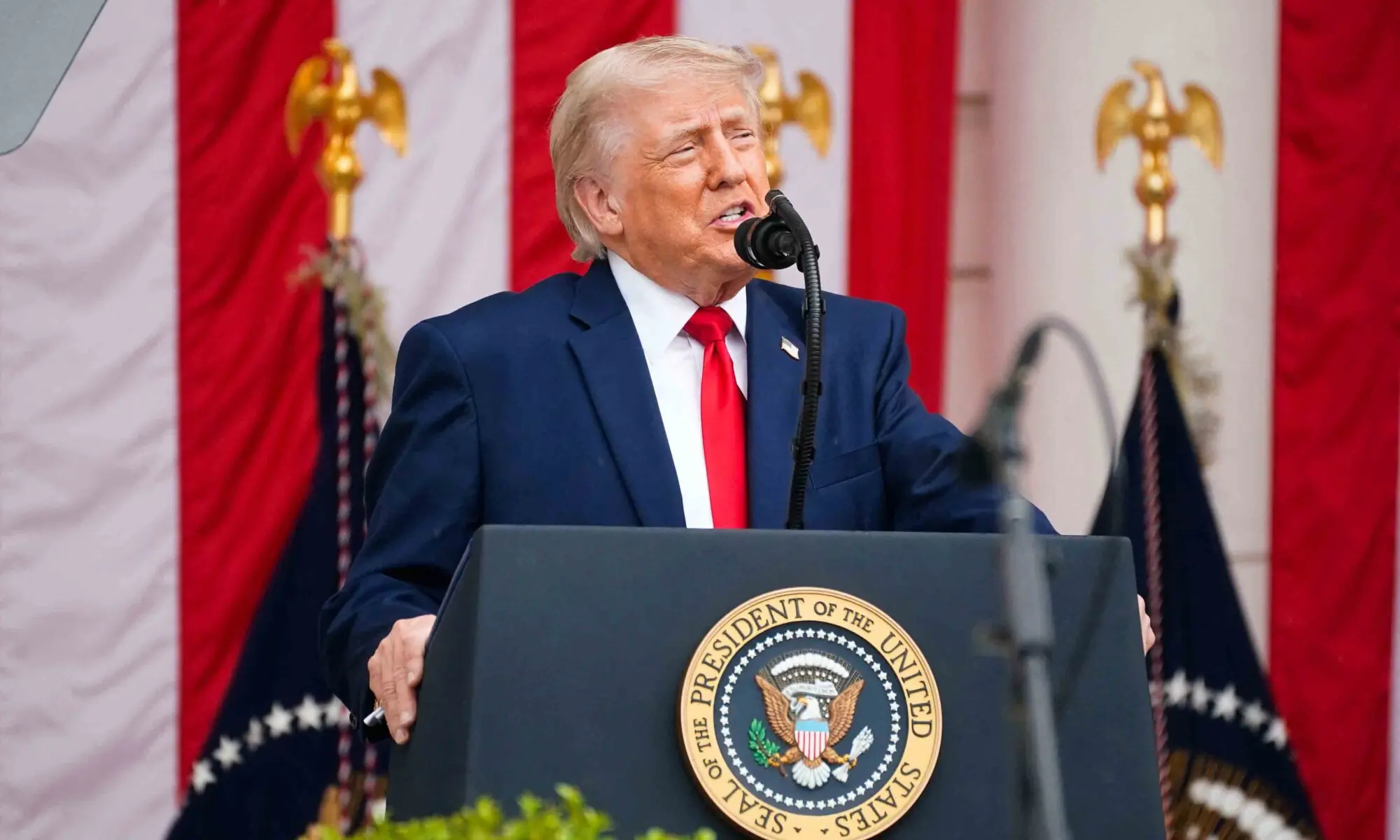
• Trump asks Saudi Arabia, Qatar, Pakistan, Turkiye, Egypt and Jordan to join Abraham Accords, calls on Riyadh and Doha to take the lead
• Leaves some wiggle room for states that ‘have a reason for not doing so’
• Analysts say no Muslim country will recognise Israel while it remains at war with Iran, continues to annex West Bank, bombard Lebanon and spill blood in Gaza
• View it as ‘negotiating tactic’ or ‘face-saving measure’
ISLAMABAD: US President Donald Trump on Monday opened up a whole new can of worms when he seemingly predicated an emerging peace deal with Iran on Muslim-majority nations across the Middle East and beyond normalising relations with Israel.
Making the suggestion that the countries involved in mediating between the US and Iran should join the Abraham Accords part of a likely deal with Iran risks complicating an already fragile diplomatic process, which is still struggling to move from conflict management towards even a limited political framework.
In a lengthy post on his Truth Social platform, Trump listed countries whose leaders he spoke with over the weekend about efforts to end the war with Iran.
“After all the work done by the United States to try and pull this very complex puzzle together, it should be mandatory that all of these countries, at a minimum, simultaneously sign onto the Abraham Accords,” he wrote.
“Those countries discussed are Saudi Arabia, the United Arab Emirates (already a Member!), Qatar, Pakistan, Turkiye, Egypt, Jordan, and Bahrain (already a Member!)”
The Abraham Accords are a set of agreements brokered under Trump in 2020 and govern the normalisation of diplomatic relations between Israel and countries that have historically been hostile to it.
They, however, remain unpopular among the public in many parts of the region, not least because they do not tackle the Israeli-Palestinian conflict.
However, Trump seemingly left some wiggle room for certain states when he wrote: “It may be possible that one or two have a reason for not doing so, and that will be accepted, but most should be ready, willing, and able to make this settlement with Iran a far more historic event than it would otherwise be”.
But he put the onus of initiating normalisation on Saudi Arabia and Qatar, saying that they should “start with the immediate signing” and “everybody else should follow suit. If they don’t, they should not be part of this deal in that it shows bad intention”.
Trump also hinted that “support and cooperation” with Arab and Muslim nations would be “further enhanced and strengthened by their joining the Nations of the historic Abraham Accords”, adding, “Who knows, perhaps the Islamic Republic of Iran would like to join, as well!”
While Pakistani officials have yet to comment on Trump’s latest demand, Foreign Office spokesperson Tahir Andrabi addressed a query regarding a proposal to join the accords earlier this year.
He said Islamabad’s “position with respect to it is that there are certain benchmarks that have to be achieved for Pakistan, which is the creation of a viable contiguous state of Palestine, with Al-Quds Al-Sharif (Jerusalem) as its capital”.
“We will then see how this State of Palestine has relationships with other countries, including potentially Israel. So that is our benchmark. We are not aware, or not concerned about who does or who does not join the Abraham Accord[s],” Mr Andrabi said at the time.
Next to impossible
There was no immediate official reaction from any of the countries whose leaders participated in the conference call during which Trump originally floated the proposal before he went public with it in his social media post.
However, officials from a couple of participating states, when contacted by Dawn, privately acknowledged that moving towards normalisation with Israel while the Palestinian issue remains unresolved and Gaza continues to face devastation would be — politically and publicly — next to impossible for their governments.
Former ambassador to the US, UK and UN Dr Maleeha Lodhi dismissed the proposition outright. “This shouldn’t be taken seriously. It is President Trump trying to respond to criticism of the impending deal with Iran from the Republican Right and the Israeli lobby,” she said.
“There is no way Pakistan, Saudi Arabia or any other Muslim country will recognise Israel and join the Abraham Accords when Israel has been at war with a Muslim country, continues its assault in Lebanon, has de-facto annexed the West Bank and is responsible for killing over 70,000 Palestinians in Gaza.”
It is worth keeping in mind that the present regional climate is markedly different from the one in which the UAE and Bahrain moved towards normalisation in 2020. In fact, for large segments of opinion across the Middle East and South Asia, Israel is now increasingly being seen as a destabilising force.
Even among countries that normalised ties with Israel earlier, the outcomes are now being reassessed more cautiously.
One Doha-based Arab journalist familiar with political thinking in the Gulf said the expected gains had largely failed to materialise. “The promises were about cooperation, knowledge transfer, and collaboration in fields like agriculture, defence, education, and health. But in reality, very little of that happened,” he said.
“For many of them… normalisation created anger, while at the official level, it created embarrassment and a political burden … UAE may be a different case because it has its own circumstances, but broadly speaking, the main beneficiary of normalisation has been Israel.”
Complicating diplomacy
The timing of Trump’s proposition is also particularly sensitive, because comes at a time when the region has barely stepped back from a dangerous conflict involving attacks on shipping lanes, closure of the Strait of Hormuz, and repeated threats of renewed strikes.
Simultaneously, Gaza remains devastated, southern Lebanon unstable and the Palestinian issue politically more charged across the Muslim world than at any point since the original Abraham Accords were unveiled during Trump’s first term.
In this environment, the suggestion that countries like Saudi Arabia or Pakistan may now normalise ties with Israel as part of a broader regional settlement appears less like strategic realism and more like domestic political messaging directed towards Washington’s Republican right and pro-Israel constituencies uneasy over a potential diplomatic opening with Tehran.
At a time when indirect negotiations between Washington and Tehran are currently focused on ceasefire stabilisation, sanctions relief, maritime security and sequencing of nuclear concessions, the US president’s attempt to fold recognition of Israel into the process appears detached from the diplomatic priorities of the region.
In these circumstances, inserting an ideologically loaded regional realignment project into this framework risks overburdening a process that remains fragile even on its own limited terms.
Former Senate foreign affairs committee chairman Mushahid Hussain argued there was no logical connection between the two tracks.
“This Trump logic of linking the Iran peace deal to recognition of Israel is rather convoluted, as there’s no linkage between the two and it’s like rewarding Israel for its crimes against humanity during Gaza genocide as well as illegal and unjustified aggression against Iran,” he said.
“For Pakistan, Palestine is paramount as it’s the core cause of conflict in the Middle East and Palestine is part of the Pakistani DNA like Kashmir.”
A ‘face-saving’ mechanism?
Even though formal recognition remains unlikely, the concern in the region is that Washington may gradually pursue functional integration in the region through quieter channels involving intelligence cooperation, maritime coordination and security engagement.
Adam Weinstein of the Middle East programme at Quincy Institute in the US suggested Trump’s remarks were partly tactical. “President Trump’s suggestion that additional countries join the Abraham Accords as part of a US-Iran settlement appears to be part genuine ambition, part negotiating tactic, and potentially a face-saving mechanism.”
He also noted that Trump himself appeared to leave room for exceptions.
Still, even rhetorical pressure may complicate diplomacy with Tehran at a delicate stage. Iranian officials already view the Abraham Accords framework as part of a broader US-Israeli attempt to construct a regional security order directed against Iran.
Publicly linking the ongoing negotiations to the expansion of that framework is therefore likely to reinforce suspicions within Tehran that the diplomatic process ultimately seeks strategic encirclement rather than coexistence.
Published in Dawn, May 26th, 2026