India orders migrant detention centres in West Bengal, sparking arbitrary explusion fears
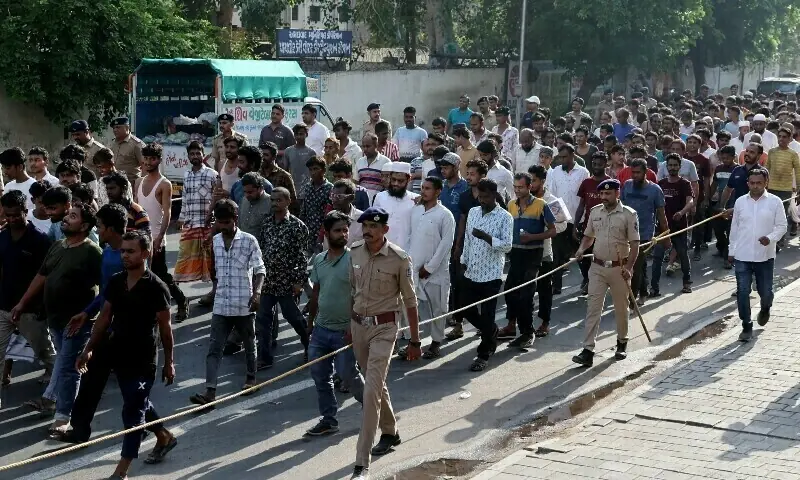
India’s ruling Hindu-nationalist party has ordered detention centres for undocumented Bangladeshis and Rohingyas in West Bengal state, sparking fear among minorities that it could lead to arbitrary expulsions.
The directive comes just days after Prime Minister Narendra Modi’s Bharatiya Janata Party (BJP) won power in the eastern state for the first time since the country’s independence in 1947.
The order calls on local authorities to set up “holding centres” for “apprehended foreigners” awaiting deportation, as part of a broader crackdown on illegal migration.
The government has defended its “detect, delete, deport” principle, saying those targeted are migrants staying illegally in the country.
“Illegal migration has security and socio-economic ramifications which are often well beyond law enforcement” read the order, issued last week.
The decision has fuelled anxiety among West Bengal’s roughly 35 million Muslims, many of whom share linguistic and cultural ties with neighbouring Bangladesh.
Critics say the measure reflects the government’s long-standing hardline stance on immigration, with top BJP members referring to Bangladeshi migrants as “termites” and “infiltrators” in the past.
The party has pursued similar policies in the neighbouring state of Assam, where it has overseen sweeping identification drives and large-scale detentions.
Rights activists say hundreds have been deported to Bangladesh from Assam without due legal process, often based on ethnic profiling.
Many of them have been allegedly pushed across the border at gunpoint, according to activists and lawyers who have challenged the measures in court.
They argue the policies disproportionately impact the Muslim population by conflating religious identity with illegal migration.
The planned centres in West Bengal have drawn particular concern because of the state’s porous border with Bangladesh and its long history of migration.
The inclusion of Rohingya refugees in the order has also drawn criticism.
India has previously been accused by humanitarian groups of forcibly returning Rohingya to Myanmar, despite ongoing conflict there, in potential violation of international norms on refugee protection.
Adding to the unease of the Muslims, the BJP-led government in Assam on Monday introduced legislation to curb polygamy and amend personal religious laws, which critics say could further marginalise minorities.