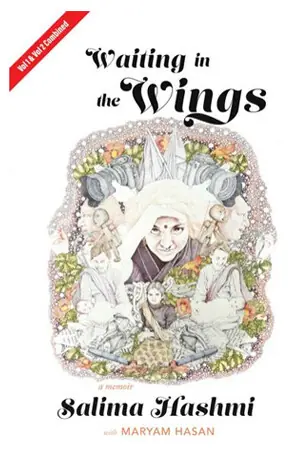
Waiting in the Wings —
A Memoir
By Salima Hashmi with Maryam Hasan
Vanguard Books
ISBN: 978-969-402-708-1
237pp.
Salima Hashmi needs no introduction. A remarkable, multi-talented individual who wears many hats, she is an artist, writer, educationist, human rights advocate, political activist and, above all, the elder daughter of poet Faiz Ahmed Faiz and Alys Faiz.
In her recently published compelling memoir, Waiting in the Wings, she reflects on the struggles, hardships, achievements and losses that have shaped her life through vivid and indelible memories. The opening lines are compelling, intriguing the reader to explore alongside her: “I am curious about the person who might be reading this introduction… I am a tessera in a much larger mural, shaped by my well-known parentage. Inevitably, the name of Faiz Ahmed Faiz surfaces — the poet who influenced vast audiences across the Subcontinent and beyond.”
From Chapter One, evocative lines such as “Shush, go to sleep… my mother mumbles… noise and shouts from the street had drawn me to the windowsill” draw the reader into her earliest childhood memories. Her recollections as a four-year-old during Independence are particularly striking: the turmoil of leaving her ancestral home in New Delhi, a brief stay in Murree with Alys Faiz and other women active in the freedom struggle, her symbolic pony ride with a white flag to protest the brutal massacre of Sikhs and, finally, her family’s settlement in Lahore at 41 Empress Road, where, as she writes, “My early life is entirely intertwined with that house.”
Salima describes herself as a shy, indolent child and later reflects with gentle humour on meeting her equally shy life partner, Shoaib Hashmi — “pure serendipity, not to mention good judgement on my part.”
In her recently published memoir, the multi-talented Salima Hashmi reflects on her famous family, loss, art, activism and the personal struggles that shaped her remarkable life
She recounts how her parents, Faiz and Alys, met and subsequently married, after which Alys embraced Islam — learning to pray, reading the Qur’an in English, and adopting the shalwar qameez. Salima also fondly describes her English paternal grandparents as a “down-to-earth couple from London”, who stayed with them for a year during the time of Independence.
A later chapter narrates Faiz’s service in the army as a lieutenant colonel, followed by periods spent in education, as editor of The Pakistan Times and Imroze, his imprisonment and his work with the Arts Council.
As a child, Salima loathed school and would often cry in the mornings, but her grandparents, true to their promise, would rescue her by picking her up midday in a tonga [horse-drawn carriage]. She recalls being gifted a gold watch by Faiz when she stood first in her matriculation. She also accompanied him to mushairas [poetry recitals] and to the cinema, where he nurtured her love for music and films.
Salima also recounts Faiz’s political arrest in the early hours of March 9, 1951: “Those were uncertain times, much of it a blur — I was about eight and a half.” During this period, she learned to distinguish between her true friends and foes while coping with the emotional strain of her father’s imprisonment. She reminisces about the insensitive attitudes of people who posed petty, probing questions to her as a child.
Her memories also include recurring dreams that haunted her younger sister, Mizu [Muneeza Hashmi], and the quiet resilience of her mother, who struggled to sustain the household with limited means. Those years were further marked by difficult journeys with her mother to visit Faiz in jail in Lyallpur and Hyderabad.
Salima recalls the support her family received during these challenging times from figures such as educationist and cultural icon Begum Abdul Majeed Malik, Faiz’s step-sister Iqbal whom they lovingly called Bali, his classmate Sher Mohammad Hameed and Uncle Haneef, a humble worker at Faiz’s press. She also mentions Faiz’s close friends, including broadcaster Z.A. Bukhari, journalist I.A. Rehman, educationist Nazir Ahmad, litterateur M.D. Taseer, historian Victor Kiernan, poets and journalists Chiragh Hasan Hasrat and Abdul Majeed Salik, and artist Abdur Rahman Chughtai.
She later reflects on her education, first at the Lahore College for Women (1958) and then at the National College of Arts, which was flourishing at the time under Mark Ritter Sponenburgh. He eventually persuaded Faiz and Alys to send her to the Bath Academy of Art. Subsequent chapters describe her journey by sea with Faiz to Moscow for the Lenin Peace Prize ceremony. Although the journey is documented in many photographs, one particularly notable image captures Chilean poet Pablo Neruda, Faiz, Salima and other writers together.
Later, she left for Corsham in England to pursue her studies. Salima vividly recounts her academic years there, mentioning influential teachers such as Howard Hodgkin, Adrian Heath, Riette Moore and Helen Binyon, along with her travels and the friendships she formed. These chapters trace not only her struggles but also her growing passion for painting, design, puppetry, teaching and theatre — marking her transformation into a more confident and expressive individual. As she reflects, “I have never regretted going there.” She also describes her memorable venture to a ball at Cambridge with friends, capturing a lively glimpse of her student life.
Salima later recalls meeting Shoaib Hashmi, who was working as an assistant to Faiz at the Alhamra Arts Council in Lahore. Their shared interest in theatre and performance brought them closer. After completing their studies in England, they married in Karachi on August 8, 1965 and returned to settle in Model Town, Lahore. Both worked as college professors while navigating personal and professional challenges, and remained actively involved in Pakistan Television productions, puppetry and creative work. Alongside these pursuits, they raised their two children, Yasser and Mira.
Salima movingly narrates the loss of her parents, Faiz and Alys, and how deeply they shaped her identity as strong parents. A major turning point came in 1980, with Shoaib’s arrest during Gen Ziaul Haq’s regime, echoing earlier hardships and creating “a distinct feeling of déjà vu.” She also reflects on her long tenure at the National College of Arts, where she served until 2000, facing institutional challenges and political pressures. She also experienced political arrest in 2007. By the end of the book, she acknowledges many individuals who contributed to the memories she shares.
Later chapters describe Shoaib’s stroke in 2009, the resilience of family and friends, and Salima’s brief role as caretaker minister in Punjab in 2013. The passing of Shoaib in 2023 after a prolonged illness is deeply felt in her writing. She also notes receiving an honorary fellowship from the Bath Academy of Art in 2016.
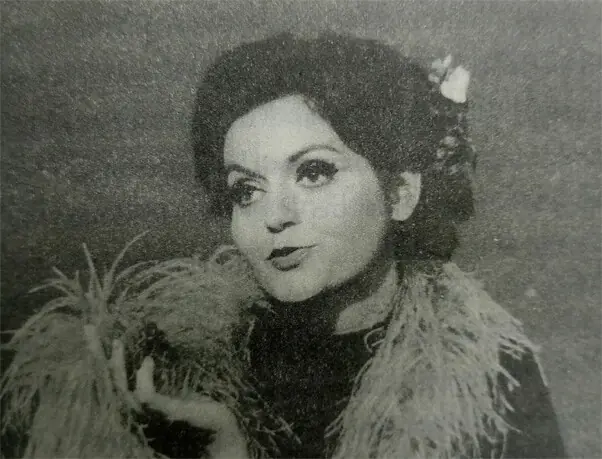
Overall, the memoir is a deeply engaging and emotionally rich account, filled with well-narrated incidents that capture both personal experiences and significant historical moments. Salima Hashmi rises to the challenge of writing about her own life with remarkable resilience and grace. The photographs tracing her journey from childhood to the present, along with those of her parents, friends, Shoaib Hashmi and their children, add another layer of depth — creating a visual treat that readers can truly enjoy as they move through the memoir.
While the narrative occasionally shows minor lapses in sentence structure, grammar and spelling, these do not detract from its overall impact. It remains a worthwhile and insightful read for anyone interested in the life of a remarkable individual whose influence extends far beyond national boundaries.
The reviewer is an art critic, fine artist and educationist based in Lahore. She can be reached at ayeshamajeed2015@gmail.com
Published in Dawn, Books & Authors, May 17th, 2026