UAE’s bumpy divorce from Opec


 0
0
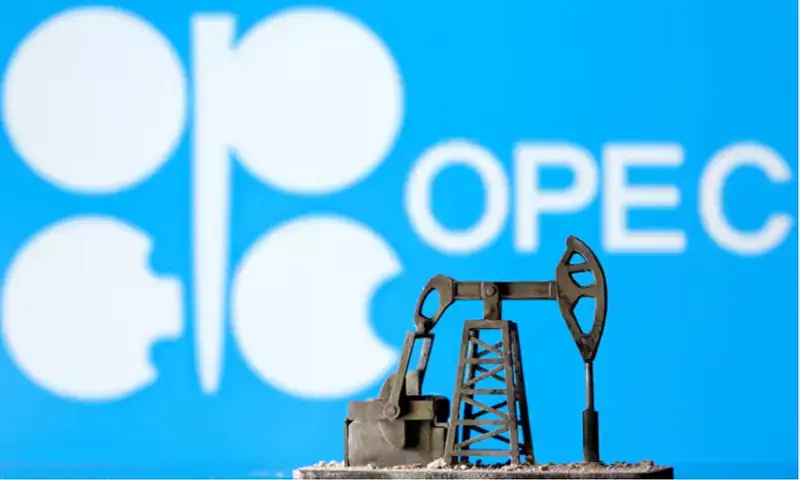

The UAE, the third-largest oil producer in the Organisation of Petroleum Exporting Countries (Opec), left the group last Friday, ending its almost six-decade membership. This was a serious blow to Opec and the expanded Opec+, which also includes Russia. It weakened the group and its capacity to influence global oil market dynamics.
Within Opec, the UAE held the second-largest spare capacity, behind Saudi Arabia. And this spare capacity played a significant role in balancing global energy markets during crises. Although Saudi Arabia will continue to play that role with its considerably larger spare capacity, Opec has lost the additional UAE cushion to leverage the markets.
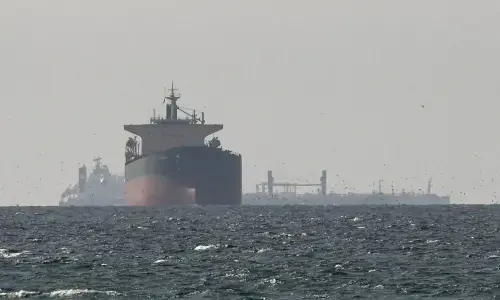
The UAE decision came at a sensitive juncture. With the US-Israel war against Iran still to be resolved and Tehran and the US continuing to block passage of vessels from the Strait of Hormuz, from which roughly 20 per cent of global crude oil used to pass through every day, the issues of oil demand destruction, lack of security of supplies from the Persian Gulf oil producers and the growing emphasis on renewables and alternative sources of energy were already at work. The world was already looking to lessen its dependence on supplies from the Middle East.
In recent years, Angola, Ecuador, Indonesia, and most importantly Qatar have left Opec. But none of them was as big a blow to the organisation as the UAE’s exit from the group. Even Qatar was not a big oil producer as its strength lies in gas.
Once things settle down, an output war may erupt, bringing the global oil prices down
The UAE’s announcement to quit Opec came out of the blue, but it has been in the making for a few years. The country’s output quota was the bone of contention. The UAE has been targeting higher output over the last few years, but the Opec output quota has been a spanner in its wheel. The UAE plans to increase its capacity to around five million barrels per day (bpd) by 2027. Under the current output quota regime, the UAE was allowed to produce roughly 3.2m barrels per day.
In 2020, disagreements over production cuts during the pandemic led to the first major reports that the UAE was considering an exit. Then again, in 2023, while the UAE hosted global climate talks, it pushed for higher baselines, leading to renewed speculation about its future in Opec. Somehow, the UAE was persuaded on both occasions not to leave.
To soothe, despite Opec’s initiative to keep output on a tight leash, it allowed the UAE to increase its output. But with its current output quota of 3.2m bpd and capacity of above 4m bpd, the UAE still has spare capacity of 1m bpd. This pushed the UAE to break the Opec stranglehold.
UAE’s decision came at a time when there was ongoing discussion in the energy community that global oil demand was approaching a plateau and would begin to decline in the next few years. That meant some crude asset could be left beneath the surface. Some producers are thus intent on monetising the asset left beneath the ground to the optimal levels possible. The UAE has been at the forefront of this crusade.
UAE’s departure from Opec has a geopolitical angle too. Its rift with Saudi Arabia, Opec’s kingpin, has widened as the war in the region refuses to come to an end. The UAE is complaining that, with Iran hitting, its Gulf neighbours did not come to its rescue as they should have.
Last Monday, Dr Anwar Gargash, diplomatic adviser to the UAE president, said the Gulf Cooperation Council (GCC) — the political bloc comprising the UAE, Saudi Arabia, Oman, Qatar, Bahrain and Kuwait — was at its lowest ebb. “Unfortunately, the GCC’s position is the weakest in history, considering the nature of the (Iranian) attack and the threat it poses to everyone.”
Hinting at antagonism to Turkey and possibly Pakistan, he said: “We cannot allow anyone outside the Gulf region to dictate our security priorities. These missiles will not be aimed at them tomorrow; they will be aimed at us.
A lack of liquidity in the UAE financial system is also on the horizon. Earlier this month, the UAE reportedly approached the Trump administration about a currency swap line to ensure its access to US dollars if its reserves ran dry. That may be an added motivation for the UAE to monetise the crude assets beneath its surface, and as early as possible.
The geopolitical rift between Saudi Arabia, Opec’s kingpin and the UAE has been widening over recent months. In the Horn of Africa, the UAE had been pursuing a largely commercially driven foreign policy that put it directly at odds with Riyadh. A divide between Saudi Arabia and the UAE has also been brewing over Yemen. Here, both countries have been supporting opposing camps.
With the rift widening between the UAE and its former allies, the UAE is seeking closer ties with Washington. President Trump has hailed the UAE decision to withdraw from Opec. He has been deeply critical of Opec in the past, and the UAE’s withdrawal from it weakens the group. This is a welcome omen for Washington.
Consequently, a new axis is in the making, with the UAE, Israel and India coordinating closely on regional and security issues. In January 2026, India and the UAE signed a strategic defence cooperation framework. The new realignment helped the UAE look away from its Gulf Arab allies, its partners in Opec.
The impact of this divorce on the oil markets is still to be ascertained. There may not be much impact on oil markets in the immediate run, as little oil is leaving the oil-rich region now due to the blockade of the Strait of Hormuz.
But once things settle down, and it may take months — if not years — an output war may erupt, bringing the global oil prices down. For the time being, supplies are tight, and prices are on the up. The UAE decision will not help soothe the oil markets in the immediate future.
The writer is an energy analyst and has delivered talks at the Department of Energy in Washington and the International Energy Agency.
Published in Dawn, The Business and Finance Weekly, May 4th, 2026