Opec+ agrees third oil output quota hike since Hormuz closure


Opec+ agreed on Sunday on a modest oil output hike for June, an increase that will remain largely on paper as long as the US-Israeli war on Iran continues to disrupt Gulf oil supplies through the Strait of Hormuz.
Seven Opec+ countries will raise oil output targets by 188,000 barrels per day in June, the third consecutive monthly increase, Opec+ said in a statement after an online meeting. The increase is the same as that agreed for May minus the share of the United Arab Emirates (UAE), which left the group on May 1.
The move is designed to show the group is ready to raise supplies once the war stops and signals that Opec+ is pressing on with a business-as-usual approach despite the departure of the UAE from Opec+, sources associated with the alliance and analysts said.
Opec+ is sending a two-layer message to the market: continuity despite the UAE’s exit, and control despite limited physical impact, said Jorge Leon, an analyst at Rystad and former Opec official.
While output is increasing on paper, the real impact on physical supply remains very limited, given the Strait of Hormuz constraints. This is less about adding barrels and more about signaling that Opec+ still calls the shots.
Top Opec+ producer Saudi Arabia’s quota will rise to 10.291 million bpd in June under the agreement, far above actual production. The kingdom reported actual production of 7.76m bpd to Opec in March.
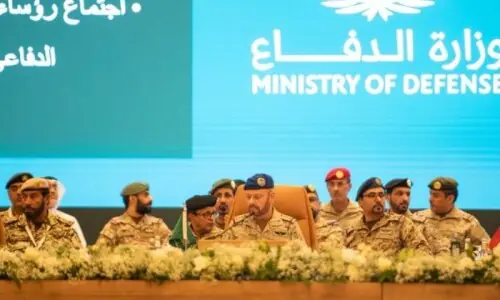
The seven members who met on Sunday were Saudi Arabia, Iraq, Kuwait, Algeria, Kazakhstan, Russia, and Oman.
With the UAE leaving, Opec+ comprises 21 members, including Iran. But in recent years, only the seven nations plus the UAE have been involved in monthly production decisions.
Hike remains largely symbolic until Hormuz reopens
The US-Israeli war on Iran, which began on February 28, and the resulting closure of the Hormuz strait have throttled exports from Opec+ members Saudi Arabia, Iraq and Kuwait, as well as from the UAE. Before the conflict, these producers were the only countries in the group able to raise production.
Even when shipping through the Strait of Hormuz reopens, it will take several weeks if not months for flows to normalise, oil executives from the Gulf and global oil traders have said.
The supply disruption has propelled oil prices to a four-year high above $125 per barrel as analysts begin to predict widespread jet fuel shortages in one to two months and a spike in global inflation.
Crude oil output from all Opec+ members averaged 35.06m bpd in March, down 7.70m bpd from February, Opec said in a report last month, with Iraq and Saudi Arabia making the biggest cuts due to constrained exports.