• Iranian military warns renewed hostilities with Washington ‘likely’
• Trump boasts of Hormuz blockade, says ‘we are like pirates’
• Tehran reaches out to Qatar, South Korea to discuss ongoing negotiations
• Israeli strikes in Lebanon kill over 12 people, injure dozens; Lebanese army chief meets US general
TEHRAN/BEIRUT: Amid a surge in deadly strikes by Israeli forces in southern Lebanon and little headway in talks between the US and Iran, an Iranian military official warned against the ‘likely’ resumption of hostilities whereas diplomats in Tehran were told that the ball was in US court to pick fight or return to table after US President Donald Trump had rejected yet another Iranian proposal.
An Iranian proposal so far rejected by the Trump administration would open shipping in the Strait of Hormuz and end the US blockade of Iran while leaving talks on Iran’s nuclear programme for later, a senior Iranian official said.
A day earlier, the US rejected the fresh peace offer from Tehran, with President Donald Trump saying Iran had made “strides” in the latest proposal, but he was “still not satisfied”.
Iran on Saturday responded that it was up to the US if it wanted to pursue a negotiated settlement or return to war. “Now the ball is in the United States’ court to choose the path of diplomacy or the continuation of a confrontational approach,” Deputy Foreign Minister Kazem Gharibabadi told diplomats in Tehran, according to state broadcaster IRIB. “Iran, with the aim of securing its national interests and security, is prepared for both paths,” he said.
The war, launched by the United States and Israel on Feb 28, has been on hold since April 8, with one round of peace talks having taken place in Pakistan since then.
Axios reported that US envoy Steve Witkoff had submitted amendments to a previous proposal, putting Tehran’s nuclear programme back on the negotiating table.
The changes reportedly included demands that Iran not move enriched uranium from bombed sites or resume activity there during talks.
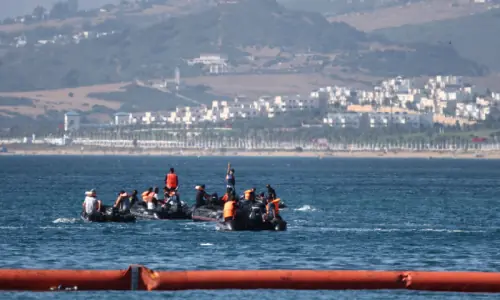
Besides the nuclear programme, a major bone of contention between the two is the blockade in the Strait of Hormuz.
Interestingly, Trump while addressing a rally in Florida compared the US action in the sea to that of pirates. “We’re like pirates” as he described an earlier helicopter raid on an oil tanker under the blockade.
“We… land on top of it and we took over the ship. We took over the cargo, took over the oil. It’s a very profitable business,” he remarked.
Iranian engagements with allies
Meanwhile, Iranian Foreign Minister Abbas Araghchi and Qatari Prime Minister and Foreign Minister Mohammed bin Abdulrahman bin Jassim Al-Thani discussed the ongoing negotiations between Tehran and the US in a telephone call, according to Doha’s foreign ministry.
The Qatari PM “affirmed the State of Qatar’s full support for mediation efforts aimed at resolving the crisis through peaceful means, emphasising the need for all parties to engage with these efforts in a way that contributes to creating the appropriate conditions for progress in the negotiations and limits the possibilities of renewed escalation”.
Mr Araghchi and South Korean Foreign Minister Cho Hyun also discussed bilateral relations, as well as the latest regional developments and initiatives related to diplomacy aimed at ending the US-Israeli war on Iran, Al Jazeera reported.
While the situation remains highly volatile with the fragile ceasefire in Iran war, the blockade of the Strait of Hormuz and a surge in deadly attacks by Israel in southern Lebanon have created fear that the regional conflict could turn into a prolonged war.
13 killed in Lebanon
Despite the ceasefire in the Gulf, fighting continued in Lebanon, where Israel has carried out deadly strikes even though it signed a US-backed truce to end the Lebanon war. Lebanon’s health ministry said 13 people were killed in the latest strikes in the south, including in a town where Israel’s army had issued an evacuation order despite a ceasefire.
The strikes in Habboush killed eight people, including a child and two women, and wounded 21 others, the ministry said, raising an earlier toll. Other strikes in Zrariyeh killed four people, two of them women, and wounded four more, it said. The ministry also reported a strike in Ain Baal near the coastal city of Tyre killed one person and wounded seven others.
In Habboush, where the Israeli evacuation warning was issued, a photographer saw clouds of smoke rising after the raids. The state-run National News Agency reported that Israeli warplanes “launched a series of heavy strikes… less than an hour after” the warning. The NNA also reported Israeli strikes and artillery fire on other south Lebanon locations, including Tyre.
The NNA said Israeli troops carried out detonations in the southern town of Shamaa, and “demolished a monastery and a school” run by a religious order in the town of Yaroun.
Lebanon’s health ministry raised the toll from Israeli strikes since March 2 to 2,600 dead, including 103 emergency workers and paramedics.
Lebanese army chief meets US general
On Saturday, Lebanese armed forces commander General Rudolf Haykal and US General Joseph Clearfield met in Beirut to discuss the security situation in Lebanon and regional developments, the army said.
Clearfield heads a committee monitoring a US-backed ceasefire in fighting between Israel and Hezbollah.
Published in Dawn, May 3rd, 2026