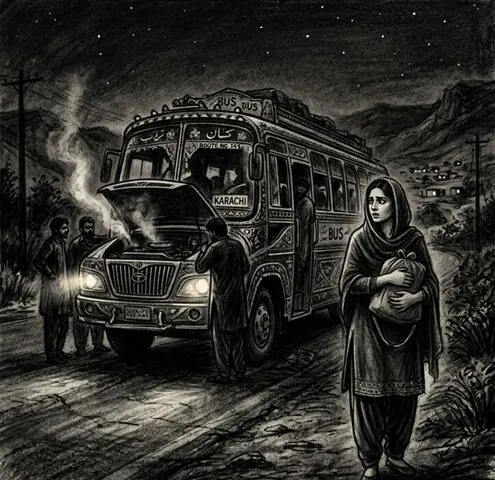
EARLIER this year, I travelled from Islamabad to Mian Channu on a local bus. I was the only woman on board. In the middle of the journey, the driver stopped at a petrol pump and got off without explanation. The conductor told me the bus needed repairs. But other passengers informed me this was not true, and we were being misled.
I called the National Highways and Motorway Police, but was told that it was a local road beyond its domain. I was advised to call police at 15. A police vehicle happened to pass by before I could do so. I told the officers what was happening, but they showed no interest in doing anything. I then called 15, and a sub-inspector arrived. He scolded the conductor, but did not call the driver even though I requested this several times. No proper action was taken.
As a woman travelling alone, this experience was frightening. What troubled me more was that the police did not take it seriously. The Punjab Police have launched a women’s safety cellphone application developed by the Punjab Safe Cities Authority, which allows women to send emergency alerts with a single tap. It also has a safe journey planner and information on women’s legal rights.
While every woman in Punjab should surely download it, a mobile phone application alone is not enough if the police on the ground do not respond properly. Local transport services must be properly regulated. Drivers and conductors should have registered identities, buses should have CCTV cameras, and police must be trained to take complaints from women seriously. Women have the right to travel safely. Until these basic steps are taken, incidents like this will keep happening.
Sidra Sabir
Islamabad
Published in Dawn, May 1st, 2026