Mali’s defence minister killed in major weekend assault
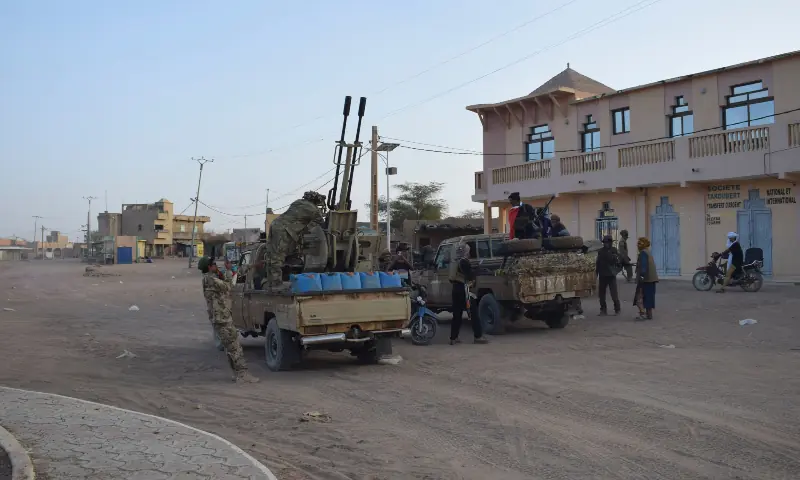
BAMAKO: Mali’s Defence Minister Sadio Camara was killed in an attack by an Al Qaeda affiliate on his residence near the main army base outside Bamako on Saturday, France’s RFI radio and two relatives said on Sunday.
The operation in Kati, 15 km north of Bamako, was part of a wider assault by the affiliate, Jama’at Nusrat al-Islam wal-Muslimin (JNIM), which cooperated with a Tuareg-dominated rebel group in what analysts and diplomats described as one of the largest coordinated attacks in the country in recent years.
A relative of Camara’s said he had been killed, while a Malian journalist known to be a brother-in-law of the defence minister posted about his death on Facebook.
A spokesperson for Mali’s defence ministry and a government spokesperson did not respond to requests for comment on Sunday. A statement by the armed forces said operations were continuing in various parts of the country to repel the insurgents.
Shock for Mali junta
The United Nations called for an international response to violence and terrorism in West Africa’s Sahel region following Saturday’s assault, for which authorities have not provided a death toll.
“The Secretary General is deeply concerned by reports of attacks in several locations across Mali. He strongly condemns these acts of violence,” a UN spokesperson posted on X.
If confirmed, Camara’s death would represent a major shock for Mali’s military leaders, said Djenabou Cisse, associate fellow at the Foundation for Strategic Research (FRS), which specialises in West African security.
The current government, led by Assimi Goita, took power after coups in 2020 and 2021 and has pursued closer ties with Russia while spurning Western military cooperation — a strategy Camara promoted.
“As a key figure within the junta and a central architect of the Mali-Russia rapprochement, his removal would underscore JNIMs capacity to strike at the core of state power,” Cisse said.
‘Fall of strategic city’
In addition to Kati, Saturday’s strike hit near Bamako airport and in localities further north, including Mopti, Sevare and Gao. The fate of the strategic city of Kidal, a former stronghold for the Azawad Liberation Front (FLA), the Tuareg-dominated group that partnered with JNIM, was unclear on Sunday.
The FLA said in a statement that Kidal had fallen, and a spokesperson for the group said on X that a deal had been struck to let Russian mercenaries leave a besieged camp outside the city where Malian armed forces were still entrenched. But Sunday’s statement from Mali’s armed forces said operations to repel the insurgents were still underway in Kidal among other places.
Ulf Laessing, head of the Sahel programme at German think tank the Konrad Adenauer Foundation, said the attack was a setback for Russia, which backed the military-led government after it kicked out French, US and other Western forces.
“For Russia the attack has been a disaster, Laessing said. They were unable to prevent the fall of the highly symbolic Tuareg stronghold of Kidal and now need to leave this northern city.”
Security of presidential palace
Russian state-run broadcaster Vesti reported on Sunday that Russia’s Africa Corps was repelling a large-scale Islamist attack on Mali’s government. According to Vesti, Russian personnel were responding along with units of Mali’s Presidential Guard and armed forces, preventing the presidential palace from being seized. Vesti said some members of Russia’s Africa Corps were wounded, without providing further details.
Saturday’s attacks are the latest sign that Mali’s government has failed to deliver greater security despite promising to do so. In September 2024, JNIM attacked a gendarmerie training school near Bamako airport, killing about 70 people. More recently, it carried out an effective fuel blockade that has starved the capital’s residents and businesses of power and supplies.
The government has recently pursued closer ties with Washington, which has sought to rebuild cooperation on security and explore mining opportunities.
Mali’s foreign minister said that neighbouring states and foreign powers were backing terrorist groups, but declined to name the countries.
Published in Dawn, April 27th, 2026