

“HOW did the world’s richest nation armed with the most powerful military arrive at this strategic defeat?” asks New York Times writer W.J. Hennigan.
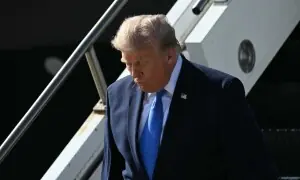
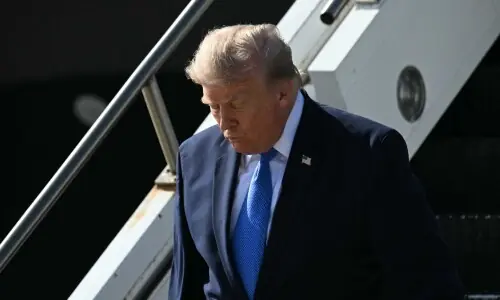
Quoting Donald Trump in his analysis for the same paper, David E. Sanger captures the American president’s bravado: “There will be no deal with Iran except unconditional surrender.”
Contrary to Trump’s declaration, the Iranians have not only survived a war with the world’s most powerful military but have also found themselves in a position to celebrate. “Iran is actually stronger now relative to their position in the Middle East than they were prior to this war,” said House Minority Leader Hakeem Jeffries. Trump, he said, was “divorced from reality”.
The 14-point agreement between Washington and Tehran appears more like a temporary stabilisation mechanism reached after a costly confrontation. The immediate objective seems to be to restore stability in the Gulf rather than resolve the disputes that led to the war. According to Iran expert Vali Nasr, this ‘no war, no peace’ situation is not sustainable.
“Strategically, geopolitically, the only real winner at this point is Iran,” said Ross Harrison of the Middle East Institute. According to him, post-war, Washington had lost global credibility. The deferral of the nuclear issue was a setback for Israel which was the biggest loser, he concluded. The preliminary agreement is “terrible for Israel”, said a senior Israeli official, echoing the frustration of the Israeli prime minister and chief of staff.
The US-Iran deal is a reminder that we cannot just bomb our way to solutions. On the occasion of the recently observed International Day of Dialogue among Civilisations, Pakistan’s ambassador to the UN termed “dialogue and diplomacy the most effective tools to transcend differences and foster mutual understanding and cooperation”. He said that it was “the spirit of dialogue that enabled human civilisation to forge mutual respect and trust and chart a path of shared progress and development”.
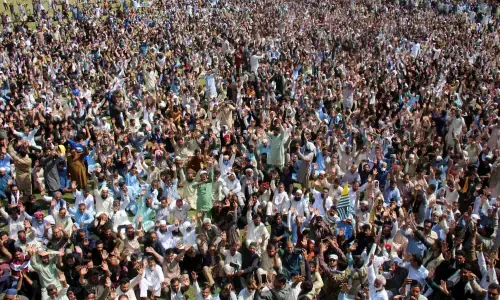
This is as relevant domestically as it is internationally. No one can shoot their way to internal stability and peace. PPP chairperson Bilawal Bhutto-Zardari warned that “At a time when the international spotlight is firmly on Pakistan, the ongoing unrest in AJK is damaging both the Kashmir cause and Pakistan’s reputation”.
Political grievances should be resolved through “democratic, constitutional and peaceful means”. The PPP is not in favour of confrontation. For its leader, 12 refugee seats cannot be more valuable than human lives. The message is loud and clear: prioritise reconciliation and political harmony over confrontation.
The US-Iran deal is a reminder that we cannot just bomb our way to solutions.
Pakistan is rightly basking in glory after brokering the landmark US-Iran agreement. The Islamabad MoU has indeed raised hopes for peace in West Asia and the Middle East. Our current leadership is deserving of the accolades and appears to have pulled off the ‘deal of the century’. But one should remember that just as charity begins at home so do diplomacy and dialogue. This is where might is not right.
The State of Freedom Report 2026 has just been released by Mishal Pakistan — reportedly the “first evidence-based national benchmark for measuring freedom, public trust, institutional performance, citizen empowerment and governance outcomes”. It examines political, civil, economic, digital and social freedoms in the country.
We need to ask those who rule currently some tough questions. Can rule by fear ever promote freedom? How is the public’s trust to be gained in an environment where elite capture and corruption are pervasive? Has the state ever tried to measure institutional performance? Can it see that policing has totally collapsed?
Citizens do not trust the police, and see them as an instrument of oppression and persecution. This colonial model of policing cannot be revived. If we want a professional and highly accountable police force, then the focus must be on developing an independent and impartial investigations cadre.
Law enforcers cannot kill to control crime. Violence begets violence. Police are an instrument of law, and its leaders simply should not act as courtiers of the ruling junta. No judge, general or politician can assume the role of investigator — equipped with the powers of probe, arrest and evidence collection. This function lies solely in the police’s domain. If they want to earn the public’s trust, they must rise above their materialistic mindset and develop a cadre of quality investigators who are legally bound to act without fear or favour. The rule of law must have primacy.
How can the citizens be empowered? They should be able to choose their representatives through a free and fair electoral process. The current ruling dispensation is mostly the product of rigged elections.
What kind of a country have we become when our own election commission cannot hold an election that allows the voters’ true representatives to sit in the local, provincial and national assemblies? We are merely going through the motions of the electoral process with no true representation of democracy at the end. What about the bureaucracy?
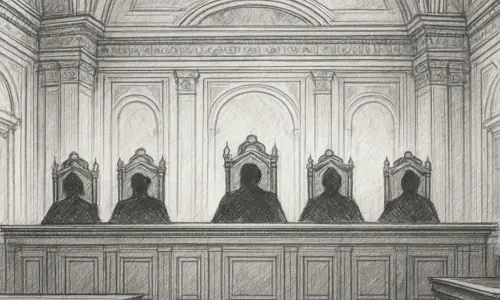
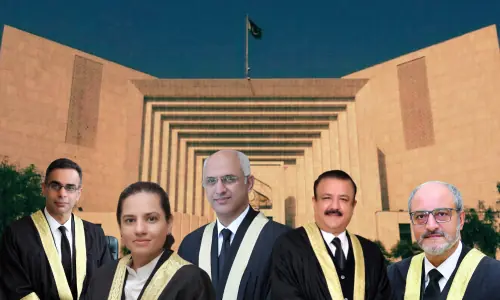
Are they promoting good governance through quality service delivery with integrity and fairness? They have mostly lost the trust of the citizens who they are supposed to serve. Unfortunately, they are following the dictates of the deep state, resulting in a serious rupture in the social contract between the state and society. Where are the constitutional guardians of the rights of citizens and the rule of law? Where is justice? As a result of judicial infighting, the judiciary has been robbed of its grace and dignity.
Above all, who really governs Pakistan? Who sets the strategic direction? Civilians may administer day-to-day government, but the decisive choices — and the limits of politics — are set elsewhere. We have oscillated between direct military rule, hybrid arrangements, and some periods of civilian government.
Currently the establishment wields power through two reinforcing systems: a set of formal levers increasingly written into law through constitutional amendments, and a much deeper informal architecture of political management. The trend is towards formalisation: powers once exercised behind the scenes are now written into statutes and the Constitution. Is might right? Only time will tell.
The writer is a former police officer.
Published in Dawn, June 21st, 2026