PM Shehbaz announces reduction in prices of petrol by Rs74, diesel by Rs67
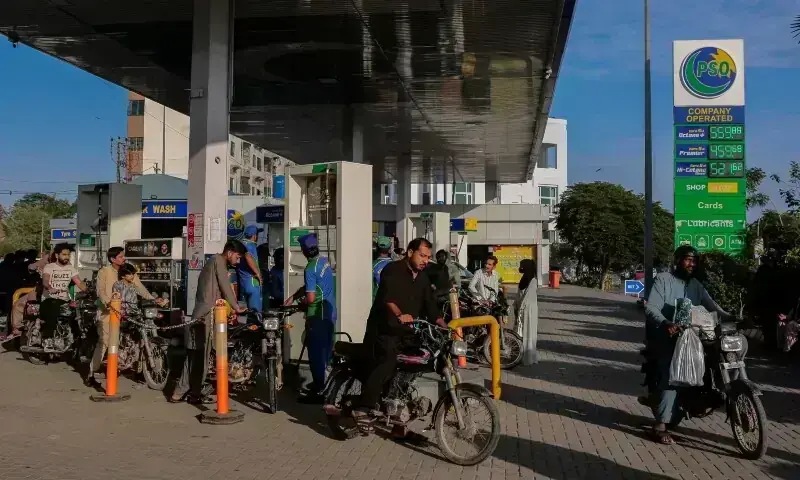


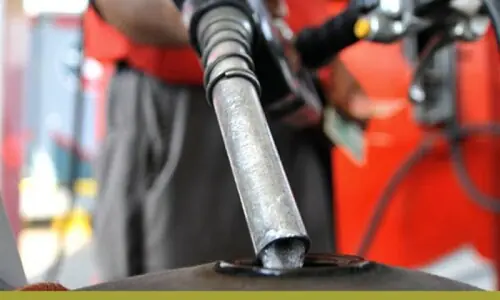
Prime Minister Shehbaz Sharif on Friday announced a Rs74 reduction in petrol prices and a Rs67 cut in high-speed diesel (HSD) prices as the government seeks to pass on the benefit of declining international oil prices.
The official notification for the new petroleum prices is yet to be issued.
Once notified, the price of petrol will stand at Rs299.78 and high-speed diesel (HSD) at Rs311.78, down from Rs373.78 and Rs378.78 per litre, respectively.
In a statement from his office, the premier said the government was passing on the benefit of an improved regional economic situation and declining oil prices.
“We are now fulfilling the promise we made to the nation,” the premier said in the statement.
Speaking in the National Assembly earlier in the day, PM Shehbaz vowed a “significant” reduction in fuel prices, as tensions eased in the Middle East following the US-Iran peace deal and the restoration of energy shipping in the Strait of Hormuz.
“The price of petrol is being reduced by Rs74 per litre, while diesel is being reduced by Rs67 per litre,” the premier’s statement said.
“We fully understand the hardships faced by the people. You demonstrated extraordinary patience and resilience during these difficult circumstances,” PM Shehbaz noted.
He extended his sincere appreciation to the public for “standing by the government during these challenging times”.
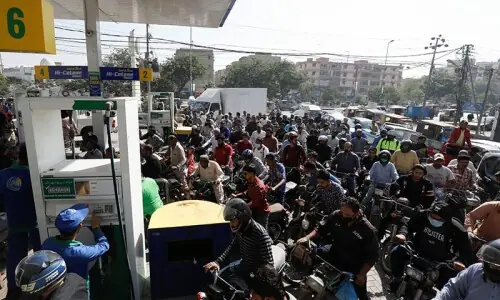
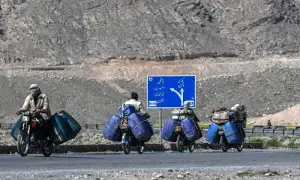
Petrol is mainly used in private transport, small vehicles, rickshaws and two-wheelers, and changes in its price affect the middle and lower-middle classes.
Similarly, changes in diesel prices also impact the public at large, as it is mainly used in the heavy transport sector, power plants and large generators.
As the energy crunch from the US-Iran war due to the Strait of Hormuz blockade hit the global markets, the government began revising petroleum prices every week on Friday night.
In the first wartime revision on March 6, the government hiked petrol and diesel prices by Rs55 per litre — a move slammed as an “inflation bomb”.
That raised the ex-depot HSD rate to Rs335.86 per litre and the ex-depot petrol price to Rs321.17 per litre.
Fuel prices reached their peak on April 3 when the government hiked the petrol price by Rs137.24 per litre and the HSD price by Rs184.49, taking them to Rs458.4 and Rs520.35 per litre, respectively.
Amid backlash over the unprecedented hikes, PM Shehbaz had brought the petrol price down to Rs378 per litre within 24 hours by slashing the petroleum levy by Rs80 per litre.
‘Maximum relief top priority’
In his statement, the prime minister expressed gratitude to the chief ministers, noting that the federal and provincial governments worked in “complete coordination” to keep the country’s economy stable.
“We took every possible step to protect the public from the impact of global inflation,” the premier asserted. “Whatever reduction occurs in international oil prices will be passed on to the people in full.”
The premier vowed that the government would “continue taking effective measures to maintain economic stability and further reduce inflation”.
He highlighted that the government “not only implemented austerity measures at all levels but also provided subsidies to underprivileged segments of society”.
“Providing maximum relief to the public remains the government’s highest priority,” he affirmed.
In his statement, the premier mentioned the mediation efforts of Pakistan, which “made peace in the region possible”.
He said Chief of Defence Forces (CDF) and Chief of the Army Staff (COAS) Field Marshal Asim Munir was deserving of a “special thanks for his untiring efforts” in making the Islamabad MoU possible.
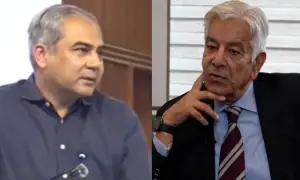
PM Shehbaz also extended his thanks to Deputy PM and Foreign Minister Ishaq Dar, Interior Minister Mohsin Naqvi and the rest of the government team for their diplomatic efforts.
The premier further appreciated the work of Finance Minister Muhammad Aurangzeb and his ministry, Planning Minister Ahsan Iqbal, Petroleum Minister Ali Pervaiz Malik and others during the “economic crisis”.