0
0
MUZAFFARABAD: Government officials in Azad Jammu and Kashmir (AJK) on Saturday described the recently held agriculture conference as a “successful and outcome-oriented exercise,” saying it had helped identify key challenges faced by farmers and laid the groundwork for a comprehensive policy to revitalise the sector in the region.
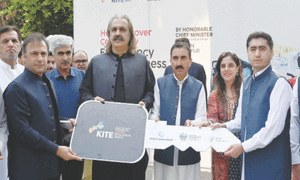
The moot, organised by the departments of agriculture, livestock, irrigation and allied institutions on the premises of Muzaffarabad’s non-functional airport on Wednesday, brought together experts, researchers, policymakers and farmers from across the country, generating a set of practical recommendations for sustainable agricultural development.
Speaking at a post-conference briefing, Secretary for Agriculture, Livestock, Dairy Development and Irrigation Mirza Wajahat Rasheed Baig said the event highlighted that despite possessing significant natural potential, AJK’s agriculture sector remained underperforming due to fragmented landholdings, limited market access, outdated farming practices and vulnerability to climate change.
He was flanked by Director General Livestock and Dairy Development Dr Muhammad Ijaz Khan, Agriculture Department directors Amna Rafi and Zaffar Jehangir Awan, Deputy Director Raja Zaheer Iqbal, publicity officer Sundas Saleem and others.
Improved water management and drip irrigation to tackle increasing water scarcity stressed, says an official
“It was the first exercise of such scale in many years in Azad Kashmir, held under the vision of Prime Minister Raja Faisal Mumtaz Rathore. Officials at all levels worked with exceptional commitment to make it meaningful through expert input from diverse fields,” Mr Baig said.
Participants underscored the need to shift from subsistence farming to a more market-oriented and value-driven approach, supported by modern technologies, research and effective extension services, he added.
According to the secretary, one of the key takeaways was the urgent need for a unified and forward-looking agricultural policy, incorporating stakeholders’ input and aligning the sector with contemporary requirements.
He said experts stressed improved water management through efficient irrigation systems, including drip irrigation, to tackle increasing water scarcity caused by changing climatic patterns.
Highlighting discussions on horticulture, Mr Baig said nursery development and the availability of certified planting material were identified as critical for enhancing fruit production, particularly in mountainous areas, with public-private partnerships recommended to strengthen this segment and ensure better returns for farmers.
The conference also underscored the importance of diversifying into high-value crops such as tea, ginger, olive and soybean, as well as promoting value addition through processing of fruits, dairy products and other farm produce.
He said the conference also highlighted the considerable potential for tea cultivation in AJK, particularly in areas located at elevations of 1,200 to 1,500 metres, including Neelum and Jhelum valleys. Tea, being a high-value long-term crop, could help reduce Pakistan’s substantial import bill while creating sustainable income opportunities for local farmers, he noted, adding that initial assessments suggested thousands of acres were suitable for its cultivation.
Livestock, being the backbone of the rural economy, also received special attention, with experts calling for disease control measures, vaccination campaigns and breed improvement to enhance productivity and market competitiveness, he said.
He maintained that the recommendations emerging from the conference would be consolidated and presented to the government for incorporation into a comprehensive policy framework aimed at ensuring food security, increasing farmers’ incomes and promoting exports.
Published in Dawn, April 26th, 2026