THE WAR AGAINST IRAN AND PAKISTAN’S MOMENT
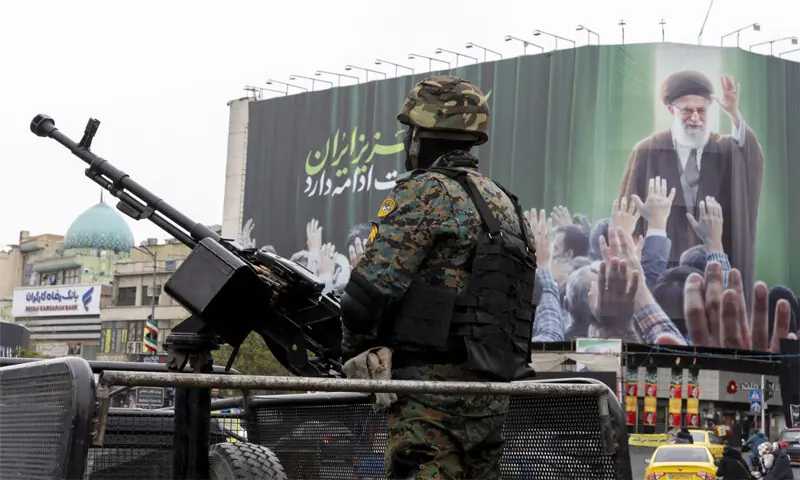
“There are strategic attacks that have led directly to peace, but these are the minority. Most of them only lead up to the point where their remaining strength is just enough to maintain a defence and wait for peace. Beyond that point the scale turns and the reaction follows with a force that is usually much stronger than that of the original attack.”
— Carl von Clausewitz, On War
“Conflict remains the Middle East’s most troublesome dynamic, but there is today less to this problem than headlines might lead one to believe. Iran — the region’s chief destabilising force — has been greatly weakened… As this administration rescinds or eases restrictive energy policies and American energy production ramps up, America’s historic reason for focusing on the Middle East will recede.”
— US National Security Strategy, 2025
“There is no terror, Cassius, in your threats,/ For I am arm’d so strong in honesty/ That they pass by me as the idle wind,/ Which I respect not.”
— William Shakespeare, Julius Caesar
“Woe to the land that’s governed by a child.”
— William Shakespeare, Richard III
PROLOGUE
The second round of talks between Iran and the United States scheduled for last Wednesday in Islamabad remained stillborn. Reason: US President Donald Trump is still averse to negotiating. He thinks that negotiations are spelled D.I.K.T.A.T. That is a non-starter.
The inordinate time he spends putting out mocking posts in all caps, he was already set to sabotage the process. Publicly insulting the other party is not the best way to go into talks. One doesn’t need to learn negotiations theory at Harvard to figure that out.
Second, there’s a growing corpus of literature on the disruptive nature of “Twiplomacy”. The general consensus among scholars is that it is dangerous for serious diplomacy and negotiations because social media fundamentally alters the speed, substance, and secrecy of traditional negotiations.
To put it in perspective, imagine Clemens von Metternich or smartphone-carrying X-ers in the five major powers of the time tweeting about what he was doing to put together the Concert of Europe, an exercise so complex that it just couldn’t have been done without secrecy, aristocratic exclusivity, and slow, deliberate, face-to-face negotiations among elite diplomats. In the era of twiplomacy, Metternich’s gravitas would have collapsed irredeemably.
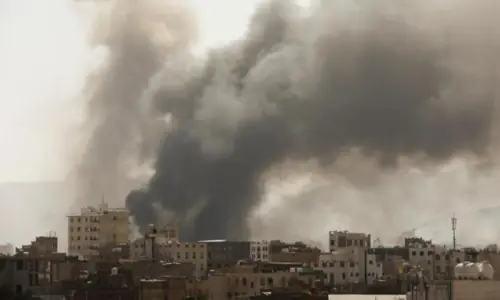
As Washington and Tehran oscillated between escalation and diplomacy after the war imposed by the US and Israel on Iran, Pakistan emerged as an unlikely but structurally primed mediator. Ejaz Haider unpacks the conflict so far, where we stand now, the limits of coercion and Pakistan’s role in helping to forge peace
Three, the refusal of Iran to send a delegation should have been anticipated. That the second round could not happen doesn’t necessarily reflect on Pakistan’s efforts. Tehran simply cannot be seen at the table with the US while the blockade continues. As I wrote in this space in early March, nor can Iran negotiate away the three pillars of its security: nuclear latency, missile programme (now also drones) and regional relationships.
Iran’s position remains more circumscribed. It has signalled willingness to limit enrichment temporarily, reduce stockpiles, and accept international monitoring in exchange for sanctions relief and unfreezing of its money. Missile forces and regional relationships were/are not on the table. Further, a second war in the middle of talks has also made it imperative for Iran to demand a guaranteed, comprehensive non-aggression pact.
Four, Trump doesn’t have many good choices. Bluster aside, he can’t really escalate without bombing targets that would make him a war criminal under existing International Law provisions. Granted he could wave that off as a minor nuisance and still go ahead.
But would that force Iran to capitulate? Highly unlikely. Would it kill thousands of civilians? It would. Does the world have an appetite for such savagery? No, leaving aside the horrendously murderous Zionist entity. Would Iran retaliate? Absolutely. Would such escalation send regional and extra-regional economies in a tailspin? Most certainly. Could it result in a diplomatic solution in the US’ favour? Forget it.
Action: extremely high risk. Result: very dubious to zero payoffs.
Five, to other sticking points we now have the added problem of US naval blockade of Hormuz. Everyone keeps talking about a ceasefire — to the extent that bombing has been paused, yes — but the blockade under relevant International Law provisions is an act of war. The ceasefire, to that extent, is already deceased, like the dead parrot in Monty Python.
The central question is, how long can the blockade be sustained? Iran believes, and has stated this in so many words, that it can outlast pressure. It’s the same clock versus time dialectic the US faced in Afghanistan. The underdog, if it can take and absorb pain, turns time into a strategic asset.
As Dennis Citrinowicz, a former intelligence officer and Iran expert for the Zionist entity, has written: “This is not a solution, it is a path towards deeper instability. This is a strategy of delaying the inevitable [by Trump] rather than resolving the conflict.”
With this inverted pyramid, let’s look at what Iran’s operational and politico-strategic approaches have achieved so far and also at Pakistan’s mediation efforts.
RECAP
Like last year, when Iran was attacked in the middle of talks on the nuclear file, this time, too, it was attacked while the talks were ongoing. This time, it was Operation Epic Fury (have US military planners outsourced op code-naming to professional wrestlers?). The gambit was decapitation and degradation strikes. Pesky Iran was supposed to crumble and sue for peace. Trump was to boast about the beauty of his operation.
But Iranians are nothing if not vexatious. They absorbed the pain and began counter-attacking, escalating horizontally, using missiles and drones, hitting US bases and bringing the Gulf to a precipice. Then, when their infrastructure was hit, they hit back at infrastructure. Worse, they closed the Strait of Hormuz. Trump suddenly realised they have swarms of these small, pestiferous high-speed boats, the naval equivalent of bees attacking a bulldozer.
Meanwhile, Trump, who cannot be accused of strategic coherence, declared on Truth Social on March 1 that Iran would be “hit so hard they won’t recognise what’s left of their sand.” By March 3, he was musing that “honestly, a little bombing never hurt anybody”, before pivoting to complain about the price of eggs. On March 7, he announced that “the only thing Iran understands is strength, and we have the biggest, most beautiful bombs, believe me.” Forty-eight hours later, he suggested that Iran’s Supreme Leader was “actually a very smart guy, very smart, maybe we can do lunch.”
By mid-March, he had oscillated between threatening to destroy an entire civilisation and praising the “fantastic engineering” of Iranian drones. When a reporter asked him on March 20 whether the US was at war, he replied, “It depends what your definition of war is. Also, I never said war. I said kinetic peace. Great phrase. Someone give me credit.”
It is strategic whiplash meets performance art meets a man who genuinely cannot remember what he posted on X 20 minutes ago, leaving allies exhausted, enemies confused, and everyone mulling over Richard III’s line, “Woe to the land that’s governed by a child.”
Enter Pakistan, the awkwardly useful middle child of global diplomacy, with its ‘Trust Me, I Know Everyone’ moment. Islamabad, which somehow (we shall get to that) maintains a “strategic partnership” with China, a defence pact with Saudi Arabia, a tense border with Iran, and an on-again-off-again love-hate thingamajig with the US, realised it was the only one everyone was still on speaking terms with.
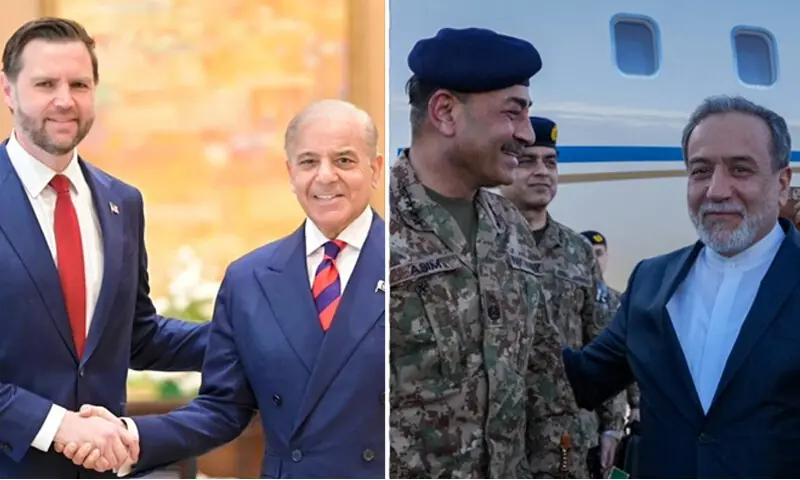
So, the Chief of Defence Forces Field Marshal Asim Munir got busy, looking like a man who just wanted (still wants) everyone to calm down and have some chai. It’s a classic Pakistani hustle, using the fact that no one hates you enough (India excepted!) to ignore you, and everyone needs you enough to listen to you.
Whether this ultimately ends in a peace deal — much is being speculated on that count — or just an awkward family dinner, where someone leaves early in a huff, remains to be seen. But for now, the bloody playground fight has an unexpected field monitor, if you will.
But the real problem is Trump. We don’t know if he really wants out. Maybe he does; maybe he is still playing the same game. Be that as it may, unless he can be kept away from his phone and making insulting statements, diplomacy will remain complicated and Iranian moderates will have a much weaker hand to play.
THE SCHRÖDINGER MEME AND IRAN’S STRATEGIC CHOICES
Someone started it. It went viral. Talks are dead/talks are alive. Strait is open/strait is closed. But if one were to go into the history of Schrödinger’s cat, it is spot-on. Schrödinger intended for the “dead-and-alive” cat to prove that quantum mechanics was incomplete and that large-scale objects cannot be in two states at once. He was wrong on that count but he was also right in a way.
The cat, used as a metaphor, can be both dead and alive. Niels Bohr and Werner Heisenberg were right. In this situation, too, we have that duality and it depends on where one is observing it from: Washington or Tehran. Nota Bene: there’s no known idea in physics that accounts for the perfidious trinity involving the Zionist entity!
Iran has now been attacked twice, both times in the middle of ongoing talks. For anyone to tell it that the cat is alive in terms of talks would need a lot of convincing. The play has become obvious: send Steve Witkoff and Jared Kushner to conduct “negotiations,” and declare that the only acceptable “negotiated” outcome is one that would require Iran to meekly submit to the US. In other words, surrender. Remember Trump’s words? Unconditional surrender.
Before the war began, Iran was negotiating but also preparing for a conflict. This much should be obvious from several interviews given to international television channels by the country’s foreign minister, Abbas Araghchi.
Its war preparations had four interconnected strategies: dispersal and delegation (mosaic defence); succession redundancies to offset the impact of decapitation strikes; horizontal escalation to raise the cost of war; and using allies as strategic reserves. Blocking the Strait of Hormuz was also an obvious part of the strategy of raising the cost of war.
To put it another way, Iran’s operational strategy was to fight its own war against the US-Zionist duo, not get into the conflict on the US’ terms. I have made this point before in this space through a children’s fable by Aesop but it bears repeating.
The fable goes thus: North Wind and Sun were quarrelling about who was stronger. As the argument became heated, Sun spotted a traveller and said to North Wind, “Let’s agree that he is the stronger who can strip that traveller of his cloak.” North Wind agreed and sent cold gusts towards the traveller, increasing the strength of the gusts gradually. But the stronger the gusts became, the more tightly the traveller wrapped his cloak around him. Seeing this, Sun began to shine and slowly increased the temperature until the traveller, feeling hot, removed his cloak.
How did Sun win? More aptly, why did North Wind lose? It lost because it got into a contest on Sun’s terms, a contest it was fated to lose even before it had begun. Sensible force employment in every contest of arms, but more importantly in an asymmetric contest, is meant to avoid just that.
Result: Iran took the pain of decapitation and degradation strikes. Dispersal allowed it to increase the survivability of its missiles and drones for counter attacks and delegation meant that field commanders could operate without being in constant contact with the top leadership and had pre-delegated orders of how to respond.
Survivability strategies, as is now known, also rely on deeply-buried production and firing sites. Even when entrances are bombed, clearing can be done from the inside.
Another aspect, which has now come to light with more evidence, is Iran’s enhanced satellite-based ISR and targeting capability. According to an April 2026 Financial Times investigation, a private Chinese firm, Earth Eye Co, allegedly sold a high-resolution spy satellite to Iran in late 2024. Leaked documents and subsequent analyses indicate that the satellite was used to monitor US military installations across the Middle East, both before and after the US strikes in early 2026.
The arrangement effectively enabled Iranian surveillance of American assets in the region. For its part, China has denied these claims. What is clear is the fact, noted by all experts, that Iran’s targeting in this war has been far more accurate and effective than in June 2025.
WHAT NOW?
The next round everyone was speculating about is not happening. While such speculation is understandable, serious analysis requires looking beyond immediate events to the structural and historical interrelations that make the conflict intelligible. As structuralism posits, phenomena are understood through their interrelations.
To answer the question of whether Iran and the US can co-exist, it’s important to look at history.
Since the 1979 revolution, US-Iran relations have followed a broader trajectory of hostility, despite brief periods of cooperation. In 2001, US envoy James Dobbins and Iranian deputy foreign minister Javad Zarif hit it off (Dobbins has written about it) and would even meet informally during the Bonn Process for Afghanistan. Iran also offered to help stabilise Afghanistan, but US President George W. Bush’s “axis of evil” speech ended that opening.
In 2003, Iran proposed a “grand bargain” covering its nuclear programme, relations with and support for Hezbollah and Hamas, and the acceptance by the Zionist entity of a two-state solution. This was also rejected by Bush. Earlier, during the Iran-Iraq War, Iran and the Zionist entity had briefly cooperated against Iraq, which the latter thought at the time was a bigger threat.
The broader animus, however, shapes current dynamics. Both sides remain trapped in what might be called a Daedalian labyrinth. Just as Daedalus needed waxen wings to escape his own maze, both the US and Iran must find a way out together. That moment depends not only on increasing pain but on a perceived payoff, American academic Ira William Zartman’s ‘mutually enticing opportunity.’
If both sides believe the rising cost of conflict is unbearable, they are ready for peace. If only one feels unbearable cost while the other retains the capacity to bear losses, the stronger will press for surrender. If both believe they hold the stronger hand, neither will concede.
Iranian-American scholar Arash Reisinezhad has warned Iran against overplaying its hand, coining the term “Faw Syndrome.” During the Iran-Iraq War, Iran’s capture of the Faw Peninsula in 1986 should have made Tehran diplomatically more flexible. Instead, victory led Iranian leaders to believe that Iraq’s total defeat was within reach. This is the ‘culminating point of victory’ problem Clausewitz discussed at length. The result: no diplomatic gain, and the war ended with UN Security Council Resolution 598. Reisinezhad warns that, today, the Strait of Hormuz and Iran’s enriched uranium stockpile may be caught in the same trap.
This assertion can be debated but the key question is whether the space Iran has created through asymmetric kinetic responses can be translated into diplomatic gains: sanctions relief and a guaranteed end to hostilities. That circles back to what Iran could concede, and to what extent.
It brings us to increasing evidence within Iran of the tussle between the hardliners and the moderates. The recent campaign in Iran against Araghchi recalls how hardliners sabotaged Javad Zarif before and after the JCPOA. When Obama failed to lift non-nuclear sanctions and Trump ultimately walked out of the deal, hardliners sidelined the moderates who could have been effective negotiating partners. That dynamic continues to block a diplomatic resolution.
But the real problem is Trump. We don’t know if he really wants out. Maybe he does; maybe he is still playing the same game. Be that as it may, unless he can be kept away from his phone and making insulting statements, diplomacy will remain complicated and Iranian moderates will have a much weaker hand to play.
THE STRUCTURAL LOGIC OF MIDDLE POWERS AND PAKISTAN’S ROLE
Finally, this brings us to how did Pakistan get into this? A number of analyses seeking to explain how and why Pakistan has emerged as a mediator in the US-Israel war of aggression on Iran have focused on surface-level factors. Some point to CDF Munir’s personal relationship with Trump; others highlight his alleged connections with the Iranian Revolutionary Guard Corps (IRGC).
Still other analyses, more accurately, note that Pakistan is perhaps the only state that enjoys a measure of trust across the board: with the United States, with China in a deep strategic partnership, with Saudi Arabia, and with Iran. What very few have realised, however, is the China factor and the close, strategic coordination between Beijing and Islamabad that underpins Pakistan’s diplomatic manoeuvres, even as China remains reluctant to enter the fray directly.
My proposition here is that, for the most part, analyses have missed the deeper, structural reasons that have placed Pakistan in the position it has worked out for itself. To that end, I use the ‘middle power framework’. It offers a robust framework for understanding Pakistan’s emergence as a regional mediator.
In other words, Pakistan’s mediating role is not just a function of personal relationships, though that can play an important role in getting the warring sides to be more amenable; nor is it just momentary diplomatic opportunism. It is the product of structural shifts towards a multipolar world, Pakistan’s unique position within overlapping great power rivalries, and the strategic utility of middle power diplomacy in an era of complex interdependence.
In his book The Reason of State, Italian diplomat and scholar, Giovanni Botero categorised the states as grandissime [great], mezano [middle], and piccioli [small]. He defined a mezano as a state that doesn’t attract the envy or “passions” associated with great powers but which has sufficient strength and authority to stand on its own.
Botero’s definition is surprisingly modern, if we discount the localised nature of his world, where states could indeed stand on their own for the most part. Today, not even the grandissime can be self-sufficient in an autarkic sense, given the complex interdependencies and legal-normative frameworks that dictate acceptable state behaviour on a wide range of issues.
In the 1940s, Canadian Prime Minister Mackenzie King and Australian Minister for External Affairs Herbert Evatt used the term “middle power” to assert that medium-sized powers such as Canada and Australia should have a significant role in multilateral bodies. Such a role, they argued, was essential for maintaining international security. Such powers, they argued, weren’t mere insignificant “price takers.”
The closest we get to the modern definition is with British international relations scholar Martin Wight. In his revised 1978 work Power Politics, Wight posited that, while great powers have interests as broad as the system itself, middle powers possess significant regional influence and often act as “swing states” (yes, the term comes from Wight) or middle-tier actors. Recent scholarship distinguishes between traditional middle powers (wealthy, stable, Western-aligned states such as Canada and Australia) and emerging middle powers in the Global South.
Certain conditions need to be present in order for a middle power or a coalition of middle powers to intervene and act in a crisis: a situation where two or three great powers are deadlocked; a situation where a great power is directly involved in a conflict and cannot be a broker; and a situation where one of the great powers is reluctant to get directly involved, another is an aggressor and still another is benefiting from the conflict.
The third situation is what we are witnessing in regard to the war on Iran: the US is the aggressor, China is playing its hand in the backdrop and Russia is benefitting from the war.
Pakistan fits this structural description precisely. It possesses sufficient military capability and nuclear deterrence to command respect, yet it does not threaten the global primacy of the United States or China. It maintains deep strategic coordination with Beijing through the China-Pakistan Economic Corridor (Cpec), while simultaneously retaining functional diplomatic channels with Washington, Riyadh and Tehran. This is not accidental. It is the product of deliberate statecraft designed to occupy the mezano space: hedging, capable and indispensable, precisely because it is not a hegemonic rival.
Pakistan’s position is also reinforced by China’s strategic interests. Beijing benefits from having a trusted partner capable of engaging with the US, Saudi Arabia and Iran simultaneously, particularly when China itself is locked in great power competition and prefers not to take direct ownership of every regional crisis.
Will something come out of Pakistan’s mediation? Before I answer this question, it’s instructive to read what Ambassador TCA Raghavan, a former High Commissioner of India to Pakistan wrote in The Telegraph in India after the first round of Iran-US talks produced no outcome:
“This time, Pakistan has played an even more astonishing role… It is no small achievement to have played some role in bringing to a pause, howsoever temporarily, one of the most intense military and geo-economic conflicts we have seen in recent history. Whether the failure to reach an agreement in Islamabad is a pause or a real setback remains to be seen. But bringing the belligerents together and possibly starting a process is no small feat, and there is applause from professionals across the world.”
These words are to be taken seriously. What Ambassador Raghavan has written also indicates that the outcome itself is not what matters, though a positive one would be an even greater feat.
EPILOGUE
For Pakistan, it is important to understand three broad points: its primary task is to mediate; it is not an enforcer. Put differently, Pakistan must remain a facilitative mediator, not a directive one. The latter role can induce distrust in one or both sides. It’s never easy to avoid the mediation dilemma.
Two, given the complexity of the issues, even if we were to accept that the moment is ripe for the two sides to start talking, it is far from clear at this stage if a ‘mutually enticing opportunity’ can emerge.
Three, if mediation could help extend the ceasefire for another 30 or 60 days, that would be a big achievement at this stage. If, as part of further confidence-building, the US were to lift the blockade and Iran were to open the strait, that would be icing on the cake. These developments won’t resolve the issue but could help create a conducive environment for further negotiations.
It will take much more effort than one, two or three rounds, howsoever hectic, to break this logjam. It’s like brick-laying. Pakistan should also not offer further mediation unless both sides request that.
Finally, there’s the serpent: the Zionist entity. It will do everything possible to scuttle any deal. Iran knows that. Pakistan should expect that.
The writer is a journalist interested in security and foreign policies.
X: @ejazhaider
Published in Dawn, EOS, April 26th, 2026