Bears return to PSX amid geopolitical tensions
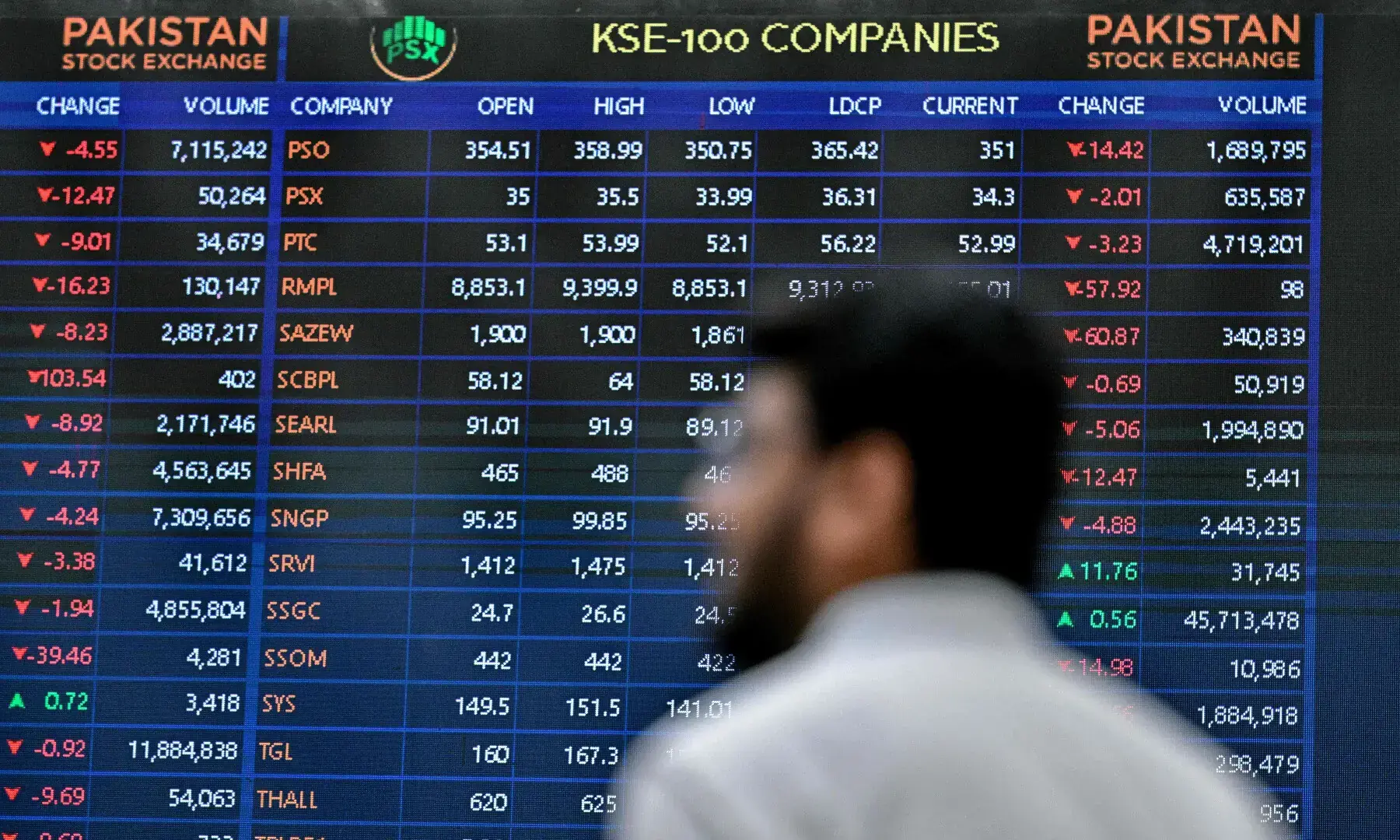


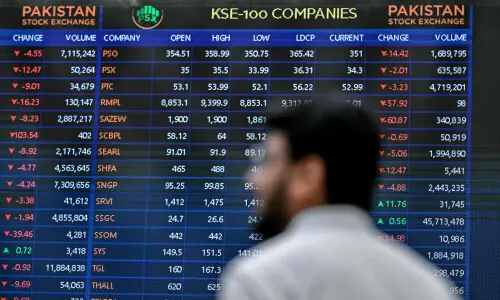
KARACHI: After two bullish weeks, bears returned to the Pakistan Stock Exchange (PSX) as tensions in the Strait of Hormuz and a surge in oil prices amid stalled US-Iran talks dented investor confidence and heightened economic concerns.
The benchmark KSE-100 index ended the week lower, though a strong rally in the final session helped to trim losses. The late recovery was driven by speculation surrounding a visit by Iran’s foreign minister, which some investors initially interpreted as signalling a possible resumption of negotiations between Washington and Tehran.
Arif Habib Ltd (AHL) reported that the index closed at 170,672 points, down 3,267 points, or around 1.88pc, over the week. The market remained under pressure due to delays in a second round of US-Iran negotiations, despite an extension in the ceasefire reportedly secured at Pakistan’s request.
According to Topline Securities Ltd, the market’s downturn reflected heightened geopolitical risks. The deadlock between the US and Iran triggered broad-based selling across key sectors, including banking, fertilisers, and oil and gas exploration.
Hormuz crisis, oil surge spook banking and energy stocks
Global equity markets also weakened as tensions around the Strait of Hormuz disrupted supply routes and pushed oil prices higher. Brent crude rose 3.2pc over the week to settle at $104.8 per barrel, exacerbating inflationary concerns for oil-importing economies such as Pakistan.
The average daily traded volume stood at 1.2 billion shares, while the average traded value was Rs46bn. Individuals emerged as major buyers, with net purchases of $14.6m. In contrast, foreign corporates and insurance companies were significant sellers, offloading equities worth $12.5m and $11.9m, respectively.
AKD Securities Ltd noted that investor risk appetite weakened amid renewed diplomatic friction. However, sentiment improved towards the end of Friday’s session following confirmation that Iranian Foreign Minister Abbas Araghchi would visit Pakistan over the weekend, raising hopes of renewed engagement.
The US president’s decision earlier in the week to extend the ceasefire indefinitely also helped avert a sharper sell-off, keeping expectations of a potential resolution alive.
On the macroeconomic front, several developments provided some support. Pakistan received the final $1bn tranche of Saudi Arabia’s $3bn support package and repaid $3.45bn to the UAE against maturing deposits, meeting its external obligations on time.
Meanwhile, the State Bank of Pakistan’s foreign exchange reserves rose by $18m week-on-week to $15.1bn as of April 17. The rupee remained largely stable, appreciating marginally by 0.02pc to close at Rs278.85 against the dollar.
Pakistan raised an additional $250m by exercising a greenshoe option, bringing the total size of its latest Eurobond issuance to $750m, after a four-year gap.
The World Bank also reclassified Pakistan from the South Asia region to the Middle East, North Africa, Afghanistan and Pakistan (MENAAP) grouping, effective from fiscal year 2026.
On the economic data front, gas production fell 3.1pc week-on-week to 2,962mmcfd in the second week of April, primarily due to reduced output from Uch and a shutdown at Shewa. Oil production declined 1.1pc to 66,838 barrels per day, reflecting lower output from Makori East and Kunar Pasakhi Deep fields.
Repatriation of profits and dividends dropped 35.1pc year-on-year to $102.4m in March, although it rose sharply on a monthly basis. For the first nine months of FY26, repatriation increased 3.4pc to $1.78bn.
Sector-wise, textile weaving, refinery, and synthetic and rayon sectors posted gains, while jute, pharmaceuticals, and cement stocks lagged behind.
Analysts expect market direction to remain closely tied to developments in US-Iran relations. The ongoing corporate earnings season and the upcoming monetary policy decision are also likely to influence near-term sentiment.
Despite recent volatility, valuations remain attractive. The market is currently trading at a price-to-earnings ratio of around 8.3 times, with a dividend yield of approximately 6.3pc, offering some support to investors.
AKD Securities projected that a constructive geopolitical outcome could act as a key catalyst for recovery, adding that the index could reach 263,800 points by December if stability improves.
Published in Dawn, April 26th, 2026