Punjab’s residents left reeling amid hours-long loadshedding
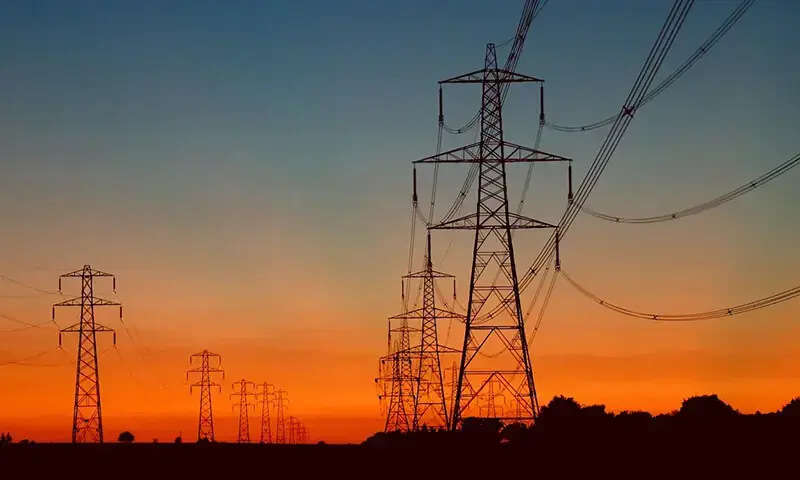
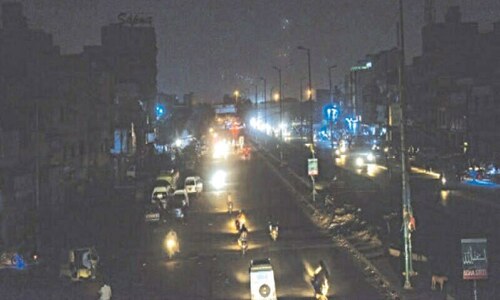
LAHORE: Widespread loadshedding has been reported in urban and rural areas across Punjab as distribution companies (Discos) grapple with an increasing gap in supply and demand.
The situation is reported to be worse in rural areas, especially those covered by the Multan Electric Power Company (Mepco), where, at present, discos are observing loadshedding on an hourly basis and up to 16 hours in some areas.
“We cannot even sleep at night due to the loadshedding being observed by Mepco these days,” said Imran, a villager in Muzaffargarh district.
“We are experiencing 12 to 16 hours of loadshedding almost daily,” he said, complaining that the Mepco area office had no words to justify their position.
Tahir, a villager from Khanewal district’s Kabirwala area, said that loadshedding was being observed for up to six to eight hours in his area.
“This has started all of a sudden, as the situation was not bad five to six days ago,” he said.
“We are experiencing loadshedding for four hours daily these days in our urban area,” said Rehan, a resident of Faisalabad.
“But the situation in rural areas is not good in terms of uninterrupted power supply,” he added.
Aziz, a resident of Lahore, also complained about three to four hours of loadshedding. Similarly, Anwar, a resident of Kasur’s rural area, also reported five to eight hours of loadshedding over the past few days.
“No one from the Lahore Electric Supply Company (Lesco) is telling us the actual situation,” he deplored.
Similar reports were received from regions covered by the Gujranwala Electric Power Company (Gepco).
However, speaking to Dawn, a spokesperson for Lesco dispelled the impression of loadshedding in the provincial capital, stating there was almost no shortfall in Lahore.
“Till 2:30pm, our total demand was 2,104 megawatt while allocation was 2,150MW. Our draw was 2,009MW, which means we only have a shortfall of just 95MW,” the spokesperson said.
She said the areas from where loadshedding was being reported had witnessed scheduled power shutdowns observed due to repair or maintenance work.
The spokesperson further said that loadshedding was also observed in areas that fell in the service jurisdiction of high-loss feeders — where power theft is often reported.
“In these areas, loadshedding is being observed under a policy matter to discourage and control power theft,” she said.
When contacted, a senior official of the Petroleum Division, who wished to remain anonymous, said the gas supply to the gas-fired power plants had been curtailed considerably.
“Qatar has already told us that there will be no liquefied natural gas (LNG) cargoes for Pakistan till May 9. So while we have no LNG, how can we give gas to power plants?” the official questioned.
He added that at present, only 90 million cubic feet per day (mmfcd) of gas (from the system/indigenous gas) was being supplied to the power sector. He said this would increase to 160mmfcd in May in Punjab.
According to him, there was also no gas for the fertiliser sector at the moment and the supply would resume in May.
“Planning is underway to close down gas supplies to the compressed natural gas sector next month,” he said.
Responding to a question, the official said there was no gas loadshedding in the domestic sector as supply was being ensured during cooking hours.
Meanwhile, the Islamabad Electric Supply Company said there had been a “temporary reduction” in electricity generation due to the recent global fuel crunch, due to which “load management is being done for equal durations in rural and urban areas” when required.