NA body tells K-Electric to minimise loadshedding
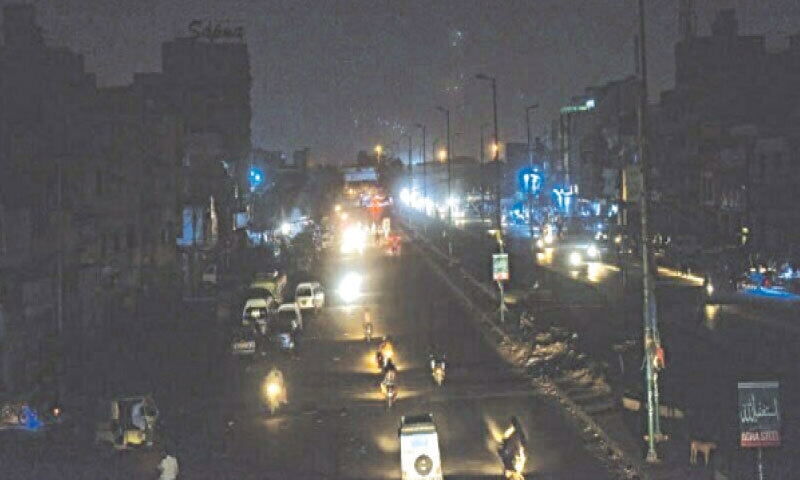

KARACHI: National Assembly’s Standing Committee on the Power Division has expressed its strong dissatisfaction with K-Electric’s discriminatory loadshedding patterns, terming the practice of collective punishment in areas with theft problems ‘unacceptable’.
The committee’s panel led by Muhammad Idrees, stressed that bill-paying customers should not be punished for electricity theft by others within their areas. It urged the sole power utility in the metropolis to use advanced technology to curb theft and ensure an uninterrupted power supply for compliant areas.
The committee highlighted that unreliable power supply by power utilities was undermining efforts to improve the power distribution, and that vulnerable populations suffered the most.
It said that while the Benazir Income Support Programme supports over nine million families nationwide, power outages affect not just people’s lives but also access to basic necessities such as healthcare and education.
Asks for action plan within 30 days to put anti-power theft technology in place; says penalising bill-paying consumers through outages is unacceptable
According to a press release, the standing committee directed the KE to submit a comprehensive action plan within 30 days to reduce loadshedding for bill-paying consumers and to hold quarterly follow-up meetings to monitor progress.
The power utility was asked to consider launching a pilot project using tamper-proof cables in selected union councils to counter the widespread kunda (hooks used to steal electricity) system and assess its effectiveness for citywide implementation.
The committee established three non-negotiable priorities: eliminating discrimination against paying consumers through fair load-management policies; ensuring 24-hour supply to compliant consumers instead of collective punishment; and deploying advanced technologies to systematically eliminate electricity theft.
The meeting underscored the critical link between reliable electricity access and Pakistan’s broader development objectives, particularly its impact on economic opportunities, education, healthcare and water supply for low-income households.
During the meeting, KE sought legislative support to criminalise electricity theft by converting an existing ordinance into a permanent law.
The power utility officials said that electricity theft affected every honest consumer in Karachi, and that a robust legal framework with meaningful penalties was needed.
The committee said that the National Assembly would prioritise electricity theft criminalisation legislation. It pledged unwavering support for anti-theft legislation while demanding immediate accountability from the power utility.
The company presented its infrastructure achievements, noting that transmission capacity had expanded from 200MW to over 500MW, and interconnection capacity with the National Grid had been enhanced to over 2,000MW with federal government support.
The committee members present at the meeting included Babar Nawaz Khan and Sanjay Perwani, while Chaudhry Naseer Ahmed Abbas joined the meeting through a video link. Power Division Additional Secretary Mahfooz Ahmed Bhatti also attended the meeting.
The KE officials present at the meeting were Chief Distribution and Marcomms Officer Sadia Dada, Chief Financial Officer Aamir Ghaziani, Chief Regulatory Officer Imran Qureshi and Chief Generation and Transmission Officer Abbas Hussain.
KE Chief Executive Officer Moonis Alvi could not attend the meeting as he is reported to have been out of the city.
Published in Dawn, January 30th, 2026