ISLAMABAD: Ministers of finance and central bank governors of developing countries will launch the ‘Borrowers’ Platform’ to improve their debt management capacity in Washington on April 15, during the IMF-World Bank Spring meetings.
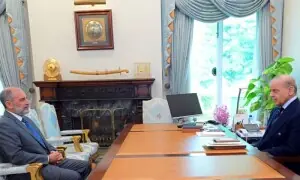
Finance Minister Muhammad Aurangzeb and Egyptian Finance Minister Ahmed Kouchouck will jointly preside over the launching of the platform, to be held at the United Nations Foundation.
The launch comes amid rising debt pressures across developing countries. To mark this historic occasion, UN Secretary-General Antonio Guterres will attend the platform’s launch. The initiative is member-state-led, with the United Nations Conference on Trade and Development (UNCTAD) serving as the secretariat.
The platform addresses a gap in the international financial system, where developing countries remain under-represented while creditor coordination has expanded, UNCTAD says.
Pakistan and Egypt lead Borrowers’ Platform launch
The platform will open a new space for cooperation on debt. A key, long-recognised gap is the lack of a dedicated platform for cooperation among borrowers to elevate their collective voice, safeguard their interests and share knowledge.
In June last, UN Secretary-General’s Expert Group on Debt had proposed establishing a borrowers’ platform as one of its recommendations.
The idea took shape in the ‘Sevilla Commitment’, adopted by member states at the Fourth International Conference on Financing for Development in July 2025. An initial working group, comprising Egypt and Pakistan (chair and vice-chair), along with Colombia, Honduras, Maldives, Nepal and Zambia, developed draft modalities outlining the platform’s objectives, governance and participation.
The platform will strengthen South-South cooperation and knowledge-sharing; provide technical and advisory support to borrowing countries; improve representation in global financial and debt discussions; enhance debt transparency and public debt management; support sustainable financing and development outcomes; and send a positive market signal by strengthening debt-sustainability practices and improving data.
UNCTAD says debt servicing costs in developing countries have soared over the past decade, squeezing their public finances and forcing them into tough trade-offs. As more revenue goes to debt repayments, less is available for public services and climate action.
Developing countries’ external debt burden reached $11.7 trillion in 2024. In 2024, they spent almost 10 per cent of government revenue on interest payments to creditors abroad. Least developed countries pay nearly a quarter of their revenue to external creditors. 54 countries, home to 3.4 billion people, now spend more on debt than on health or education.
According to UNCTAD Secretary-General Rebeca Grynspan, 3.4 billion people deserve better outcomes. They are not asking for charity. They want a level playing field where finance enables development rather than constraining it.
For decades, developing countries have faced debt challenges arising not only from country-specific circumstances but also from structural weaknesses in the global financial architecture. Creditor-driven coordination and negotiation mechanisms have been insufficiently responsive to borrowers’ collective needs, UNCTAD says.
Published in Dawn, April 12th, 2026