Strict controls announced ahead of wheat procurement in Sindh
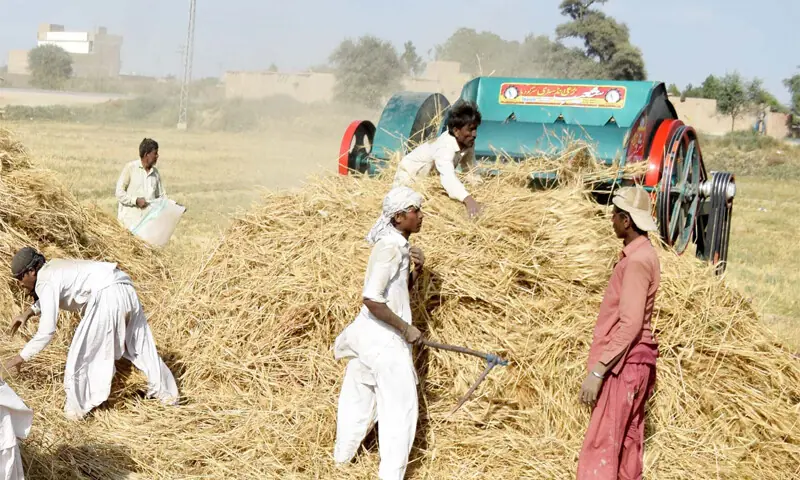

HYDERABAD: The Sindh food department has notified ‘Wheat Procurement Policy Guidelines Crop 2025-26’ as it is set to establish procurement centres to purchase the commodity.
The Sindh cabinet on Tuesday approved the policy for the Rabi 2025–26 season, setting a target of one million metric tonnes to ensure food security and maintain price stability across the province.
The cabinet fixed the indicative wheat price at Rs3,500 per 40kg, in line with international parity and estimated import costs. To promote transparency and directly benefit genuine farmers, the procurement will be limited to the growers (over 332,000) registered under the ‘Sindh Wheat Growers Support Programme’, who had earlier received DAP fertiliser subsidy.
According to the policy guidelines, the farmers who have benefited from the programme at the notified wheat procurement centres (WPCs) would be able to receive the support price, inclusive of the cost of 50kg polypropylene bags.
Cabinet approves policy guidelines; verification for subsidy disbursement to be done through Benazir Hari Card for a first time; no tainted official to be posted as in-charge of godown
The crop will be purchased at the average standard weight of 50kg plus bardana weight preferably of 0.115kg.
The WPC in-charge will prepare and maintain a weekly register of farmers from whom wheat has been procured during the preceding seven-day period and this record includes full name and parentage of grower, CNIC, active contact information, precise location of the deh where verified wheat cropped area is situated and exact quantum of wheat procured.
The small farmers having 1-25 acres of landholding were given cash subsidy by Sindh government through the Benazir Hari Card whose applicability during current wheat procurement would also be seen for the first time.
Such cash subsidy was disbursed through the card in farmers’ bank accounts. Cash disbursement of a DAP and two bags of urea per one acre each was made through the card. Now the support price would be offered while using this card.
Revamping of food dept
Commenting on the use of the card in the process, Sindh Food Minister Makhdoom Mehboob Zaman told Dawn: “It is being done in line with the government’s plan to revamp the food department”. He did not explain why such revamping was not done over the last 18 years.
Mr Zaman heads the cabinet committee on food department. “The committee will be submitting its findings to the Sindh cabinet with regular intervals,” he said.
The guidelines required district food controller (DFC) to certify that bardana (gunny bags) meets the required quality standards and it should not be old or torn.
A benchmark of 10pc moisture in wheat crop is fixed as fair average quality for procurement from farmers and the WPC in-charge would check the moisture using the relevant meter.
Substandard, damaged, weevilised or contaminated wheat (containing dust dirt or straw) has been strictly prohibited and if accepted, the in-charge and DFC will be held responsible.
Stock safety measures
The policy guidelines called for storing wheat properly keeping in view the safety and security of wheat stocks. Cleanliness of godowns will be ensured with fumigation and spray to store newly-procured stocks. Entire space available in official godowns would be utilised and private godowns will be hired to store maximum wheat stocks in covered accommodations, at the rate approved by the respective rent assessment / procurement committees.
WPC in-charges will choose a place for storage of wheat and intimate the DFC concerned, who in turn will inspect the place.
Tainted staff barred
The guidelines clarified that the field staff already found involved in misappropriation / shortage / defalcation will not be posted as WPC in-charge subject to the availability of requisite staff. No advance payments will be made under any circumstances.
In case of misappropriation or shortage, the centre in-charge and DFC will be held equally responsible and severally liable.
Checks and balances
All storage and enforcement officers / assistant accounts officer / regional audit officers will check procured stock, as well as the payments made to growers as envisaged in the Wheat Policy 1984-85. During the procurement campaign, flour mills shall only be allowed to purchase and store specific quantities of wheat notified by the food department at declared godowns for manufacture / production of wheat byproducts and will not be allowed trading of wheat. Mills will declare the stocks purchased to the DFC concerned.
Monitoring & controls
In order to have a correct idea about wheat stocks available in private sector, flour mills and stockists, bearing the Food Grain Licence, will be bound to share quantity of wheat stock available with them under the Sindh Essential Commodities Price Control and Prevention of Profiteering and Hoarding Act, 2005; the Sindh Foodstuffs (Control) Act, 1958; the
Sindh Foodgrains (licensing Control) Order, 1957; and the Sindh Flour Mills (Control) Order, 1959.
Published in Dawn, April 1st, 2026