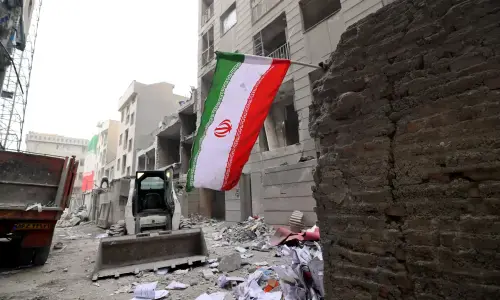
WITH a catastrophic war raging on the nation’s borders, it is imperative that the civilian and military leadership continue to consult each other and other stakeholders in order to steer Pakistan through these stormy waters.
On Thursday, with the US-Israeli war on Iran on the agenda, President Asif Zardari chaired a high-level meeting of the nation’s top officials to discuss a way forward. The moot was attended by the prime minister, chief of defence forces, key cabinet ministers and the PPP chief. The meeting stressed the need for “national consensus and public awareness” related to the challenges spawned by the aggression.
As a neighbour of Iran, and located at a stone’s throw from the Gulf, Pakistan is especially vulnerable to the fallout of this conflict, as well as the shockwaves that are shaking the global economy. Of particular concern to those in attendance were Pakistan’s economic and energy security issues. Such consultations should continue, particularly if the conflict drags on.
In fact, parliament should play a more active role, with lawmakers briefed on the evolving situation. In the past, parliamentary consultation has proved successful in shielding the country from geopolitical storms. The Yemen quagmire — in which Arab states wanted Pakistan to participate in the anti-Houthi campaign — is a case in point. The legislature wisely advised against stepping into the Yemeni imbroglio.
In a similar vein, Pakistan should try and avoid being pulled into offensive operations against Iran. Tehran’s attacks on its Gulf neighbours are indeed unwise and complicate matters. But Pakistan cannot afford to get sucked into the Gulf vortex, and risk its fragile internal stability. The Gulf states are Pakistan’s friends and allies, and the country must do all it can to support them; sending surplus food supplies to help them tide over the crisis is one example of what can be done. At the same time, Iran, too, has deep cultural and historical links with this country; getting involved can negatively affect Pakistan’s internal sectarian dynamics.
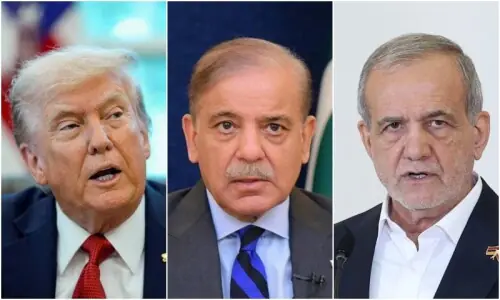
Therefore, Pakistan should try and stay neutral. The path this country is currently pursuing — trying to find a diplomatic off-ramp — is the best available option. Pakistan is in a unique position; it enjoys a measure of trust with Iran, while its ties with the Arabs, particularly the Saudis and the UAE, are excellent, even though greater clarity is needed on the mutual defence agreement signed with Riyadh last year. Meanwhile, the Trump administration has exhibited a marked liking for Pakistan’s current civil and military leadership.
Pakistan cannot be expected to work miracles to end this brutal conflict. But it can surely act as a facilitator to help all belligerents reach a peaceful and just settlement.
Published in Dawn, March 28th, 2026