
IT is impossible as a Pakistani not to marvel at this moment. At a time when the world order has been shaken at a speed that challenges belief, Pakistan’s military and civilian leaders have accomplished a remarkable recasting of the country’s role in the world.
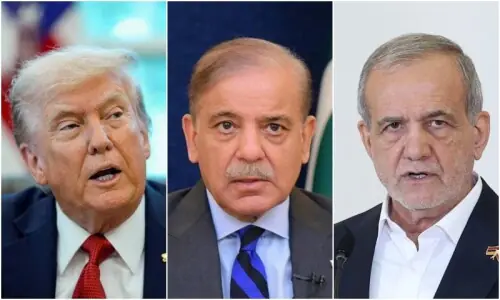
In a milieu where everyone is fighting — Iran against the US and Israel, the GCC countries being dragged into the conflict — Pakistan has offered to act as a peace broker. As a first effort, it delivered a 15-point US peace plan to Iran — publicly rejected but said to be still under unofficial review.
Pakistan’s emergence as a potential peacemaker reflects a new vision for its global and regional role — one that has been created by the collective effort of the country’s civilian and military leadership. It deserves to be commended because it reveals a recognition of and capitalising on stark new global realities. The first of these is a worldwide trend towards militarism.
Last year, global military spending reached a record $2.63 trillion, driven largely by Europe, which saw a sharp increase of 21 per cent. This increase is notable because it parallels a recession in the relative influence of international law. In stark terms, it means that countries have assessed the changing global order and decided — at least in monetary terms — to put their faith in weapons.
Pakistan’s role as potential peacemaker is quite a feat.
Central to this has been the reduced influence of transnational institutions like the UN, created to prevent precisely such arms races.
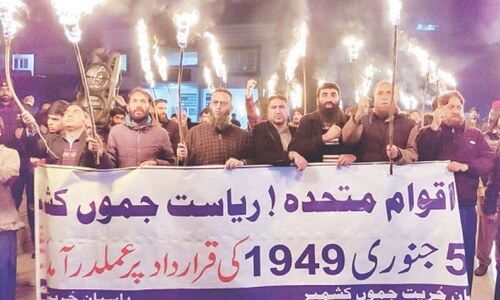
Pakistan is well situated to take advantage of this new trend in the world order. Historically, it has had to rely on militarism to survive in an inhospitable environment. International law, including UN resolutions mandating a Kashmir referendum, has never delivered on promises such as the plebiscite.
Despite Pakistan raising the issue again and again at the UN, little has been achieved over the decades. Indian aggression meant Pakistan had to invest in weapons even as its own population endured huge privations because of massive defence spending.
The twin realities — the failure of transnational institutions to provide security and the necessity of weaponisation — are reflected in Pakistan’s long familiarity with the conundrums confronting the rest of the world. This makes Pakistani diplomats and military leadership uniquely qualified to offer insight in making sense of the world.
Militarism may not be the ideal basis for the governance of any country, but pragmatism dictates its selection when it guarantees survival.
It is no small irony that Pakistan’s role as peacemaker in West Asia rests on its identity as a heavily militarised state. It is impossible not to note that the war on Iran, at least in the American telling, centres on the claim that Iran was close to developing nuclear weapons. Iran denies this, though internal debates have existed about pursuing such capability. Undoubtedly many in Iran — facing the onslaught of US and Israeli bombing — now wish such capability had been developed as a deterrent.
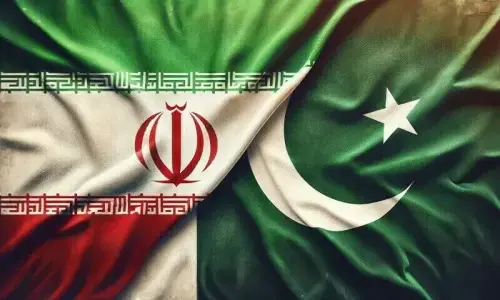
Then there is the fact that Pakistan — because of its geography and strategic importance — is accustomed to juggling complex relationships with global powers. Since the Soviet invasion of Afghanistan in 1979, its foreign policy has resembled an acrobat juggling multiple rings of fire. Unlike some other countries, Pakistan maintains close ties with China while also engaging with America.
As it happens, the very complexity of Pakistan’s foreign policy — managing relationships with powers that have divergent interests — has now become its greatest ability.
It is impossible to predict the outcome of the conflict. However, as the past year and the dramatic shifts in the world order suggest, conflict and war will be constant realities of the future. Fundamental questions, whether the petro-dollar will survive, whether the US or China will win the AI race, and what will replace the post-World War II liberal order, will not be resolved quickly.
Pakistan’s emergence as peacemaker rather than pariah state is a remarkable feat of foreign and military policy, one that capitalises on the harsh realities of existence.
The outcome of the ‘mediation’ remains unknown, but positioning itself at the centre of global relevance reflects commendable statecraft and leadership. Whether or not Pakistan is able to assist in resolving this conflict, its emergence as a state that helps rather than hurts the possibility of peace is a significant achievement in itself.
The writer is an attorney teaching constitutional law and political philosophy.
Published in Dawn, March 28th, 2026