DPM Dar says US-Iran ‘indirect talks’ taking place through messages being relayed by Pakistan
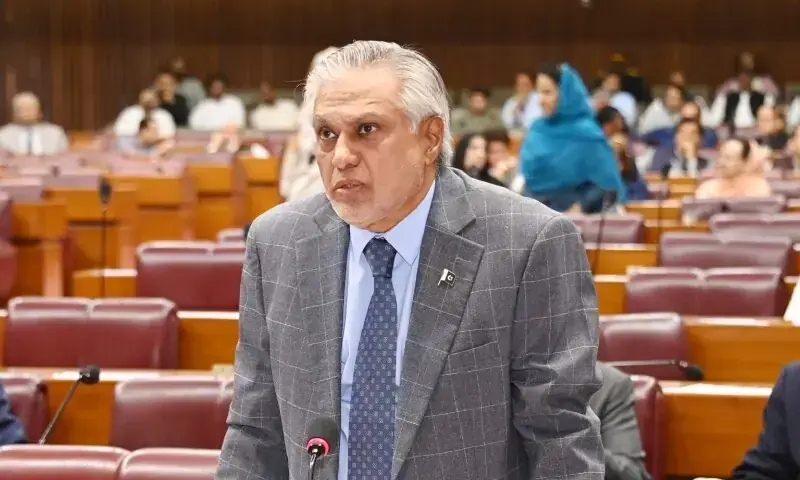


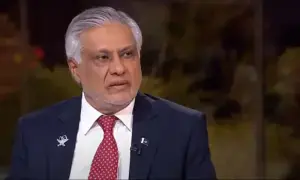
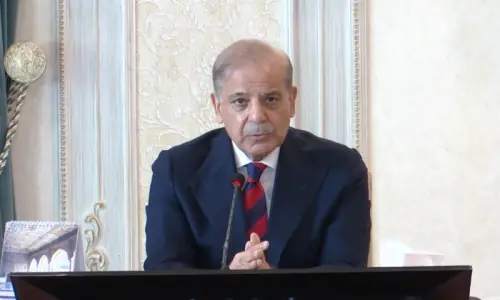
Deputy Prime Minister and Foreign Minister Ishaq Dar on Thursday said that US-Iran “indirect talks” were taking place through messages being relayed by Pakistan.
“There has been unnecessary speculation in the media regarding peace talks to end ongoing conflict in the Middle East,” he said in a post on the social media platform X.
“In reality, US-Iran indirect talks are taking place through messages being relayed by Pakistan. In this context, the United States has shared 15 points, being deliberated upon by Iran,” he said.
“Brotherly countries of Turkiye and Egypt, among others, are also extending their support to this initiative,” he said.
“Pakistan remains fully committed to promoting peace and continues to make every effort to ensure stability in the region and beyond,” he said, adding that dialogue and diplomacy were the only way forward.
He also tagged US Secretary of State Marco Rubio, Iran’s Foreign Minister Abbas Araghchi and US President Donald Trump’s Middle East Envoy Steve Witkoff in the post.
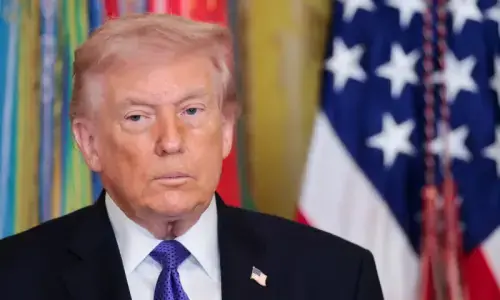
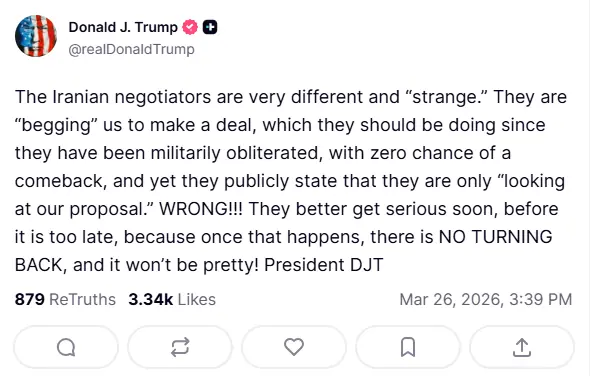
Shortly after Trump took to his Truth Social platform to say Iranian negotiators were “begging” for a deal despite what he described as having been “militarily obliterated.”
“They better get serious soon, before it is too late, because once that happens, there is NO TURNING BACK, and it won’t be pretty,” he said.
The developments come a day after an acknowledgement of Pakistan’s role in backchannel diplomacy between the warring sides, as Iranian officials confirmed that Pakistan had passed on a proposal from the US to Iran for ending the war.
This seemed to be a reference to the ‘15-point plan’ that Trump had referred to a day earlier. Although its contents were not officially disclosed, as per Israel’s Channel 12, it centred around stopping Iran from building nuclear weapons, limiting its missile programme in range and quantity, stopping its support for Hezbollah in Lebanon, Hamas in Gaza and the Houthis in Yemen, as well as reopening the Strait of Hormuz so it could function as a “free maritime corridor”.
In exchange, the plan promised the lifting of all sanctions on Iran, and international assistance in developing its nuclear capacity for energy production.
However, Iran’s state-run Press TV reported on Wednesday that Tehran had “responded negatively” to the American proposal, citing a senior political-security official.
“The official with knowledge of the details of the proposal… said Iran will not allow US President Donald Trump to dictate the timing of the war’s end,” it said.
“Iran will end the war when it decides to do so and when its own conditions are met,” the official said, outlining five conditions under which Tehran would agree to end the ongoing conflict.
These include: a complete halt to “aggression and assassinations” by the enemy; the establishment of concrete mechanisms to ensure that the war is not reimposed on the Islamic Republic; guaranteed and clearly defined payment of war damages and reparations; the conclusion of the war across all fronts and for all resistance groups involved throughout the region; and, international recognition and guarantees regarding Iran’s sovereign right to exercise authority over the Strait of Hormuz.
Meanwhile, Reuters reported that despite its initial negative response, Iran was still reviewing the US proposal and had not rejected it outright, citing an unnamed senior Iranian official.
Subsequently, White House Press Secretary Karoline Leavitt, in a briefing on Wednesday, said that talks were still on, and described them as “productive”.
Leavitt claimed that Tehran was seeking an “exit ramp” as their capacity to attack US and allied forces, as well as their ability to defend territory, is “dwindling, literally, hour by hour”.
“We are very close to meeting the core objectives of Operation Epic Fury and this mission continues unabated,” Leavitt said. However, she cast doubt on the draft of the 15-point plan being cited in media reports, saying: “The White House never confirmed that full plan. There are elements of truth to it, but some of the stories I read are not entirely factual.”
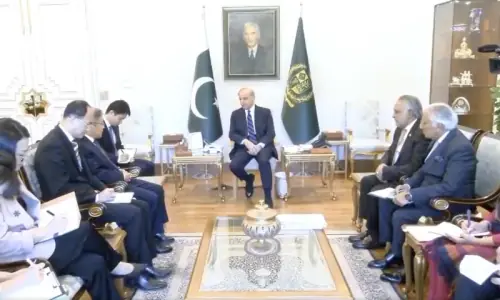
It should also be noted that Prime Minister Shehbaz Sharif on Tuesday said Pakistan stood “ready and honoured” to host “meaningful and conclusive talks” between the US and Iran.
“Subject to concurrence by the US and Iran, Pakistan stands ready and honoured to be the host to facilitate meaningful and conclusive talks for a comprehensive settlement of the ongoing conflict,” he said on X, tagging Trump, Araghchi and Witkoff. The US president had also shared PM Shehbaz’s statement on his Truth Social platform.
Additional input from Reuters