Assets acquired during marriage subject to equitable distribution: Islamabad high court
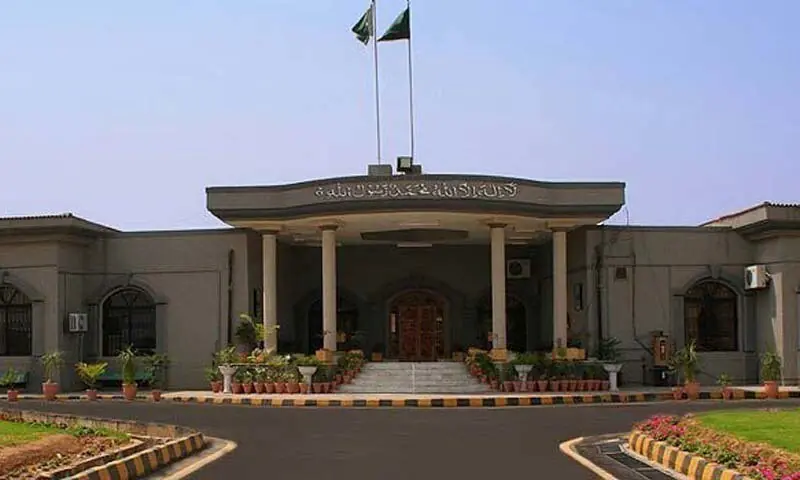

ISLAMABAD: In a landmark judgement, the Islamabad High Court (IHC) has ruled that all assets acquired during the subsistence of a marriage—whether movable or immovable and regardless of the title holder—constitute “matrimonial property” and are subject to equitable distribution between spouses.
Justice Mohsin Akhtar Kayani, while taking up a petition, emphasised that there should be no bias in favour of a “money earner” over a “home maker” or “child carer” when dividing marital assets.
The court observed that domestic labour and household management are economically significant contributions that facilitate the family’s wealth accumulation.
The ruling came in response to a writ petition filed by Amara Waqas, a former officer of the Pakistan Air Force, who challenged previous court orders regarding the recovery of her dowry and personal belongings.
While a trial court had granted her 30pc of the alternate value of her dowry, an appellate court had later set that relief aside entirely, citing a lack of “tangible evidence” such as receipts or parent testimony.
Justice Kayani set aside both the previous judgements, noting that the lower courts failed to appreciate the specific circumstances of working women. The court highlighted that professional couples in government service are frequently transferred, leading parents to provide cash assistance for household items rather than traditional, bulky dowry articles.
The petitioner’s bank statements further suggested her salary was consumed by joint family expenses, creating a presumption in her favour.
The IHC specifically addressed a Suzuki Cultus purchased during the marriage. Although the vehicle was in the respondent’s name, the court declared it matrimonial property, noting the petitioner had provided the “seed money” for its lease. The court concluded that the petitioner is entitled to at least a 50pc share in such joint assets.
Drawing on comparative jurisprudence from Malaysia, Indonesia, Turkey, and the United Kingdom, the court argued that marriage must be recognised as an economic partnership. The judgement also cited Quranic injunctions from Surah Al-Baqarah and Surah Al-Ahzab, asserting that Islamic law does not prohibit legislation aimed at shielding women’s property rights.
Furthermore, the court noted that Pakistan, as a signatory to the Convention on the Elimination of All Forms of Discrimination Against Women (CEDAW), is under an international obligation to eliminate property-related discrimination.
The IHC called for “serious legislative attention” to protect homemakers.
The court recommended amendment to the Nikahnama by creating a specific column in the marriage form to stipulate that property acquired after marriage be divided equally.
The court also recommended educating girl children to utilise Column 18 of the current Nikahnama to secure their proprietary rights and initiating laws that recognise a wife’s domestic labour as a contribution to marital assets.
Published in Dawn, March 25th, 2026