UK bans Al Quds march over alleged Iran support


 0
0

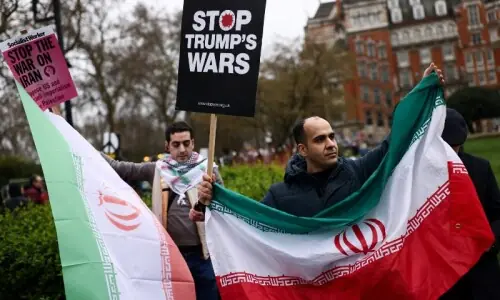
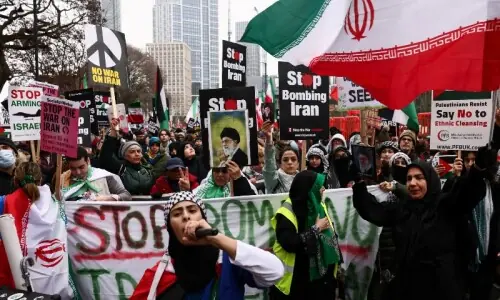
LONDON: The UK government has banned an annual pro-Palestinian march planned for Sunday which London police claim is organised by a group “supportive of the Iranian regime”.
Interior minister Shabana Mahmood said on Tuesday she had approved the rare police request to prevent “serious public disorder” if the Al Quds Day march and counter-protests had gone ahead.
It is the first time a protest march has been banned since 2012 but a static demonstration will be permitted, according to London’s Metropolitan police. Mahmood said she was “satisfied” a ban was “necessary” due to “the scale of the protest and multiple counter-protests, in the context of the ongoing conflict in the Middle East”.
The minister added that she expected to see “the full force of the law applied to anyone spreading hatred and division”.
The Islamic Human Rights Commission (IHRC), an NGO which organises the annual Al Quds Day march, said it “strongly condemns” the decision, which it called “politically charged”.
“We are seeking legal advice and this decision will not go unchallenged,” it added, accusing the Met of having “brazenly abandoned their sworn principle of policing without fear or favour”.
It said the London force “unashamedly regurgitate Zionist talking points about the IHRC “without a shred of evidence”.
The group describes the day and march as an “international demonstration … in support of Palestinians and all the oppressed around the world”.
‘Unique risks’
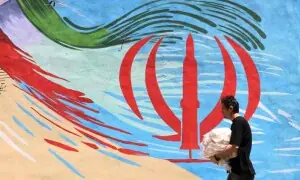
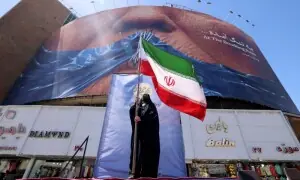
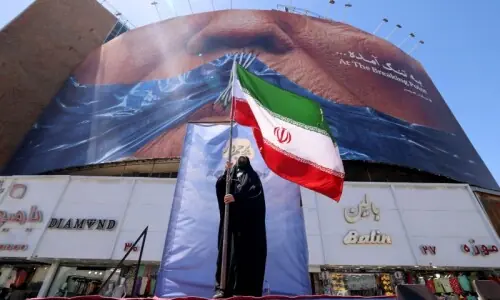
Al Quds day, which takes its name from the Arabic for Jerusalem, originated in Iran in 1979 in support of the Palestinian people, and is now marked annually in various countries, notably in the Muslim world. It aims to protest Israel’s occupation of east Jerusalem.
But the Met’s Assistant Commissioner Ade Adelekan said it was “uniquely contentious having originated in Iran and in London is organised by the Islamic Human Rights Commission”.
He claimed that the organisation was “supportive of the Iranian regime”.
“The threshold to ban a protest is high and we do not take this decision lightly,” Adelekan said.
He noted the Met has “a proven track record” of permitting free speech and protest rights at dozens of major pro-Palestinian and other demonstrations in recent years.
“But in our assessment this march raises unique risks and challenges,” he said.
“We must consider the likely high numbers of protestors and counter protestors coming together and the extreme tensions between different factions.
“We have taken into consideration the likely impact on protests of the volatile situation in the Middle East, with the Iranian regime attacking British allies and military bases overseas.” The ban on the march and any associated counter-protest marches is valid for a month from Wednesday.
Public disorder
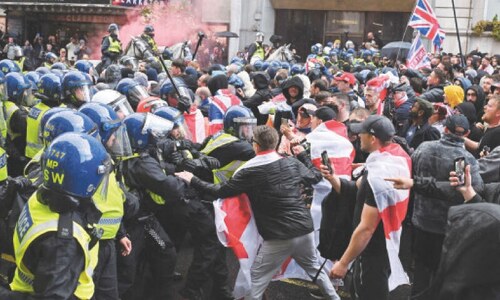
The threshold to ban a protest is high in Britain, with the police saying this was the first time the power had been invoked in 14 years, but the risks of public disorder were “so severe” it was right to block it. The ban also applies to any counter-protest marches.
Police said that previous Al Quds marches have resulted in arrests for supporting terrorist organisations and anti-Semitic hate crimes, and said that even with the ban in place they were facing a “challenging, potentially violent weekend”.
“We have taken into consideration the likely impact on protests of the volatile situation in the Middle East, with the Iranian regime attacking British allies and military bases overseas,” the police statement published late on Tuesday said.
“We must also consider that the security services have been publicly clear about the threats we are facing on UK soil from the Iranian regime.”
British police have faced heavy scrutiny of their handling of regular, large pro-Palestinian protests in London.
Published in Dawn, March 12th, 2026