0
0

• Pried analysis says NDCs ‘only pay lip service’ to fossil fuel phase-out in energy sector
• Experts warn carbon capture technology is very expensive, call it a ‘global distraction effort’
• Highlight indigenous carbon removal options amid scalability concerns
ISLAMABAD: Pakistan’s climate action plan, submitted to the United Nations before COP30 in Brazil, lists controversial ‘Carbon Capture Utilisation and Storage’ (CCUS) technology as one of the approaches to address climate change and decarbonise, in line with the 2015 Paris Agreement.
The Nationally Determined Contributions (NDCs) are submitted to the United Nations Framework Convention on Climate Change (UNFCCC) by all countries, outlining their ambition to decarbonise economies.
In its NDCs, Pakistan pledged to halve carbon emissions by 2035. At least 33pc of this commitment is conditional on international financing. For this task, Pakistan “requires $565.7 billion”, the document says.
These climate goals were prepared through a “participatory, open and transparent approach”, according to the government, but they have come under scrutiny for “carbon-intensive steps” and the absence of concrete measures to address the phaseout of fossil fuels — a major driver of climate change.
In its analysis, the Islamabad-based think tank Policy Research Institute for Equitable Development (Pried) said the “open and transparent” approach did not reflect in the final NDC document, adding that the NDCs paid “only lip service to the elimination of fossil fuels in the energy sector”.
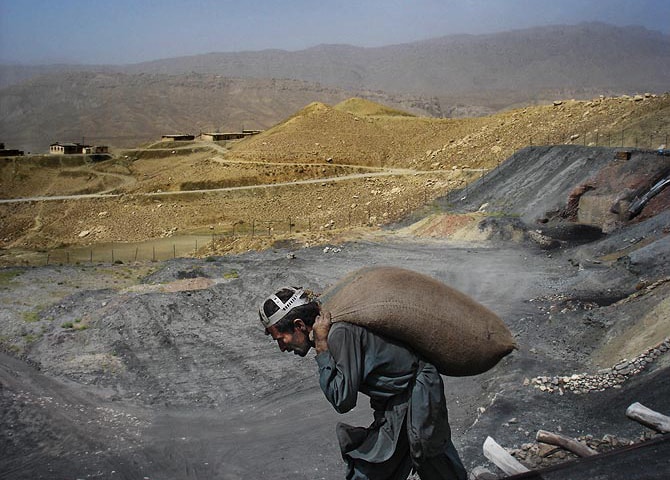
Though the NDCs proudly celebrate the moratorium on imported coal power plants, local coal remains the cornerstone of Pakistan’s energy policy, and costly technologies, such as CCUS, are an attempt to perpetuate the use of fossil fuels, experts say.
CCUS is a “global distraction effort” whose “efficacy is questionable, and its financial rationale is worse”, according to the Institute for Energy Economics and Financial Analysis (IEEFA).
The Ministry for Climate Change did not respond to repeated requests for comment.
Better for coal than the environment?
Maria Rehman, climate policy analyst at Islamabad-based Climate and Weather Services, explained that CCUS is an engineering solution and comes under carbon dioxide removal (CDR). “It works by capturing carbon from industrial emissions and storing it in the ground, and requires advanced technology for implementation,” she noted.
Ammara Aslam, a climate change researcher at Pried, argued that CCUS was featured in the NDCs because the government wanted to “continue using locally sourced coal for power generation in the name of energy security” despite available alternatives, such as solar and wind power.
IEEA’s Haneea Isaad argued that countries in Southeast Asia, like Japan and Malaysia, were looking at CCUS for prolonging the life of their coal and gas assets.
In the case of Pakistan, it may be “nearly impossible to consider an early phaseout” of Thar coal-based plants, as these plants rank at the top of the economic merit order due to strategic directives”, she said, adding that a phaseout of the imported coal fleet, however, would save billions.
For instance, the early retirement of the Sahiwal power plant could save up to $5 billion in “avoided capacity payments”, she noted.
Dr Muhammad Faheem Khokhar, head of the Environmental Sciences Department at the National University of Science and Technology (Nust), said Pakistan did not want to phase out coal, but “wants to make it cleaner” to reduce its carbon footprint.
Rehman, however, opined that featuring the carbon capture technology in the NDCs could be linked to its relevance with Article 6 of the Paris Agreement related to achieving emission reduction targets through carbon markets.
She said the technology was not financially viable for Pakistan. Dr Khokhar agreed. He said cost of one tonne of carbon could range from $20 per tonne to $1000, depending on the nature of the technology.
“So, it’s roughly $20 per ton, plus additional transport and logistic costs… in a very ideal scenario so far… It does not involve storage,” he said, adding that merely capturing can go up to over $1000 “if you are focusing on just direct air capture”.
Despite its financial unviability, carbon capture technology is mentioned in the national climate goals because Pakistan is a “power-hungry country”, and a quest for a “rapid solution” has taken the country down this road.
Meanwhile, Aslam warned about the danger of reliance on locally sourced coal, particularly Thar coal, for its environmental costs. “Local coal still holds a 12pc share in annual electricity generated within the country, which is a low-quality lignite coal, causing three times as many emissions as the higher-quality imported coal,” according to Aslam.
Isaad said that Pakistan’s moratorium on imported coal-based power was officially instituted in 2021, but this excluded plants on local coal or those already in the pipeline, such as the Gwadar coal project.
“However, financing challenges with new capacity additions are quite significant in Pakistan, not to mention the surplus situation of the grid, so any new coal development does not seem likely,” she said, adding that the proposed use of CCUS against this backdrop “becomes even more complicated, especially when this technology is not deemed feasible” by experts.
Besides its economic costs, the CCUS has also been described by civil society as a false solution that would harm the environment in the name of climate action.
Available alternatives
According to the Nust professor, there are “cheap” carbon removal solutions available, which could remove carbon from the air, but he noted that their capacity was limited. He said his institute at NUST also introduced the idea of a CO₂ arrester to capture carbon dioxide from the air and from tailpipe emissions, besides introducing ‘carbon bins’.
Speaking about such projects, Rehman noted that it was an innovative approach tapping into alternative solutions, but the major concern was the economic feasibility, as this was also a technology-based solution. “CDR is necessary as emission reduction delays globally make overshoot inevitable.
However, on-ground realities of Pakistan must be considered to determine the feasibility of this tech,” the expert noted. Rehman favoured nature-based solutions for carbon removal. One such example is mangroves, which provide greater carbon storage as compared to other trees and are native to Pakistan’s southeastern coastline, she said.
These solutions, however, may ease the clean energy transition obstacles, according to experts, who added that phasing out fossil fuels was essential. “With the implementation of the Carbon Border Adjustment Mechanism, and the world shifting away from coal and setting its net-zero targets, our government needs to step up and formally announce a definitive, legally binding national coal phaseout date, which applies to both imported and indigenous coal,” said Aslam.
“Without these (decarbonisation) measures in place, Pakistan’s positioning for procuring and securing climate finance becomes weakened,” she warned.
Published in Dawn, March 4th, 2026