Pakistan ready to work with all nations for peace: president
• Warns security now includes cyber, hybrid threats and information challenges
• Urges dialogue over division, cooperation over conflict in volatile region
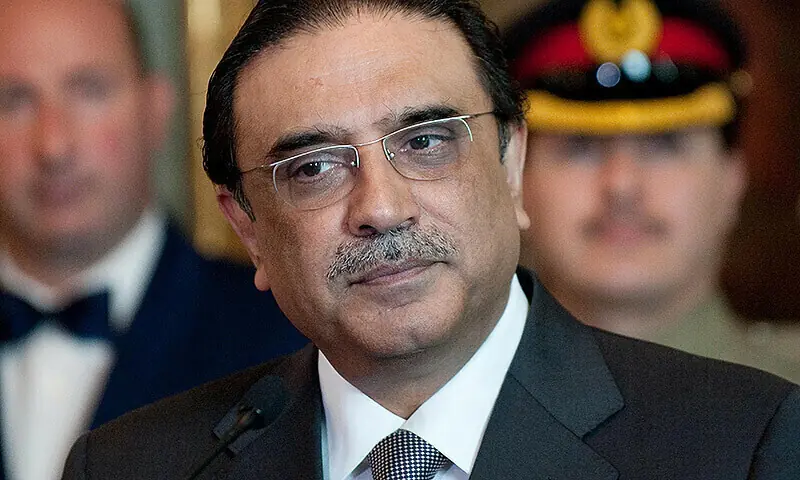
ISLAMABAD: President Asif Ali Zardari on Friday, highlighting the rapid changes facing the world, reiterated that, amidst these challenges, Pakistan stood ready to work with all nations to build understanding, peace and sustainable development.
The president expressed these views during an interactive session with participants of the 6th International Workshop for Leadership and Stability 2026. He felicitated the participants at the conclusion of the workshop, which was attended by around 100 individuals, including 69 from 49 countries.
Calling leadership and stability the pillars of nations and institutions, the president said the world was undergoing rapid transformation, marked by geo-political shifts, emerging security threats and the growing role of technology in governance.
“Security is no longer limited to conventional conflicts. It now includes cybersecurity, hybrid threats and information challenges. At the same time, climate change, resource scarcity and disinformation transcend borders, demanding collaborative solutions,” the president emphasised.
President Zardari urged participants to translate their discussions into real-world solutions, choosing dialogue over division and cooperation over conflict.
He commended the National Defence University (NDU) for organising the forum, saying such workshops bring together policymakers, diplomats, military officials, academics and private-sector leaders. He noted that these forums provide a valuable space to discuss leadership and stability.
“I hope these insights reach a broader audience across our institutions and society,” he said.
The president thanked the organisers, participants and NDU for making the workshop possible and expressed hope that the discussions would prove insightful, collaborations lasting and time spent meaningful.
Responding to questions, President Zardari said Pakistan was working closely with many countries in the region and was ready to strengthen its workforce through bilateral technological cooperation.
He emphasised the need to enhance interaction between Pakistan and Serbia, expressing Pakistan’s desire to expand collaboration between the two coun-tries’ think tanks, industries and academic institutions.
In response to another query, he said Pakistan and the world have no choice but to cooperate as all nations were interconnected and faced cross-cutting challenges.
President Zardari said the 18th Constitutional Amendment was designed to guide the nation towards a sustainable future, reflecting public sentiment and ownership of decisions regarding natio-nal resources.
“Pakistan believes that every country has its national interests. We do not encourage war and conflicts among nations; rather, we promote continuous dialogue to resolve issues. Our region is volatile, but I remain hopeful that no conflict will be triggered,” he said.
Referring to the Pakistan Peoples Party, he said the party believes in the vision of Benazir Bhutto to promote leadership among women and empower them by ensuring their due rights.
He paid tribute to the former prime minister for her vision and struggle for democracy, recalling his association with her and reaffirming his commitment to serving the masses, empowering women and strengthening Pakistan as a democratic society.
Earlier, in his welcome remarks, Director General of the Institute for Strategic Studies, Research and Analysis (ISSRA), Major General Muhammad Raza Aizad, thanked the president for providing workshop participants the opportunity to visit Aiwan-i-Sadr.
He said the workshop was also attended by 30 participants from Pakistan, representing various sectors including industry, business, think tanks, the military, academia and the media.
The workshop covered a wide range of topics, including the transforming global order, climate change, xenophobia, perception management, economic narratives, and the art and culture of Pakistan.
He added that participants would join a strong global network of more than 3,000 alumni after completing the workshop.
Published in Dawn, February 14th, 2026