Pakistan wants Washington to speak directly with Tehran
• FO backs Muscat dialogue, says Islamabad ‘ready to take part in any form of diplomacy’ on Iran
• Confirms PM Shehbaz, FM Dar will attend ‘Board of Peace’ meeting in Washington next week
• Pakistan ‘will stand by Muslim bloc to raise collective voice for Palestinians’
ISLAMABAD: Pakistan on Thursday urged the United States and Iran to move towards direct negotiations over Tehran’s nuclear programme.
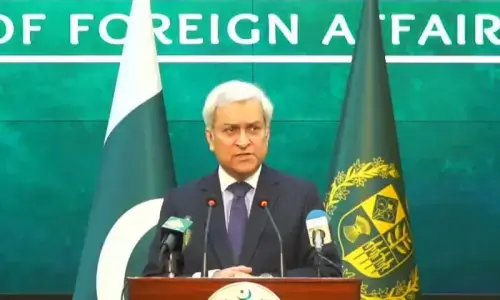
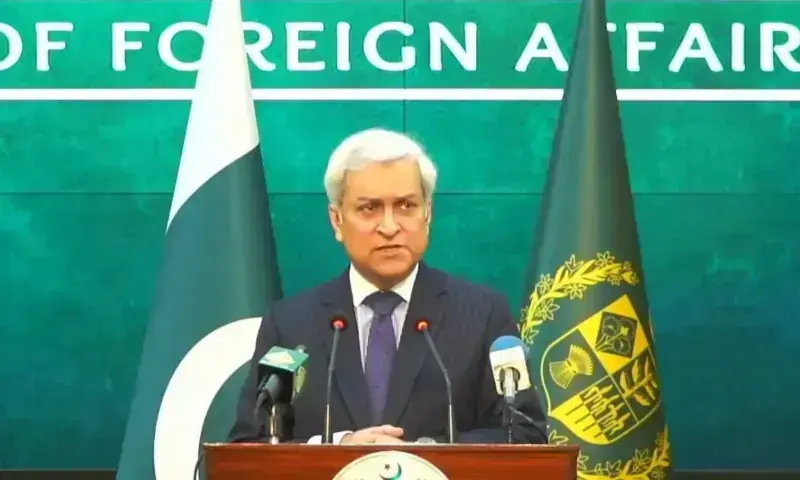
“Whilst we stand ready to participate in any format of dialogue and diplomacy on Iran, we encourage the relevant parties to have as direct a negotiation framework as possible,” Foreign Office spokesman Tahir Andrabi said at the weekly media briefing.
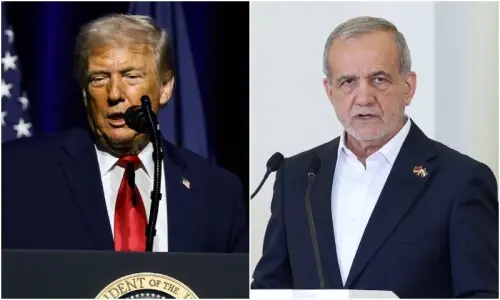
The indirect Iran-US talks took place in Muscat on Feb 6 amid heightened regional tensions, including an expanded US military presence and warnings from President Donald Trump of severe consequences if no deal is reached.
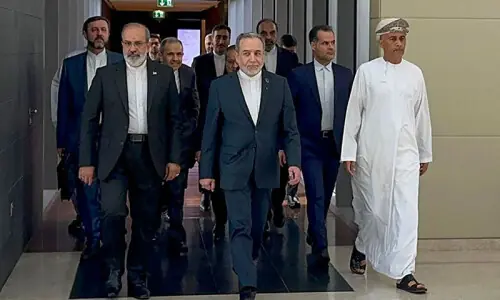
The session was mediated by Omani Foreign Minister Badr al-Busaidi, who shuttled between the two sides. Both sides described the discussions as a “good start”.
A follow-up visit by Ali Larijani, secretary of Iran’s Supreme National Security Council, took place in Muscat around Feb 9-10 to discuss next steps.
No date or venue has been formally announced for the next round of talks, though both sides have signalled their intention to continue discussions pending consultations in their respective capitals.
On Thursday, Mr Andrabi said Islamabad hoped the momentum generated in Muscat would continue. “We hope the positivity (in Oman talks) would be carried forward by the parties in the conduct of these talks,” he noted.
Diplomatic efforts
“Pakistan welcomes the talks in Oman between relevant parties. We support all initiatives of dialogue and diplomacy to settle
outstanding issues, including this question of nuclear talks,” Mr Andrabi said. He called the development “a positive progression towards a negotiated solution”. During the briefing, Mr Andrabi was asked specifically about Pakistan’s role in the Muscat process, but he did not directly address whether Islamabad had facilitated contacts or participated behind the scenes. However, he reiterated that Pakistan supports dialogue and would be ready to participate “in any format”, if requested.
Before Oman, talks between the US and Iran were originally slated to be held in Istanbul, where a host of regional players were also expected to take part. When Tehran asked for a change of venue and sought to limit the agenda of the talks, it also limited the scope for engagement by regional players, such as Turkiye, Saudi Arabia and Pakistan.
Diplomatic sources said that a top Pakistani official had visited Oman, and met with US envoy Steve Witkoff on the sidelines of the dialogue process, but there was no official confirmation in this regard.
Since June last year, Pakistan has acknowledged acting as a messenger between Tehran and Washington, something which was also confirmed by the Foreign Office.
Immediately after the Muscat talks, Iran’s ambassador in Islamabad had called on Deputy Prime Minister and Foreign Minister Ishaq Dar to brief him on Tehran’s position. Days later, Iranian Foreign Minister Abbas Araghchi and Mr Dar spoke by phone.
According to Iranian accounts of the call, Mr Araghchi explained Tehran’s positions regarding what it described as a fair and just agreement and elaborated on the process of indirect negotiations in Muscat. Mr Dar wished success for the negotiations and emphasised Pakistan’s readiness to support diplomacy.
The spokesman also pointed to recent high-level contacts between Islamabad and Tehran. “Our deputy prime minister and foreign minister spoke twice with his Iranian counterpart. We are maintaining close contact at the leadership level,” he said, adding that the prime minister had a conversation with the Iranian president in the recent past. “Our support for dialogue and diplomacy continues,” he added.
‘Board of Peace’ meeting
Mr Andrabi also confirmed that PM Shehbaz Sharif will attend the inaugural meeting of President Donald Trump’s ‘Board of Peace’ next week, saying Pakistan would use the platform to push for a just and lasting solution to the Palestine issue.
The leaders-level meeting of the Board of Peace is scheduled for Feb 19 in Washington. It will mark the first formal gathering of the multinational body since its charter was signed during a ceremony at the World Economic Forum in Davos on Jan 22.
“I can confirm that the prime minister will attend the upcoming Board of Peace meeting. He will be accompanied by the deputy prime minister,” Mr Andrabi told the weekly media briefing.
“As regards the other members of the delegation and on engagements of the delegation in the US, we will inform you in due course of time,” he said when asked to comment on reports that Field Marshal Munir would also join the prime minister at the session.
US officials and media reports suggest the Feb 19 summit will focus on fundraising for Gaza’s reconstruction, implementation of ceasefire phases including transitional governance and security arrangements, and clarification of the board’s broader mandate and structure.
“We have joined the Board of Peace in good faith. We are in it, not in isolation, not as one voice, but as a collective voice of eight Islamic-Arab countries,” Mr Andrabi said, referring to two statements that were issued by these countries, not just on Gaza, but also on the West Bank.
“Our collective voice is resonating in the Board of Peace, and we will continue to strive for the rights, peace and prosperity of the people of Palestine, aimed at the long-term solution of the Palestine issue — to create a state of Palestine, in accordance with the pre-1967 border with Al Quds Al Sharif as its capital.”
“So, our engagement is for short-, medium- and long-term solution of the plight of the Palestinian people,” he maintained.
Published in Dawn, February 13th, 2026