Speakers warn unresolved Kashmir issue a nuclear flash-point
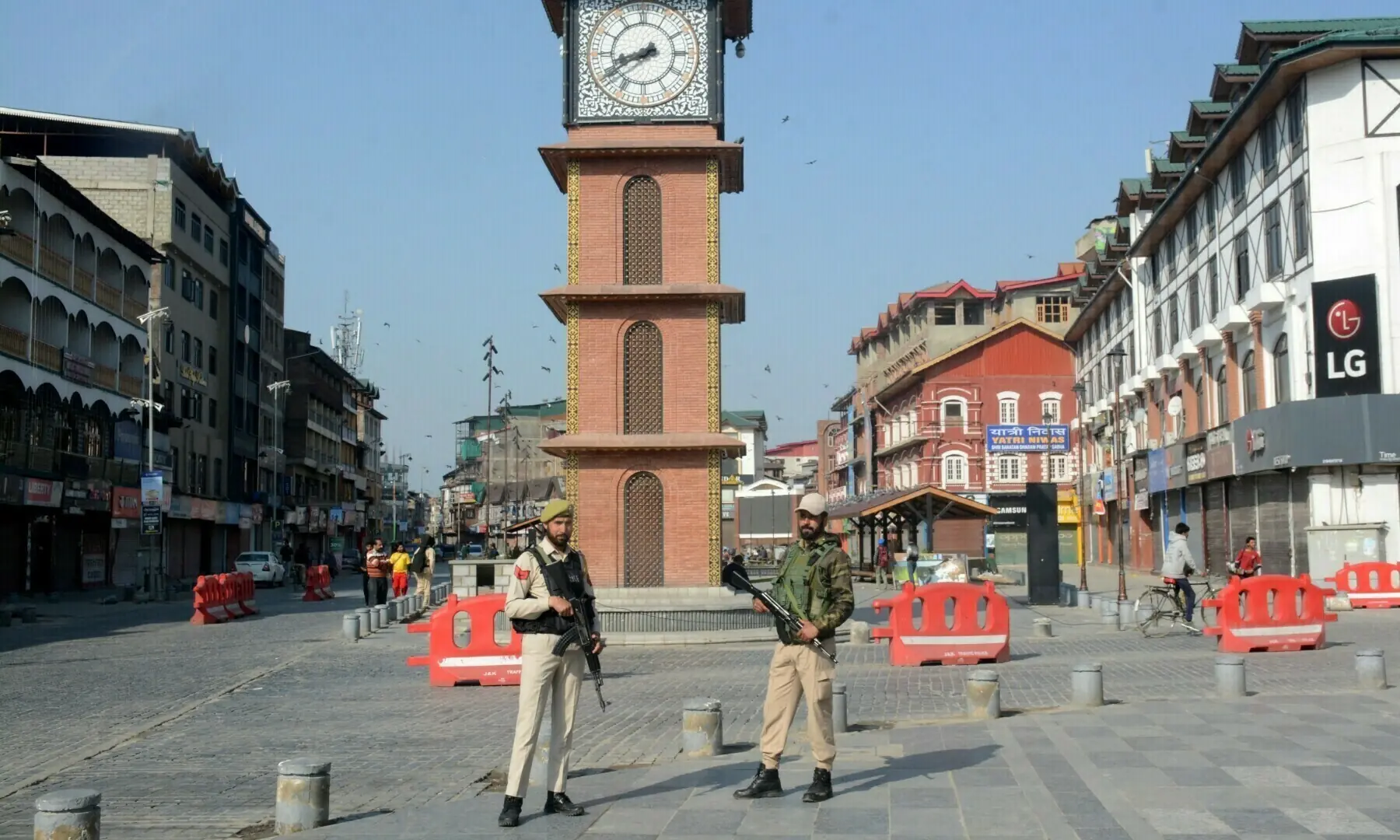

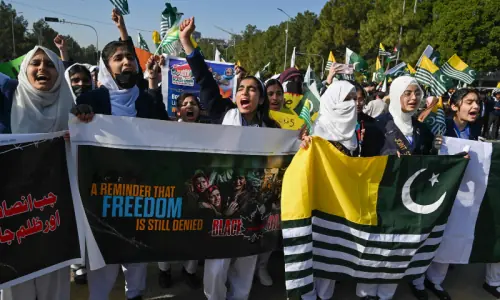
MUZAFFARABAD: Deliberating on the evolving dimensions of the festering Kashmir dispute and prospects for sustainable peace, speakers at a conference on Wednesday urged the international community to move beyond expressions of concern and take concrete steps to ensure accountability for human rights violations in Indian-occupied Kashmir, warning that the unresolved conflict remained a nuclear flashpoint in South Asia.
Titled “Vision Kashmir: Pathways to Peace and Stability”, the conference was organised by the Centre for International Strategic Studies (CISS) at the University of Azad Jammu and Kashmir’s (UAJK) Chattar Klas campus, some 20 kilometres south of the state capital.
Addressing the event via video link, Prime Minister Raja Faisal Mumtaz Rathore reiterated that the Kashmir dispute was not a bilateral issue but an internationally recognised conflict acknowledged in multiple United Nations Security Council resolutions, and a just and peaceful resolution was essential not only for the Kashmiri people but also for durable peace in South Asia, a region home to two nuclear-armed states.
The AJK premier pointed out that for over seven decades, people in occupied Kashmir had faced extrajudicial killings, enforced disappearances, arbitrary detentions, suppression of political dissent, and curbs on freedom of expression, describing these as the gravest violations of international law and human rights norms.
Referring to India’s actions of Aug 5, 2019, he said the unilateral measures and subsequent attempts to alter the demographic structure and identity of the occupied territory posed a serious threat to regional peace. “Such measures cannot change historical realities nor suppress the legitimate aspirations of the Kashmiri people,” he said.
Acting President Chaudhry Latif Akbar said the Kashmir issue remained on the UN agenda and that Kashmiris would not retreat “an inch” from their principled stance on self-determination. Stressing the need to project the case more effectively at the international level — particularly in the digital age — he urged the youth to understand the historical, legal and diplomatic dimensions of the dispute.
He said restrictions on media in India and curbs on civil liberties in occupied Kashmir posed serious questions for the global conscience and called for documented evidence to be presented before the world with confidence and clarity rather than in an apologetic tone.
Chairman of the Parliamentary Kashmir Committee MNA, Rana Qasim Noon, described Kashmir as a “nuclear flashpoint” and said sustainable peace in South Asia was impossible without resolving the dispute. Addressing the conference via video link, he said India was involved in enforced disappearances and other grave human rights violations in occupied Kashmir and called for strict accountability, particularly over the continued detention of APHC leaders since August 2019.
Dr Waleed Rasool, an associate at the Institute of Policy Studies, said the nature of the dispute had changed significantly after August 5, 2019, with shrinking space for media and human rights advocacy. Describing the diaspora’s role as crucial in highlighting the issue internationally, he, however, noted that members of the Kashmiri diaspora and their families were also facing pressure.
Salman Javed, Director of South Asia Times, was of the view that the Kashmir conflict was no longer a static dispute but one that tested the limits of the contemporary international system.
Published in Dawn, February 12th, 2026