JI calls for taking all stakeholders on board to counter terror

• Hafiz Naeem urges collective action to bring law and order under control
• Party leaders stopped from holding presser outside ECP office in Karachi
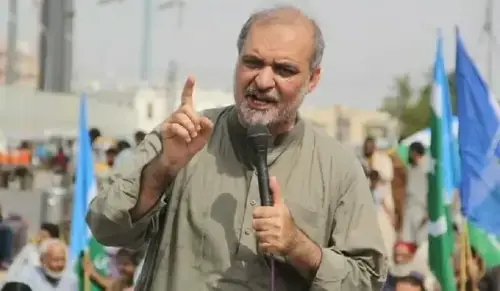
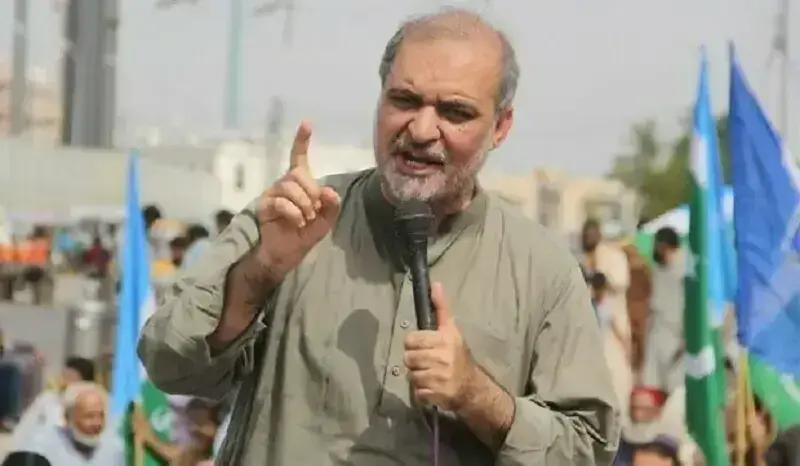
LAHORE / KARACHI: Jamaat-i-Islami Pakistan chief Hafiz Naeemur Rehman on Sunday said military operations were not a sustainable solution to the worsening law and order situation in the country and urged the rulers to take all political parties and stakeholders on board to formulate a comprehensive strategy to eliminate terrorism.
Addressing the opening session of a three-day meeting of the JI’s Central Majlis-i-Shura at Mansoora in Lahore, he said both internal and external elements were fuelling instability in the country. He added that the deteriorating law and order situation in Balochistan, Khyber Pakhtunkhwa and other parts of the country was deeply alarming and demanded urgent, collective action to bring it under control.
He said that instead of trying to appease US President Donald Trump, the government must frame policies in line with national dignity. Recalling Pakistan’s involvement in the US-led war on terror under General Pervez Musharraf, he said the nation was still paying the price.
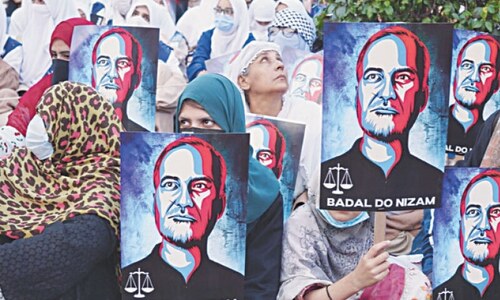
The JI chief said the party had launched the “Change the System” movement and would continue its struggle until its objectives were achieved. He announced that JI would continue its campaign for an empowered local government system and would also relaunch its movement against independent power producers after Eidul Fitr.
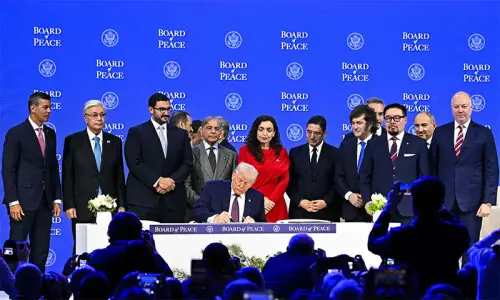
He once again strongly opposed Pakistan’s participation in the US-led “Gaza Peace Board”, terming it a parallel body to the UN and part of Washington’s broader agenda to restore a colonial order. He said the US was fully backing Israel and seeking to disarm Hamas, thereby depriving Palestinians of their right to self-defence.
He praised Hamas’s resistance policy as exemplary for Islamic and resistance movements worldwide and lauded JUI-F chief Maulana Fazlur Rehman’s firm stance against joining the Gaza board. He said he had spoken to the JUI-F chief by phone and would meet him soon.
Expressing concern over the situation in Tirah Valley, he stressed that dialogue, not force, was the way forward. He also reaffirmed JI’s opposition to the privatisation of public schools in Punjab and pledged full support to farmers, workers and other oppressed segments of society.
Stopped from holding a presser
Police on Sunday prevented JI from holding a press conference outside the Election Commission of Pakistan (ECP) Sindh headquarters in Karachi’s Saddar and briefly detained several party leaders and workers, including its lone member in the Sindh Assembly, Muhammad Farooq.
According to police officials, the action was taken to maintain law and order as JI workers gathered outside the ECP office to lodge their protest on the day marking the completion of two years since the general elections.
Police moved in during the gathering, rounded up party leaders and workers, and shifted them in police mobiles to the Defence police station. All detainees were released after a brief detention, with no FIR registered against any of them.
Following their release, a large number of JI workers assembled at the party’s headquarters, Idara Noor-i-Haq, where senior leaders addressed a press conference and strongly criticised the police action and the provincial government.
JI acting Karachi chief Muslim Parvez said the party was exercising its constitutional and democratic right to peaceful protest when police intervened and made arrests.
Mr Parvez announced that the JI would stage a sit-in outside the Sindh Assembly on Feb 14 “under all circumstances” to protest what he described as the provincial government’s “failure to address Karachi’s issues” and alleged interference in the city’s institutions.
JI MPA Muhammad Farooq said the arrests were aimed at intimidating the party and preventing its planned sit-in. He termed the police action a sign of the government’s “nervousness” and an anti-democratic attitude, adding that arrests, FIRs or threats would not force the JI to abandon its constitutional struggle.
Published in Dawn, February 9th, 2026