Japan’s Takaichi set for landslide election win


 0
0
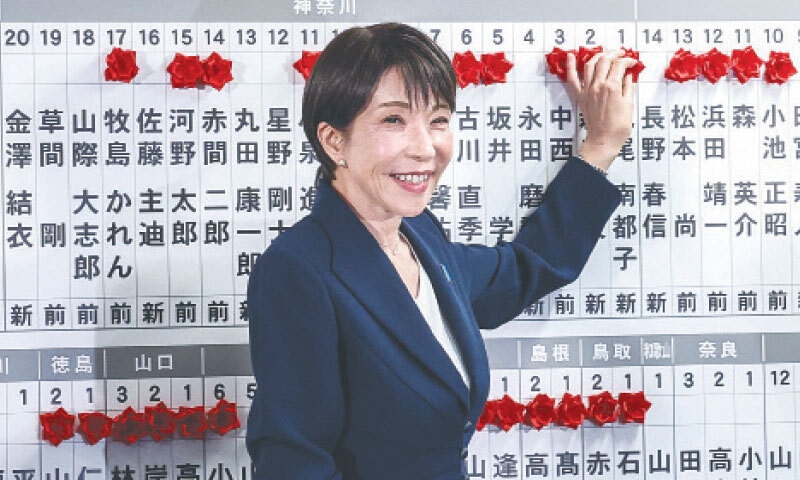

• Exit polls show the LDP and coalition partner Ishin could win up to 366 of 465 seats
• Heavy snowfall disrupts voting; some polling stations closed early
TOKYO: Japanese Prime Minister Sanae Takaichi’s ruling coalition is set for a landslide victory in Sunday’s lower house election, exit polls showed, a move that may rattle financial markets and accelerate a defence build-up aimed at countering China.
Takaichi’s Liberal Democratic Party (LDP) and coalition partner, the Japan Innovation Party, known as Ishin, could secure as many as 366 of the 465 seats in the chamber, a supermajority that would ease her legislative agenda, according to public broadcaster NHK.
The LDP alone is projected to win as many as 328 seats, which would be its best result since 1996, when the current electoral system was adopted.
Japan’s first female prime minister, 64, called the rare winter snap election to capitalise on her buoyant personal approval ratings since she was elevated to lead the ruling Liberal Democratic Party late last year.
Voters have been drawn to her straight-talking, hardworking image, but her nationalistic leanings and emphasis on security have strained ties with powerful neighbour China, while her promises of tax cuts have rattled financial markets.
Residents trudged through snow to cast their ballots with record snowfall in parts of the country snarling traffic and requiring some polling stations to close early.
It is only the third postwar election held in February, with elections typically called during milder months.
Takaichi’s election promise to suspend the 8 per cent sales tax on food to help households cope with rising prices has spooked investors concerned about how the nation with the heaviest debt burden among advanced economies will fund the plan.
Published in Dawn, February 9th, 2026