Kashmir termed dangerous nuclear flashpoint in South Asia
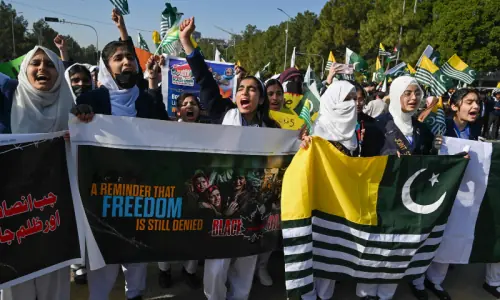
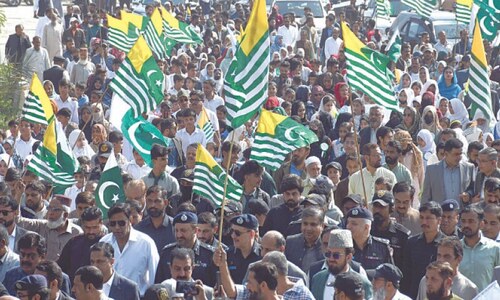
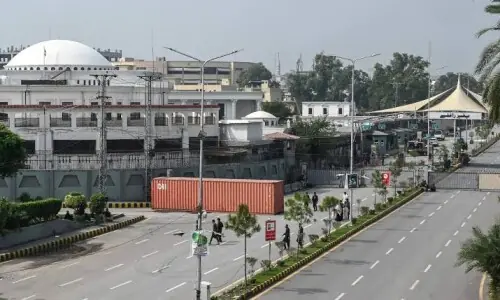
ISLAMABAD: Speakers at three separate seminars held in connection with the Kashmir Solidarity Day here on Thursday termed Kashmir a dangerous nuclear flashpoint in South Asia, urging world powers to help resolve the lingering dispute to avert threat to peace in the region and beyond.
Speakers at one of the seminars, jointly organised by the Pakistan Ex-Servicemen Society (PESS) and Overseas Pakistanis, regretted that the international community had largely failed to match the gravity of the situation with meaningful diplomatic engagement.
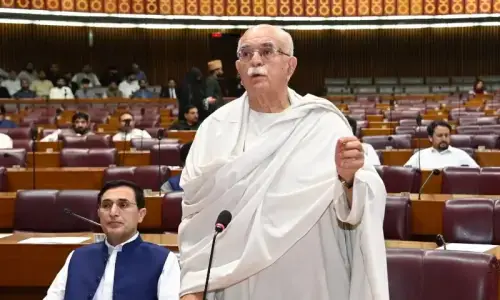
Speaking on the occasion, Minister for the Board of Investment Qaiser Ahmed Sheikh said Pakistan stands with the Kashmiris in their struggle to achieve their internationally recognised right to self-determination.
Referring to the May 2025 conflict with India, termed Marka-i-Haq by Pakistan, the minister described it as a major achievement and a decisive victory. However, he added that military strength alone was not sufficient and must be complemented by economic revival and national cohesion.
Speakers at seminars on Kashmir Solidarity Day urge world powers to help resolve long-standing dispute
Federal Minister and Chairman Parliamentary Kashmir Committee Rana Mohammad Qasim Noon said Pakistan must revisit and modernise its Kashmir policy in line with evolving global realities while keeping the Kashmiri people at the centre of all decision-making.
Former Azad Jammu and Kashmir president and ex-ambassador to the US, China and the UN, Masood Khan said overseas Pakistanis had emerged as the single most influential force in taking the Kashmir issue to global capitals.
He said Kashmir Solidarity Day was now observed not only in Pakistan but also in London, Brussels, Berlin, Washington DC, Canada and other world capitals, where diaspora communities actively lobby parliaments, think tanks and opinion leaders.
PESS President Senator retired Lt Gen Abdul Qayyum said Pakistan’s unity across political, social and professional divides was the strongest expression of solidarity with the Kashmiri people.
He said overseas Pakistanis, particularly in Europe, the UK and North America, continue to play a vital role in internationalising the Kashmir issue through political engagement and advocacy.
Dangerous phase
Kashmir dispute has entered a more dangerous phase that can no longer be managed through the status quo, said speakers at another seminar in Islamabad, according to a statement.
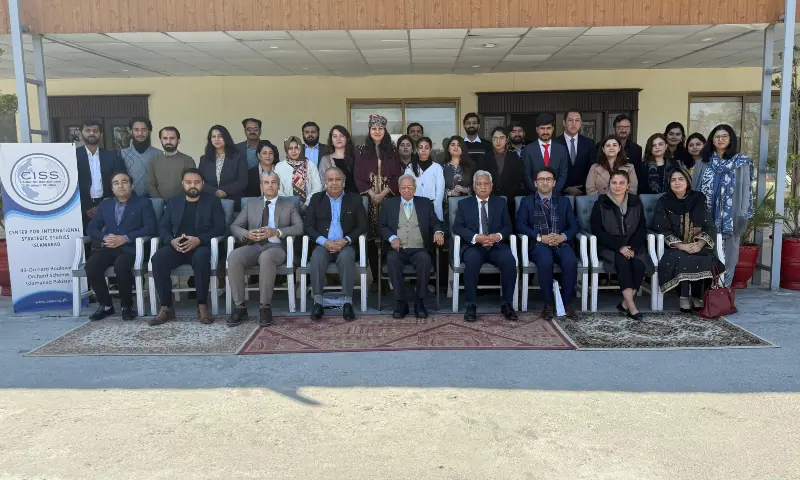
The seminar, ‘Revisiting the Kashmir Issue’ was hosted by Center for International Strategic Studies (CISS). The speakers emphasised the need to move “beyond conflict management toward genuine conflict resolution” to ensure regional stability and long-term peace in South Asia.
Kashmir Institute of International Relations Chairman Altaf Hussain Wani said the revocation of the region’s special status reflected ideological motives rather than democratic process.
“The abrogation of Articles 370 and 35A was the culmination of a long-standing BJP–RSS ideological agenda, related to electoral consideration rather than democratic consensus,” Wani said.
The participants highlighted what they described as a sharp deterioration in human rights conditions in occupied Kashmir since 2019.
Amb Ali Sarwar Naqvi, executive director of CISS, said the situation had “markedly deteriorated,” citing “extrajudicial killings, enforced disappearances, prolonged detentions, recurring internet shutdowns and the systematic intimidation of journalists and human rights defenders.”
Several speakers linked constitutional changes to long-term demographic and legal consequences.
Dr Mujeeb Afzal of Quaid-i-Azam University said India’s legal position relied on selective interpretations of historical documents — the Instrument of Accession and the 1947 princely state framework — and eroded Kashmir’s autonomy through constitutional means.
“Article 370’s promised autonomy was systematically hollowed out through constitutional manipulation,” Afzal said, warning that Hindu nationalist ideology and new domicile laws “risk demographic engineering in Kashmir,” with “serious implications for international law and regional stability.”
Dr Nazir Hussain, former dean of social sciences at Quaid-i-Azam University, described Kashmir as an unresolved international dispute rooted in partition and governed by international legal obligations.
“Kashmir remains the unfinished agenda of partition,” Hussain said, stressing that Pakistan’s position is “firmly grounded in UN Security Council resolutions and international law.”
Dr Asma Shakir Khwaja, executive director of CISS Azad Jammu and Kashmir, characterised Kashmir as a “nuclear flashpoint shaped by the policies of India,” cautioning that New Delhi’s post-2019 approach had “deepened generational trauma, narrowed prospects for peace, and heightened the risks of escalation.”
Dr Bilal Zubair, director of research at CISS, said: “Resolving the Kashmir issue requires a multidimensional approach grounded in international law, respect for human rights, and the centrality of the Kashmiri people’s aspirations.”
IPRI seminar
Addressing another seminal organised by the Islamabad Policy Research Institute (IPRI), diplomats, legal experts and political leaders called for proactive measures to counter India’s stance under international law and to persuade the United Nations to fulfil its commitments, including holding a plebiscite in Kashmir as mandated by the UN resolutions.
They said Indian Illegally Occupied Jammu and Kashmir (IIOJK) was granted special status under a UN resolution, and that the abrogation of Articles 370 and 35A and its integration as a union territory constituted a violation of international law, as it diminished Kashmir’s degree of sovereignty, an aspect acknowledged by the Indian Supreme Court as well.
The panel noted that the revocation of Kashmir’s autonomy and subsequent legislative changes had deepened marginalisation and political disenfranchisement of the indigenous population.
They added that unilateral annexation had accelerated efforts to dilute the region’s Muslim-majority character and alter its historical and demographic identity through changes to domicile laws and related regulations.
The seminar, titled “Kashmir Dispute and Indian Repression”, former AJK president and former ambassador to the United States Sardar Masood Khan said elections held in 2024 on the directives of India’s apex court had bred contempt in the Valley and produced a hapless leadership.
International law expert Ahmer Bilal Soofi cited the American Journal of International Law to argue that the right to self-determination permits resistance and external assistance.
He stressed the need to counter India on legal grounds with a sound, presentable case.
Speakers noted that Indian lawyers had also criticised the revocation of Articles 370 and 35A during Supreme Court hearings, terming Indian forces an “army of occupation” and urging that atrocities be framed as war crimes and genocide.
Published in Dawn, February 6th, 2026