Last US-Russia nuclear pact set to end
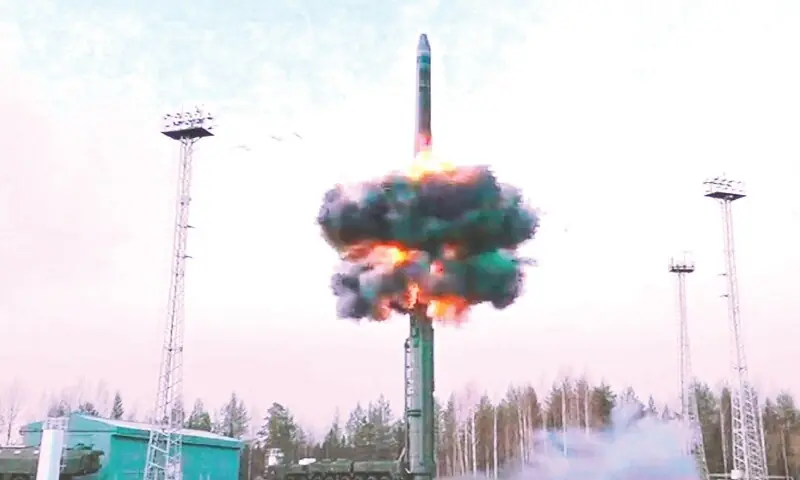
WASHINGTON: Come Thursday, barring a last-minute change, the final treaty in the world that restricted nuclear weapon deployment will be over.
New START, the last nuclear treaty between Washington and Moscow after decades of agreements dating to the Cold War, is set to expire, and with it restrictions on the two top nuclear powers.
The expiration comes as President Donald Trump, vowing “America First”, smashes through international agreements that limit the United States, although in the case of New START, the issue may more be inertia than ideology.
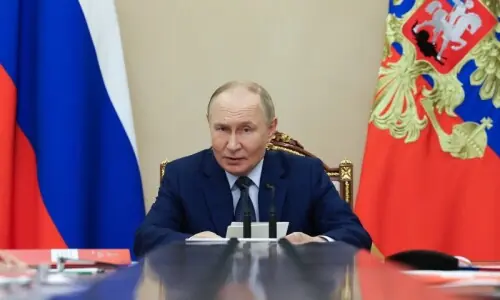
Russian President Vladimir Putin in September suggested a one-year extension of New START. Trump, asked afterward by a reporter for a reaction while he was boarding his helicopter, said an extension “sounds like a good idea to me” — but little has been heard since.
Putin ally Dmitry Medvedev, who as Russia’s president signed New START with counterpart Barack Obama in 2010, said in a recent interview with the Kommersant newspaper that Russia has received no “substantive reaction” on New START but was still giving time to Trump.
Trump has insisted on inclusion of China in ‘New START’ accord
A White House official said on condition of anonymity that Trump would like to see “limits on nuclear weapons and involve China in arms control talks.” The way to do that, the official said, Trump “will clarify on his own timeline”. Daryl Kimball, executive director of the Arms Control Association, which supports reducing nuclear risks, said Trump’s second administration, which has sidelined career diplomats and entrusted decision-making only to a handful of people, is not functioning in a normal way that would allow complex negotiations.
Jon Wolfsthal, director of global risk at the Federation of American Scientists, said Trump and Putin could pick up the phone and agree immediately at a political level to extend New START.
“This is a piece of low-hanging fruit that the Trump administration should have seized months ago,” he said.
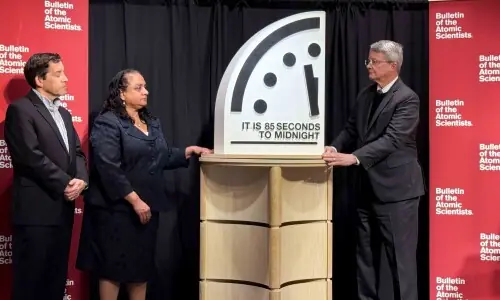
Wolfsthal is among experts involved in the “Doomsday Clock” meant to symbolise how near humanity is to destruction. It was recently moved closer to midnight in part due to New START’s demise.
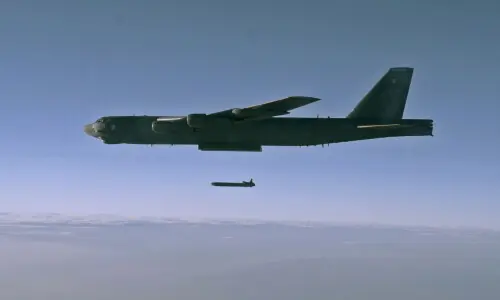
Trump called in October for the United States to resume nuclear testing for the first time in more than 30 years, although it is not clear he will carry it out.
Russia in 2023 already suspended a key element of New START, allowing inspections, as relations deteriorated sharply with US President Joe Biden’s administration over Russia’s invasion of Ukraine.
Published in Dawn, February 2nd, 2026