Among structural reforms, a key issue is unsustainable imports that make it imperative to conserve and earn foreign exchange to minimise external vulnerabilities. That calls for maximising use of local human and natural resources to boost productivity, competitiveness and diversification of products and markets and cater to the changing overseas demand and domestic consumption.
In a transforming world, it may be noted here that human capital plays a primary role in the growth of the economy. For example, remittances sent by overseas Pakistanis for their families help the middle class and lower-income groups improve their quality of life. When capital crosses the national frontier, it loses its links with national social progress.
While acknowledging that some multinational companies had left Pakistan due to “high taxes and energy costs”, Finance Minister Mohammad Aurangzeb urged them on Jan 14 at a Policy Dialogue to revise business models in line with a changing world economy.
It may be worth noting here that some multinationals in Pakistan have started using local raw materials, replacing costly imported inputs, to cut production costs.
Sustained investment in human development is the only guarantee of a prosperous and stable future for the country
Balochistan’s Chief Minister Mir Sarfraz Bugti, who is managing the least developed federating unit — capital starved and hit by insurgency — has recently emphasised that sustained investment in human development was the only guarantee of a prosperous and stable future of the province.
As households rise above the poverty line, the increased consumption will be directed primarily at domestically produced goods — meat, milk, poultry, fruit, and vegetables — rather than imports, says former SBP governor Dr Ishrat Husain. He estimates that nearly $10bn could be saved annually by substituting imports of food and cotton.
Water and Power Development Authority says its under-construction projects, on their completion, will add 9.7 million acre-feet to water storage and double the installed power generation capacity from 9,500 MW to about 20,000 MW. Though the government has accorded top priority to these projects, their timely completion cannot be assumed because of inordinate delays in their execution in the past.
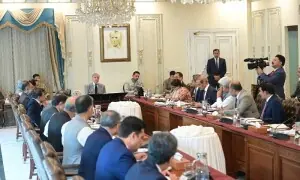
Chairing a high-level meeting recently, Prime Minister Shehbaz Sharif directed the concerned officials to prioritise the exploration of new oil and gas field resources to conserve valuable foreign exchange spent on petroleum imports. He emphasised that looking into domestic energy resources was critical for national economic stability.
The meeting was informed that a significant new oil and gas reservoir — expected to yield around 4,100 barrels of oil per day — has been discovered in the Nashpa Block area of Kohat district.
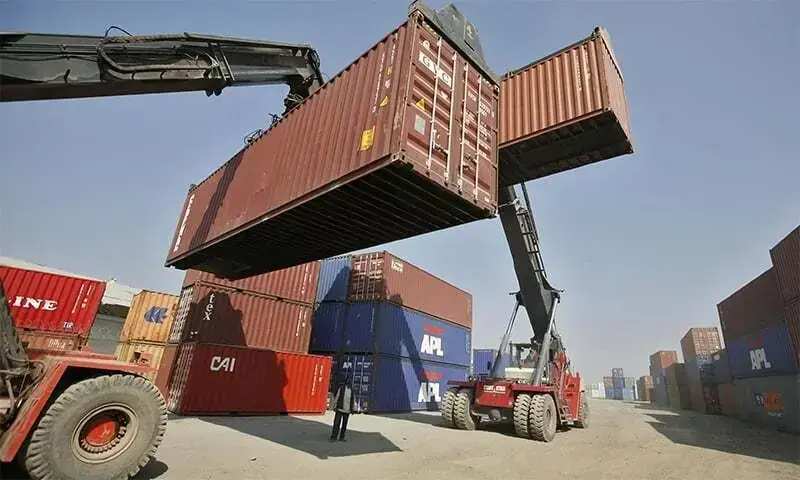
In an effort to promote indigenisation, the construction of a container vessel for the Pakistan National Shipping Corporation was launched recently to reduce reliance on foreign shipping companies.
The 1,100-TEU vessel using domestic resources and expertise is being built at Karachi Shipyard and Engineering Works. Speaking at a steel-melting ceremony, Federal Minister for Maritime Affairs Muhammad Junaid Anwar Chaudhry said the addition of the vessel would reduce freight payments abroad and enhance the Pakistan National Shipping Corporation’s capacity to support import-export trade.
This was followed by the announcement of plans to establish a 100-acre seafood processing and export zone at the Korangi Fisheries Harbour Authority, with an estimated cost of $60-80 million to expand the footprint in the global seafood trade.
The project aimed to develop, finance and operate a modern seafood processing and value-addition complex, says Mr Chaudhry, which will help shift exports away from raw seafood towards higher-value processed products.
Pakistan’s fisheries and aquaculture sector has the potential to generate $10bn per year with value-addition and better management, according to experts discussing the pros and cons of the Fisheries and Aquaculture Policy 2025–2035, at a seminar organised by the Pakistan Institute of Development Economics. Pakistan’s fisheries exports have surpassed those of fruits and vegetables, reaching over $450m.
There is a growing awareness to promote value-added exports of Pakistani products. More than 400 brands participated in ‘Mera Brand Pakistan’ Expo 2026 held in Karachi on Jan 3–4.
Similarly, the Small and Medium Enterprise Finance and Banking Expo was organised on Jan 8 by the Lahore Chamber of Commerce and Industry (LCCI). LCCI President Faheemur Rehman Saigol noted that strict collateral requirements remain a major hurdle for small businesses and a lack of opportunities despite strong potential. He urged banks to focus on cash flows, business models and market value and to expand low-collateral financing schemes.
To take another example, the proposed Mobile and Electronic Device Manufacturing Policy, says PM’s Special Assistant Haroon Akhtar Khan, will bring a major shift from simple assembly to full-scale manufacturing, essential for the promotion of local production and exports.
A committee has now been set up to devise a strategy for avoiding another IMF programme and to realise the estimated annual export potential of $60bn. Currently, goods worth about $30-35bn are sold annually. In the first half of this fiscal year, exports fell to $15.2bn, down 8.7pc on a yearly basis, while remittances rose to $19.7bn.
There is nothing new in the diagnosis of the problems hampering economic and export growth, or the solutions suggested by the panel, says a Dawn editorial. If anything, both diagnosis and prescription echo past policy pronouncements that were never followed up on.
Published in Dawn, The Business and Finance Weekly, January 19th, 2026