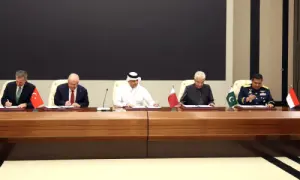
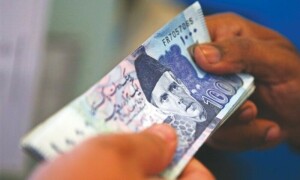
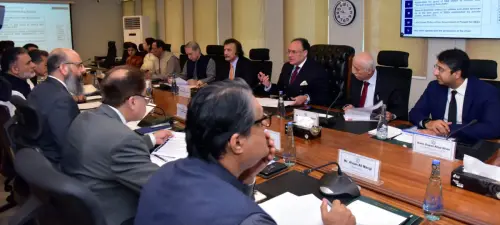
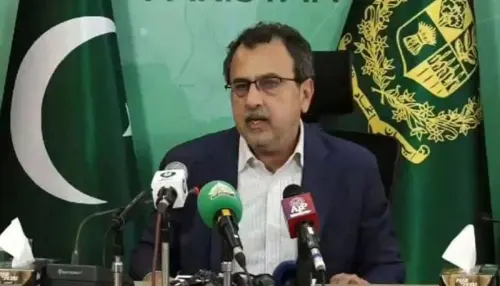
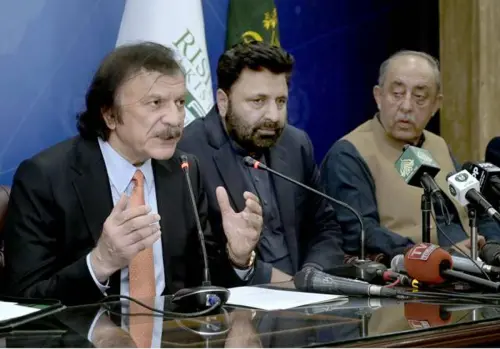
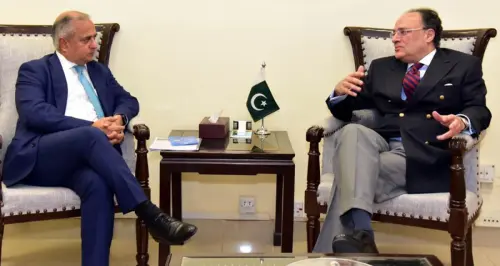
IT turned into a surprisingly high-profile event. On Wednesday, Pakistan signed an MoU with SC Financial Technologies, a firm affiliated with World Liberty Financial, which is owned by US President Donald Trump’s family, for “structured dialogue and technical understanding around emerging digital payment architectures”. Though Finance Minister Muhammad Aurangzeb would describe the MoU as ‘non-binding’, the state seems to have attached immense importance to it, with Prime Minister Shehbaz Sharif, Field Marshal Asim Munir, Deputy Prime Minister Ishaq Dar and Special Assistant to the Prime Minister Tariq Fatemi personally overseeing the signing of the MoU. The document was inked by Mr Aurangzeb and SC Financial Technologies CEO Zachary Witkoff, who is also the son of Steve Witkoff, US special envoy to the Middle East. Reuters noted this was the first publicly announced tie-up linking World Liberty, launched in September 2024, and a sovereign state.
By Reuters’ account, SC Financial Technologies will work with the State Bank “to integrate its USD1 stablecoin into a regulated digital payments structure, allowing the token to operate alongside Pakistan’s own digital currency infrastructure”. A spokesman for World Liberty Financial told the wire service that, “The agreement […] could help ensure that the US dollar will remain the world’s reserve currency. Pakistan will be exploring how […] [the] stablecoin would be used for digital payments and international remittances”. This would be a big step for Pakistan, where authorities till recently took a very dim view of cryptocurrencies. Mr Aurangzeb underlined the strategy when he said that the “focus is to stay ahead of the curve” while acknowledging that any new steps Pakistan takes need to be “aligned with regulation, stability, and national interest”. It will be a tightrope for regulators to walk, and many other countries will be watching for lessons.
To Mr Aurangzeb’s credit, he has always taken a considered stance on the adoption of new technologies. Even with this MoU, it seems that any tangible development will follow “dialogue” and sharing of “technical understanding”. As long as Pakistan’s crypto push remains tethered to sound principles that seek to protect the national interest and rupee stability, such initiatives should be explored and encouraged. It is hoped that the minister, who is also a seasoned ex-banker, will be similarly thorough in his assessments of all crypto-related proposals, which are likely to land on his table with increasing frequency as more global players take an interest in Pakistan’s policy pivot. Many countries have grappled with the idea of introducing cryptocurrency technologies in their formal financial systems, yet there seems to have been little progress in overcoming barriers between traditional systems and new technologies. Perhaps Pakistan can show the world how it may be done.
Published in Dawn, January 16th, 2026