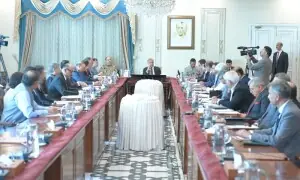
THE call by a panel, led by the planning and development minister, for “urgent ease of doing business reforms” to more than double export revenues to over $60bn within three years is familiar rhetoric. The panel was formed by the prime minister to devise a strategy to exit the IMF programme once the current bailout facility ends at the end of next year. Its weeklong consultations with public and private sector stakeholders this month has apparently concluded that the current state of affairs cannot drive the 250m-strong population towards sustained progress due to cross-cutting constraints affecting all 20 priority export products and six export drivers.
There is nothing new in the diagnosis of the problems hampering economic and export growth, or the solutions suggested by the panel. If anything, both diagnosis and prescription echo past policy pronouncements that were never followed up. The constraints to economic and export growth — high, volatile energy costs, policy unpredictability, distorted taxation, logistics and trade facilitation bottlenecks, institutional fragmentation, regulatory burden, etc — cited by the panel are old hat. These have featured in donor and government reports and in media commentary.
The persistence of these structural problems shows that the challenge lies less in their diagnosis or analysis and more in the state’s capacity and willingness to deliver politically tough, rules-based reform. Against this backdrop, the panel’s implicitly holding restrictive IMF financing responsible for the government’s failure to aggressively implement reforms to return the economy to a sustainable growth path is an attempt to gloss over the state’s own dereliction of duty. Indeed, the IMF programme conditions and targets primarily aim for economic and fiscal stabilisation by imposing fiscal discipline rather than driving the economy towards growth.
However, the lender does not stop the government from undertaking or implementing reforms to restructure the economy or address stagnant growth. For example, it may demand that the authorities increase tax revenues as a ratio of GDP to slash the budget deficit — which should encourage the government to broaden the tax base. Nor does it ask them to cut development spending — instead of this, the government could reduce its own wasteful expenditure.
Rather, the IMF — ideological and policy differences with its prescriptions aside — encourages the government to create a conducive business clime. The authorities are blaming the IMF programme for a sluggish, moribund economy to cover up their own incompetence, and obscure the ruling party’s unwillingness to dismantle the entrenched politically protected rent-seeking structures.
Unless the government walks the talk on reform to create a rules-based economy, its rhetoric of doubling exports and breaking the proverbial begging bowl will remain a pipe dream.
Published in Dawn, January 13th, 2026