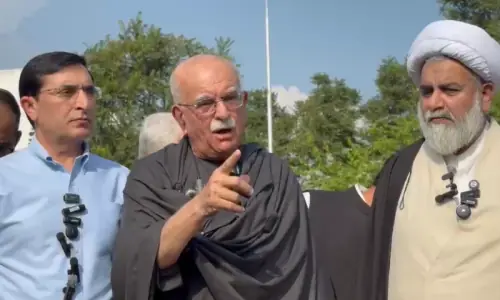
THE KP chief minister’s eventful visit to Sindh has thrown up the same questions that his recent, equally eventful trip to Punjab did: why this? Why now? Why has a relatively inexperienced PTI leader decided to go around the country to muster up a street movement, that too, at a time when both the appetite and space for agitational politics are considerably more restricted than before? If the purpose is to gain some more public sympathy for the beleaguered party, the effort is overkill. There has been no shortage of news reports and social media commentary on the travails the party and its supporters continue to face. If the purpose is to rally the public for some meaningful movement against the government, the PTI has clearly not read the room. There is no doubt that many still support the party, but that support continues to be passive. Is it that the KP chief minister felt compelled to take up this campaign in order to cement his own standing within the party? If so, that is an unfortunate reflection on the party and the unproductive expectations it has of its leaders.
It is worth noting that several prominent leaders from both the opposition and the government benches have recently signalled their intention to initiate a national-level dialogue. Those leading the effort from the opposition’s side, under the TTAP banner, have been delegated the responsibility by none other than the PTI itself. Given that it is willing to get behind a dialogue, there is no logic behind the PTI simultaneously pursuing a separate ‘street movement’. The PTI is signalling that it either does not trust its interlocutors or intends to betray the process. Neither is helping its cause. The party needs to show that it is ready to take practical steps that will help it achieve its aims. The individuals who sat down to sign the Charter of Democracy had been sworn rivals till they came to terms with the fact that, in politics, all players must eventually make compromises. Constant agitation and cage-rattling will not get the PTI what it seeks. Instead, doors are more likely to open if the party signals its readiness for change. It must stop sabotaging the possibility of a compromise and allow things to move towards a negotiated settlement.
Published in Dawn, January 13th, 2026