Pakistan worst-hit by Taliban takeover of Kabul: International Crisis Group
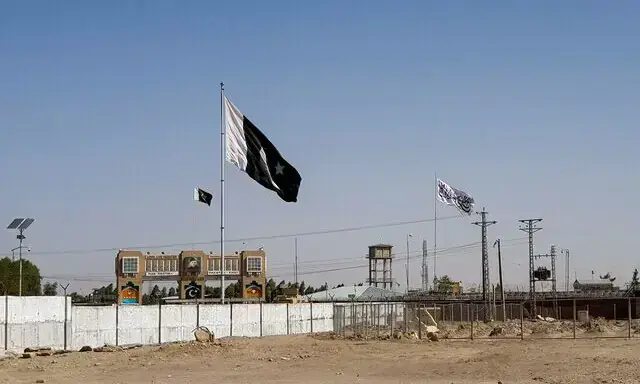
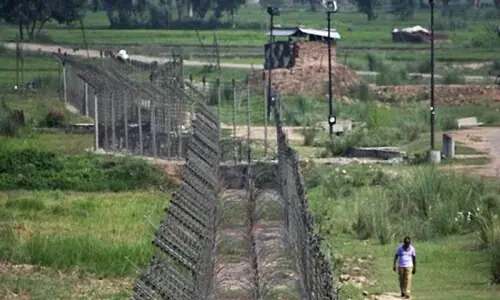
ISLAMABAD: The International Crisis Group (ICG) says Pakistan is the worst-affected country by the Taliban’s 2021 takeover of Afghanistan, noting that even though a ceasefire holds for now, Islamabad is likely to strike again if militant violence persists.
The Brussels-based independent and non-profit think tank, founded by prominent statesmen, says in a new report that relations between the two countries have tanked, mainly because of the Afghan Taliban’s refusal to crack down on the Tehreek-i-Taliban Pakistan (TTP).
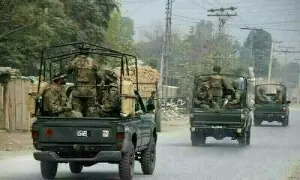
Since 2022, violence in Pakistan has spiralled. In 2025 alone, militants killed more than 600 Pakistani soldiers and police, mostly in Khyber Pakhtunkhwa and Balochistan, the two provinces bordering Afghanistan.
Islamabad blames the banned TTP for these attacks, along with Baloch insurgent groups, which it believes with evidence, are backed by arch-rival India.
Brussels-based think tank says Islamabad may strike Afghanistan again if militant attacks continue
“UN monitors assert that the TTP enjoys Taliban support, but the Taliban publicly deny that Pakistani militants are even in Afghanistan and say Islamabad provoked what they paint as homegrown violence,” according to the report.
On its western flank, after 11 Pakistani military personnel were martyred in a TTP attack on Oct 8, Islamabad conducted cross-border airstrikes, including its first-ever strike on Kabul, ostensibly targeting TTP chief Noor Wali Mehsud.
Afghanistan retaliated with attacks on Pakistani military installations. Continued fighting claimed military and civilian lives on both sides.
The report cautions that Islamabad is likely to lash out again if it traces another strike back to Afghanistan.
The Taliban regime is badly outgunned, but its retaliation could still be lethal. Kabul claims to have missiles that can reach Pakistani cities, the use of which would likely provoke an even stronger Pakistani response.
South Asia
In South Asia, however, Islamabad’s foreign relations are far more fraught. After short wars in 2025 with both Afghanistan and India, another major attack by militants could upend the precarious calm that prevails between Pakistan and its two neighbours.
The report lists 10 conflicts to watch in 2026: Afghanistan-Pakistan, Myanmar, Israel and the United States versus Iran, Israel-Palestine, Syria, Ukraine, Mali and Burkina Faso, Ethiopia-Eritrea, Sudan, and Venezuela.
The report says the world was careening into a dangerous new era well before Donald Trump’s return to the White House. Thus far, his second term has done less to slow things down than to put a foot on the gas. The year 2025 was a bloody one, and 2026 promises little better.
‘Trump effect’
Less predictable has been President Trump, whose first year back in the White House has turned world politics and international crisis management on their heads. Trump returned to power pledging to bring peace to a world ablaze. He has put himself centre stage in many wars and trouble spots.
Trump has brought fresh attention to peacemaking after years in which diplomatic efforts to end conflicts had been flailing.
But Trump has not calmed the global turmoil he decried on the campaign trail. In some cases, he has made it worse.
His deals, often built on other countries’ diplomacy, have brought respite to some battlefields but delivered no lasting peace anywhere.
Trump’s deal-making aims to bring US power to bear, whether in Gaza, by leveraging Israel’s dependency on Washington, or elsewhere, mostly by threatening tariffs or dangling business opportunities.
Trump’s bargaining must be set against the dearth of peace deals that preceded his return to power as well as the lack of progress in places where he does not engage.
European leaders, for example, focused on the existential peril they see on their doorstep, have less bandwidth for peacemaking elsewhere, the report says.
Published in Dawn, January 9th, 2026