First vaccine policy finalised to shift from imports
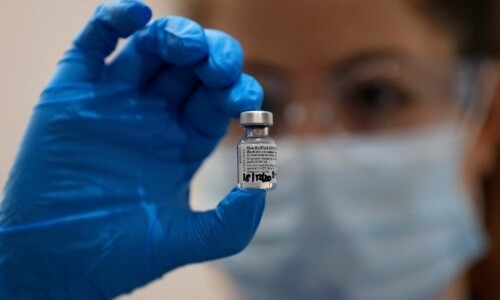
ISLAMABAD: Pakistan’s first National Vaccine Policy has proposed creating a National Vaccine Alliance to reduce imports as a strategic and economic move, as all vaccines used in the country were currently imported.
The draft policy estimates Pakistan’s annual vaccine requirement at 125 to 150 million doses in 2024-25 and suggests multi-year contracts of up to 10 years to reduce investment risks and cut reliance on imports.
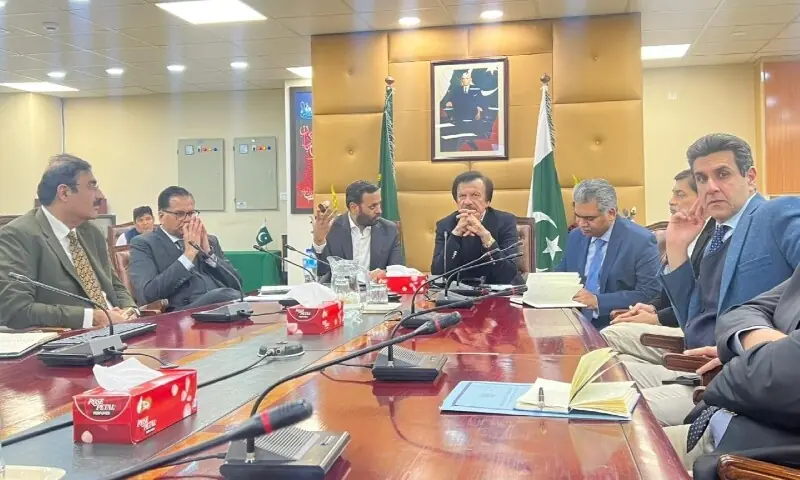
Prepared by the Drug Regulatory Authority of Pakistan (Drap), the policy was finalised on Wednesday at meeting of a high-level committee formed by the prime minister.
Chairing the meeting, its chairman, Special Assistant to the Prime Minister on Industries and Production Haroon Akhtar Khan, announced that the policy would be forwarded to the premier for approval and implementation.
Proposes creating an alliance; draft will be forwarded to prime minister for approval
The meeting was co-chaired by Federal Minister for National Health Services Mustafa Kamal.
On capacity, the draft notes that Pakistan currently has only three vaccine manufacturing facilities: the National Institute of Health (NIH) in Islamabad, Amson Vaccines and Pharma in Islamabad, and Dow University in Karachi.
Only one private facility produces limited vaccines, such as tetanus toxoid and hepatitis B, and it is not WHO-prequalified, restricting market access.
The NIH’s infrastructure is largely limited to small-scale fill-and-finish operations and would require major upgrades for end-to-end manufacturing.
To build capacity, the policy proposes a phased approach, starting with fill-and-finish operations, followed by technology transfer or joint ventures, and eventually full upstream production.
It acknowledges that WHO prequalification can take more than five years and prioritises meeting domestic needs first.
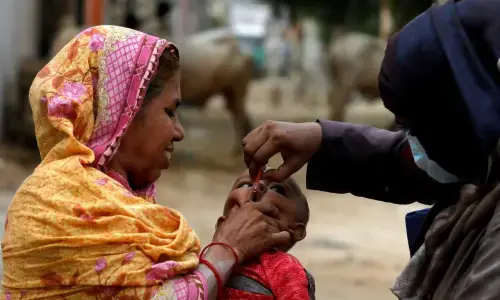
Around 40 different vaccines are administered in the country, of which 13 are included in the Expanded Programme on Immunisation (EPI).
However, due to the lack of local production, all vaccines are imported, including some from India.
Guiding principles
The policy lays out guiding principles for developing local vaccine manufacturing to strengthen national health security, achieve self-sufficiency, enhance pandemic preparedness, and create a sustainable domestic market with export potential. For FY 2025–26, the government will contribute 49 per cent of vaccine costs, while Gavi will cover 51pc.
Pakistan is expected to enter the accelerated transition phase by 2030, followed by a five- to eight-year path to full self-financing.
The policy warns that reduced subsidies will increase pressure on public finances at a time when vaccine-preventable diseases remain a challenge.
To address these risks, it proposes establishing a National Vaccine Alliance under the Ministry of National Health Services as a coordination platform to guide investment and avoid duplication.
The alliance would include representatives from Drap, the pharmaceutical industry, public-sector manufacturers, the Federal Directorate of Immunisation, the Public Procurement Regulatory Authority, academic institutions, development partners, and the Board of Investment.
Under its proposed mandate, the alliance would recommend buy-back guarantees or long-term procurement mechanisms, facilitate access to domestic and export markets, propose financing tools such as vaccine innovation funds and advance market commitments, and advise on regulatory reforms and incentive structures. The policy identifies high entry costs and the absence of sovereign procurement guarantees as the main barriers to local vaccine manufacturing.
Under the proposed buy-back framework, the draft calls for amendments to procurement rules to prioritise locally produced, non-WHO-prequalified vaccines once they pass lot release testing.
It proposes framework contracts of up to 10 years, with prices and volumes indexed to import parity benchmarks and efficiency targets.
Long-term contracts would be tied to technology transfer milestones, requiring manufacturers to move from fill-and-finish operations to full-scale production within the contract period.
Published in Dawn, January 1st, 2026