Earliest evidence of humans making fire discovered in UK
PARIS: Excited scientists announced on Wednesday they have discovered evidence in the UK of humans deliberately making fire 400,000 years ago, dramatically pushing back the timeline for when our ancient relatives are known to have mastered this crucial skill.
Learning to light our own fires was one of the great turning points in human history, offering our ancestors warmth, a place to socialise and a way to cook food, which helped us evolve our unusually big brains.
There are signs that humans were using fire more than a million years ago in Africa, but it is believed these flames were originally lit by natural causes such as lightning.
Finding solid evidence that our ancestors were sparking their own fires has proven extremely difficult, possibly because the tools did not last throughout the millennia.
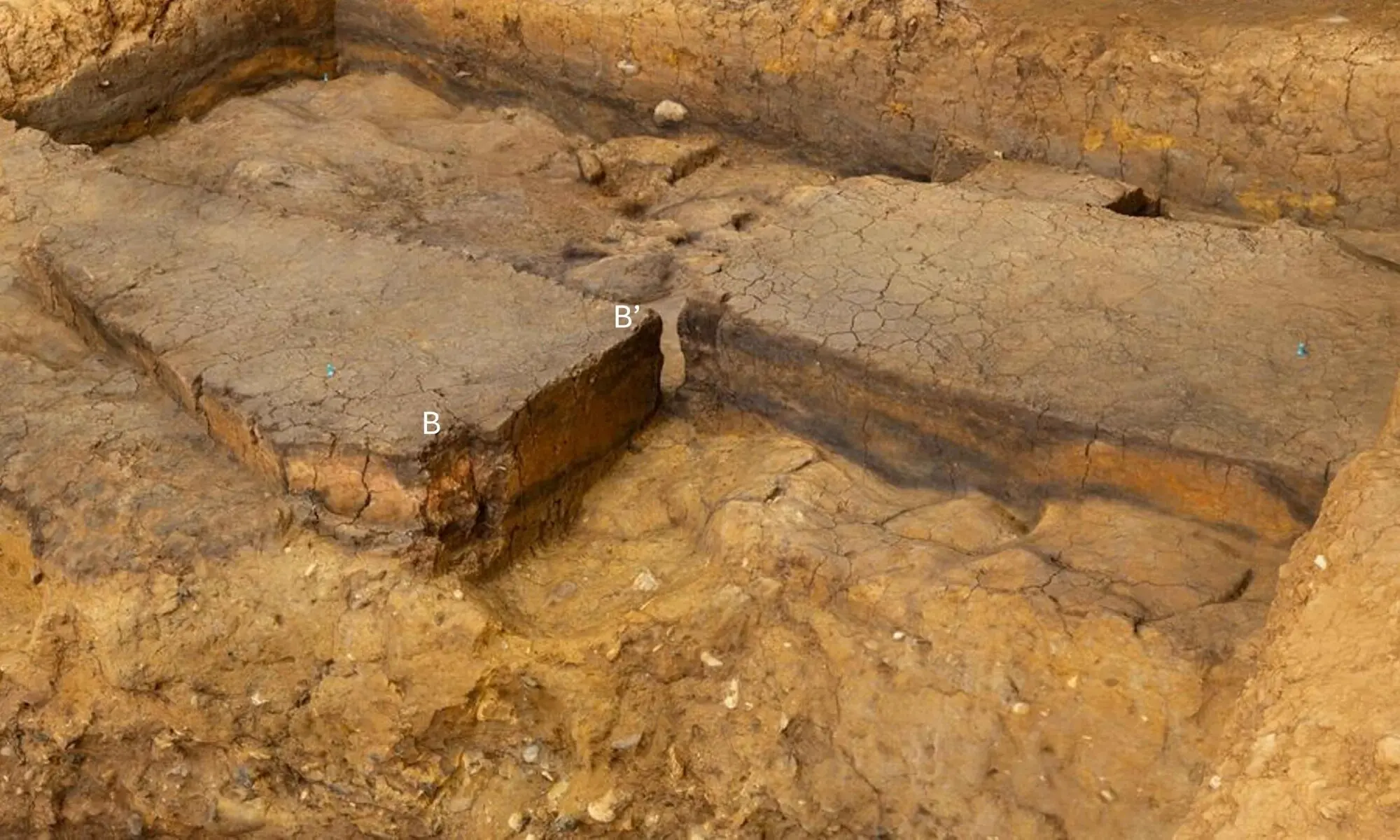
That is why a team led by researchers from the British Museum was so pleased to find a human fireplace dating back 400,000 years near the village of Barnham, in Suffolk, eastern England.
Previously, the oldest evidence of fire-making anywhere in the world was found in France and dated back 50,000 years.
“This is the most exciting discovery of my 40-year career,” Nick Ashton, a curator at the British Museum and senior author of a study in Nature describing the find, told a press conference.
Interestingly, the researchers believe the fireplace belonged to perhaps the most-maligned member of the human family tree: the Neanderthal.
We did start the fire
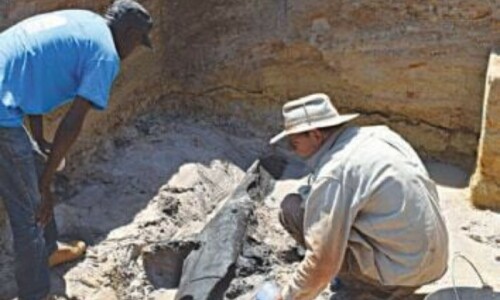
The Barnham archaeological site was first identified in the late 1800s, when ancient elephant tools were found there.
The first hint that the site could be home to a fireplace came in 2021, when scientists came across sediment that showed signs of being repeatedly heated.
But it took four years of painstaking work to prove that the heated clay was not caused by wildfire.
“The big turning point came with the discovery of iron pyrite,” Ashton said.
This mineral is used to create the spark to light tinder. It is also very rare in the area, indicating that ancient humans brought it to the site, the researchers said.
They also found fire-cracked handaxes that could have struck the pyrite.
Sarah Hlubik, a pyroarchaeologist at St Mary’s College of Maryland in the United States, not involved in the research, said, “This is a really exciting find”.
Being able to start our own fires — rather than grabbing burning branches from a naturally lit blaze — provided a lot of benefits that likely influenced human history.
The fire’s warmth allowed humans to explore farther into colder areas, the researchers said.
The ability to make fire also provided a place for humans to gather after dark, likely making us more talkative, social animals.
Everyone “can connect with the idea of a group of humans around a campfire — it’s something we’ve all experienced,” Ashton said.
But perhaps the most important was the change in our diets.
“We are the only things on the planet that rely on cooked food,” Hlubik pointed out.
Cooking food — particularly meat — saved energy previously used on digestion that is believed to have helped develop our bigger, more powerful brains.
There is fossil evidence from around 400,000 years ago, which suggests that the period when human brains were approaching their modern size, the researchers said.
Neanderthals not so dumb
While the identity of the Barnham fire-starters is not known, the researchers think they were likely Neanderthals because of fossils found nearby.
There has been a long-running debate about whether Neanderthals were able to make their own fire, with the sites in France once used to cast doubt on their abilities.
But this discovery “negates the argument that they just never had that technology”, Hlubik said.
It also adds to a recent “reevaluation” of Neanderthals, who were long dismissed as overly primitive, according to study co-author Chris Stringer of the British Museum.
But the new evidence “fits with the picture of a more complex model of Neanderthal behaviour — and increases their similarity to us,” he added.
Published in Dawn, December 11th, 2025