New finds in Turkey’s southeast add to picture of Neolithic age
Published November 26, 2025
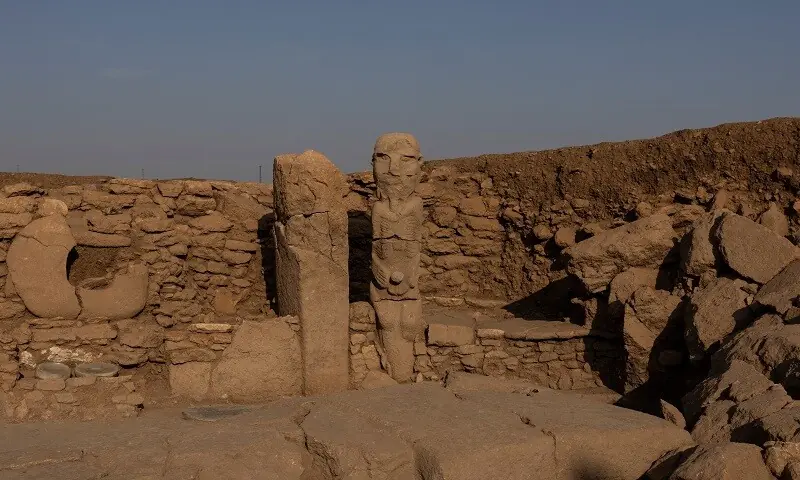
A pillar and a human statue stand at the Karahantepe excavation site, widely regarded with Gobeklitepe as keys to understanding the birth of symbolic thought, social complexity and monumental architecture thousands of years before cities or states existed, near the southeastern city of Sanliurfa, Turkey. —Reuters

Turkey unveiled dozens of new finds at a major archaeological site in southeast Turkey on Wednesday, giving fresh insight into an area seen as showing humanity’s transition from hunter-gatherers to settled societies more than 11,000 years ago.

On a plateau overlooking the fertile plains of what is often called the “cradle of civilisation”, the UNESCO World Heritage Site of Gobeklitepe and nearby Karahantepe are transforming archaeologists’ understanding of prehistoric times.

Among the latest finds in Sanliurfa province is a statue with a facial expression reminiscent of a deceased individual. Archaeologists said it was a unique discovery in terms of death rituals and symbolic expression among Neolithic communities.

People walk at the Karahantepe excavation site, widely regarded with Gobeklitepe as keys to understanding the birth of symbolic thought, social complexity and monumental architecture thousands of years before cities or states existed, near the southeastern city of Sanliurfa, Turkey. —Reuters

It was one of some 30 artefacts revealed on Wednesday, including human and animal statues, figurines, vessels, plates, necklaces and beads including a human-shaped one.

“What makes these archaeological sites unique is the way they reshape our knowledge of Neolithic history, as well as the transition to settled life,” Culture and Tourism Minister Mehmet Nuri Ersoy told Reuters.

He said the sites, which Turkey has dubbed the Stone Mounds project, show that humanity had a far higher level of consciousness in terms of belief, rituals, social organisation and cultural production than previously assumed.

Gobeklitepe is expected to attract around 800,000 visitors this year, he said, illustrating the growing recognition of the site’s importance.

The ministry-led project encompasses 12 Neolithic sites of settled communities in Sanliurfa dating back to 9,500 BC, with Gobeklitepe and Karahantepe featuring the world’s oldest structures used for gathering and performance rituals.
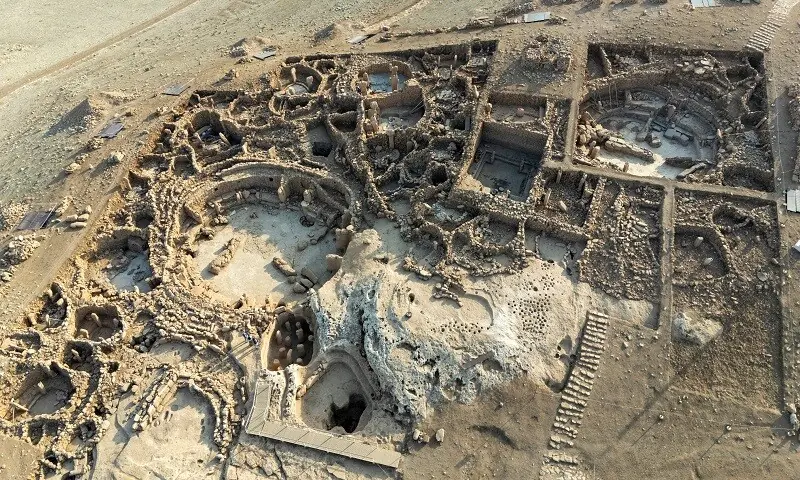
A drone view of a Karahantepe excavation site, widely regarded with Gobeklitepe as keys to understanding the birth of symbolic thought, social complexity and monumental architecture thousands of years before cities or states existed, near the southeastern city of Sanliurfa, Turkey. —Reuters

Among the most striking features at the sites are oval-shaped monumental structures up to 28 metres in diameter surrounded with T-shaped limestone pillars, regarded as representations of humans, with reliefs of animals depicted on some of them.

Archaeologists say one recent excavation at Karahantepe uncovered a T-shaped pillar with a human face, representing the first known depiction of a human face on such a pillar.

“From nutrition to architecture, from the symbolic world to the rituals, the vast diversity of evidence obtained here bring us incredibly close to prehistoric societies,” said Necmi Karul, the head of excavations, describing the builders of the structures as skilled craftsmen.

He said that until recently it was assumed that settled life started with agriculture and animal husbandry but the project indicated that these people were still hunter-gatherers but had become settled.

Opinion

Editorial

‘Missing’ LGs
29 Jun, 2026

‘Missing’ LGs

Across the world, successful civic governance is made possible through effective, responsive local bodies, which are closest to the voter.
Audit or ritual?
29 Jun, 2026

Audit or ritual?

THE AGP’s latest audit report of federal civil accounts is a detailed record of governance failures and...
Al Aqsa under threat
29 Jun, 2026

Al Aqsa under threat

NOT satisfied with the genocidal violence it has unleashed in Gaza, the current Israeli administration is doing all...
Truce tested
Updated 28 Jun, 2026

Truce tested

The latest US-Iran exchange should therefore be treated not as proof that dialogue has failed, but as a warning of how easily it could.
Paper promises
28 Jun, 2026

Paper promises

WHAT is a UNSC resolution worth if it is never implemented? Pakistan and China felt compelled to convene an informal...
Still the masters
28 Jun, 2026

Still the masters

CRISTIANO Ronaldo and Lionel Messi do not seem to be going away quietly. At least, not yet. The duo might have left...