

IRAN’S populous cities of Tehran and Mashhad are approaching Day Zero. The term refers to a moment when a city or an area runs dry and is unable to supply water to its residents. The widening water demand and supply gap in large cities makes the term more relevant during protracted droughts and climatic vagaries.
The sixth consecutive year of drought has brought the water supply system in several Iranian cities to the brink. The government is scrambling to avert a doomsday scenario by enforcing stringent water rationing in Tehran and Mashhad with populations of 10 million and 3.5m respectively. President Masoud Pezeshkian has warned of possible evacuation of the capital if it doesn’t receive rain in the coming weeks. Evacuating a city the size of Tehran is no less complicated than fetching water from outside it. The crisis is not confined to Tehran. Other places including Khorasan, Khuzestan, Isfahan, Fars, Yazd and Sistan-Baluchestan are also experiencing severe water stress. The country’s dams are on the verge of touching dead level.
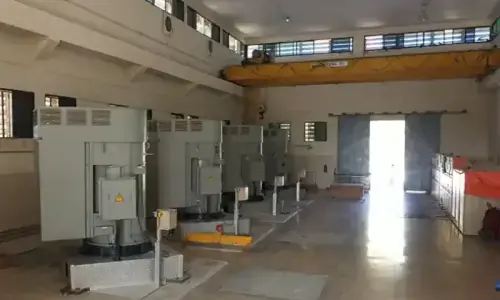
A combination of political, administrative and climatic factors has triggered this disturbing situation. Several years of drought took a complicated turn this year when Tehran received 80 per cent less than normal rain. Tehran endured a scorching heatwave this year when temperatures rose to 45 degrees Celsius in July. Iran’s water governance has been in tatters for a long time. Thanks to a decrepit, leaky water supply infrastructure, 15 per cent of the available water does not even reach the taps. Reportedly, the water mafia diverts a substantial amount to illegal conduits, while meters are often tampered with. With little regulation, residents also tend to waste the highly subsidised commodity.
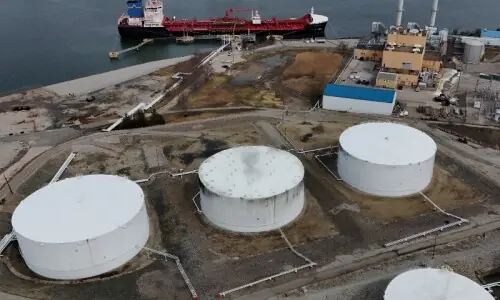
Unregulated groundwater abstraction has depleted the water table, leaving shallow wells dry in Tehran. Some studies suggest annual depletion of Tehran’s aquifer by 1-1.5 metres. The city heavily relies on drinking water supply from five dams with a cumulative storage capacity of 1.5 million acre feet. At the moment, the dams contain hardly10pc of their capacity. Meanwhile, Tehran’s population has increased by 2.5m people over the last 25 years. This population bulge has exerted enormous pressure on municipal supplies.
Iran’s water crisis is only the tip of the iceberg.
Climate change is posing new challenges for large urban dwellings across the world. Metropolitan cities in several countries have witnessed a similar paucity of water in recent years. In 2018, Cape Town’s dam storage plummeted to critical levels that would have forced shutting down most municipal taps. Strict rationing and subsequent rains brought it back from the brink of disaster. Chennai also reverberated with Day Zero alarms in 2019 when millions had to anxiously wait for water tankers. São Paulo, Harare, Jakarta, Bengaluru, Lima and Mexico City have also been through a similar situation in recent years.
Iran’s present hydro crisis is only the tip of the iceberg. Its water sector has been gravely damaged due to macro-level misgovernance. Iran’s reliance on agriculture is reflected in the numbers: the sector contributes 12pc of GDP and employs about 14pc of the workforce. As in Pakistan, the agriculture sector of Iran is a water guzzler. Primitive practices such flood irrigation and the cultivation of water-intensive crops result in substantial water losses. Experts are also critical of an approach which relies more on building dams. At the moment, the government is scrambling for short-term measures to stave off the crisis. However, experts prescribe a shift to integrated water resources management, restoring aquifers, improved monitoring and system regulation for long-term sustainability of water resources.
Social scientists are expressing anxiety that the worsening of the water scarcity will lead to social conflicts and political turmoil. If the drought persists, water shortages can potentially endanger the food supply. Sanctions have fettered the government’s ability to invest in the maintenance and modernisation of the water infrastructure. Antiquated farming practices, a dilapidated infrastructure and the lack of water-efficient technologies are some of the many factors that have led to such an ominous scenario.
With increasingly frequent heatwaves and droughts, countries that suffer from chronic misgovernance are becoming more vulnerable than ever to new political conflicts and social unrest. Political ramifications at times become complicated as the dearth of water afflicts the entire cycle of life. Pakistan’s urban waterscape has many parallels with that of Iran. Although we have water resources in abundance, the scale of mismanagement can easily outweigh the advantage.
The writer is a civil society professional.
Published in Dawn, December 1st, 2025