IT seems unnecessary and ultimately counterproductive for the government to continue imposing such restrictions. Whatever it may think of Imran Khan today, the fact remains that he is a former prime minister and, as such, entitled to basic dignity during his incarceration.
Arbitrarily cutting off his access to family and lawyers appears intended to inflict psychological pressure. This is a tactic that should not be countenanced in a just society. To be fair, Mr Khan himself, while in power, demonstrated little concern for the rights of his political opponents. He repeatedly used abusive language against them and even publicly threatened to withdraw basic amenities from the jail cell of his principal rival, Nawaz Sharif.
But while there is no denying that his conduct set a poor precedent, it should not now be used as justification for the treatment he is receiving under a government led by Mr Sharif’s party. If anything, this cycle of score-settling only underscores how little separates major political parties when it comes to the misuse of state authority.
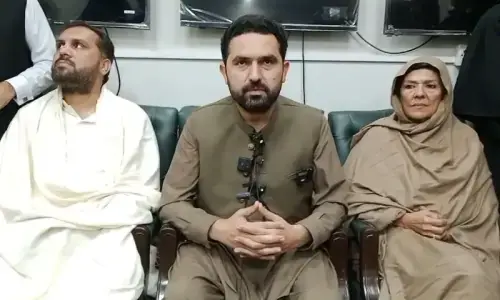
It may be noted that the courts have issued orders on several occasions allowing Mr Khan’s family and lawyers to meet the jailed leader. In most instances, however, these orders have been ignored and dismissed by the prison authorities, who, it seems, answer to some higher powers. With the courts appearing helpless in enforcing their writ, Mr Khan’s family and supporters are quite understandably growing increasingly frustrated.
Things have taken a particularly concerning turn since some publications in hostile countries recently published articles alleging that Mr Khan may have been grievously harmed in custody. Though such news appears to be fabricated and aimed at agitating Mr Khan’s supporters, it has still sparked some concern for his general well-being in his family. It is unkind of the government to not allow them to at least satisfy themselves regarding his health, even if it wants to prevent lengthy conferences.
Prisoners in Punjab, including political detainees, are generally allowed five visitors per week and 30 minutes of phone time under the jail manual. There is no defensible reason why a public figure like Mr Khan should be denied these basic privileges.
Leaving such decisions to the personal discretion of a jail superintendent reflects poorly on the current government, whose cabinet members have repeatedly tried to justify such actions, but only end up deepening the impression of vindictiveness.
Pakistan’s political class has, for decades, sent each other to jail. If they cannot break this cycle, they can at least agree on a minimal standard for how political prisoners should be treated, regardless of which party happens to be in power. Anything less will merely ensure that today’s enforcers become tomorrow’s victims, and that no one ever learns from the past.
Published in Dawn, November 30th, 2025