Experts in Quetta warn against political engineering in Balochistan
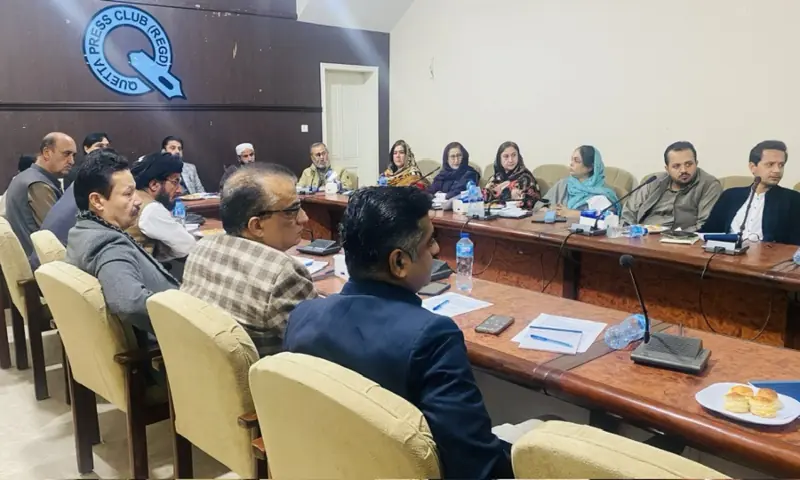

QUETTA: Experts at an event said on Friday that social and political engineering would increase radicalisation in troubled Balochistan, noting that this wrong approach will create more polarisation in society.
They expressed these views at a discussion, “Building Bridges: A Stakeholder Consultation on Tolerance and Inclusivity”, organised by the Islamabad-based Pak Institute for Peace Studies (PIPS), at the Quetta Press Club.
Lawmakers, lawyers, academics, religious scholars, human rights and political activists, and civil society representation took part in the dialogue.
The discussion brought together key stakeholders to explore strategies on bridging divides, addressing misconceptions, and fostering social harmony, tolerance and inclusivity in Balochistan and across the country.
Balochistan National Party-Mengal (BNP-M) leader and former senator Sanaullah Baloch said that social and political engineering in Balochistan had brought behavioural changes in society.
“This is a wrong approach that cannot bring tolerance and inclusivity in the province,” he said, adding that this engineering has created more actors which would increase extremism and radicalisation.
Leader of the Opposition in the Balochistan Assembly Younas Aziz Zehri said that people were entitled to demand their rights, and such actions should not be misconstrued as terrorism.
Maulana Hidayatur Rehman Baloch, MPA and chief of ‘Haq Do Tehreek’, a rights movement, stressed the need for coming out of the mindset of ‘Islamic and un-Islamic’, and said the people should look into reasons for extremism and intolerance in the broader context.
Published in Dawn, November 22nd, 2025