First draft of climate pact lands at COP30


 0
0
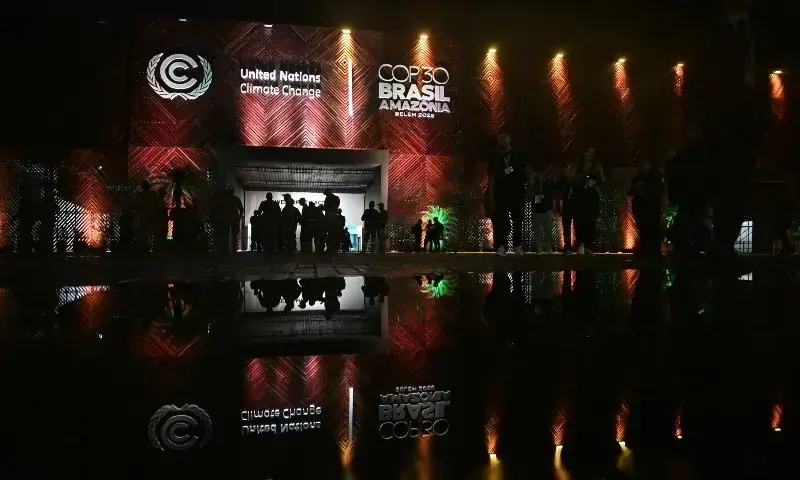

BELEM: COP30 hosts Brazil on Tuesday produced a first draft of an agreement between nations at the UN climate talks after negotiations on the sticking points stretched late into the night.
The draft includes a sweep of options on the most difficult issues, reflecting the gulf between the nearly 200 nations in Belem and the work still ahead to refine a final compromise.
The nine-page “Global Mutirao” document — a reference to an Indigenous concept of uniting toward a common goal — came after Brazil on Monday urged delegates to work day and night to produce an agreement by midweek.
The text leaves open a wide range of possibilities on the flashpoint issues in Belem — trade measures, finance for poorer nations, and the global inadequacy of carbon-cutting goals.
But the quick turnaround of a draft on these thorny points suggested the COP30 presidency was confident it could soon have an outcome, observers said.
“It represents a steady progression from the previous iteration and is likely one of the earliest releases of such a clean text in recent COP history,” said Li Shuo, a climate analyst at the Asia Society Policy Institute.
The draft reflects the stark division between a coalition wanting a “roadmap” on a fossil fuel phase-out, and a bloc led by oil-producing countries opposing any such effort.
It proposes an optional “workshop” to discuss “low carbon solutions,” or a high-level ministerial roundtable on pathways to help countries “progressively overcome their dependency on fossil fuels.” A third option proposes no text at all.
The draft also raises the possibility of assessing national climate pledges annually, instead of every five years, to assess global progress in reducing greenhouse gas emissions more frequently.
Published in Dawn, November 19th, 2025