Berlin to lift suspension of Israel weapons sales, but says ceasefire must hold
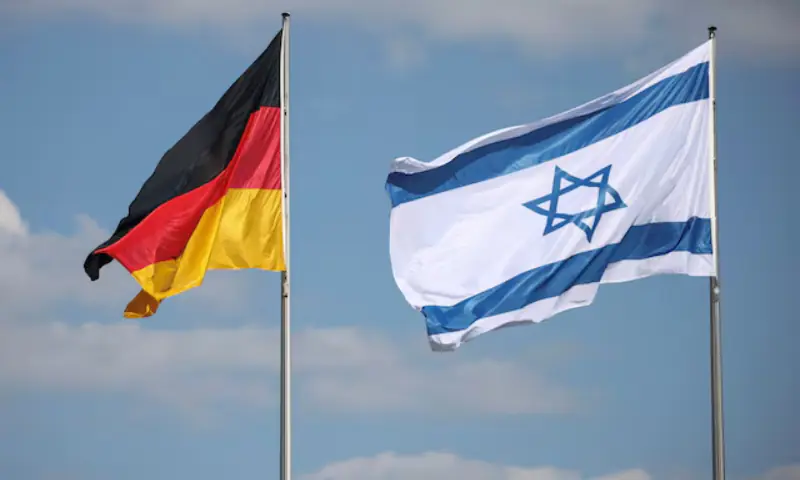
Germany on Monday moved to resume weapons sales to Israel that had been suspended since August over the onslaught in Gaza, but said the decision is subject to the observance of the ceasefire and the large-scale provision of humanitarian aid.
Germany, the second-largest exporter of arms to Israel after the United States, announced a suspension of some arms exports to Israel in August, amid mounting popular pressure over the onslaught.
The decision affected weapons and systems that could be used in Gaza but not others deemed necessary for Israel to defend itself from external attacks.
Berlin will lift the suspension order on November 24 and return to a case-by-case review of arms exports to Israel, while continuing to monitor the developments on the ground, a German government spokesperson said on Monday.
Humanitarian aid must continue ‘on a large scale’
The ceasefire between Israel and Hamas “is the basis for this decision, and we expect everyone to abide by the agreements that have been made — that includes maintaining the ceasefire,” a second government spokesperson said.
“It also means that humanitarian aid is provided on a large scale and that the process continues in an orderly manner, as agreed,” the spokesperson added.
Germany remains committed to supporting a lasting peace between Israel and the Palestinians on the basis of a two-state solution and would continue to engage in supporting reconstruction in Gaza, the spokesperson said.
Germany is one of Israel’s staunchest supporters, principally because of historical guilt for the Nazi Holocaust — a policy known as the “Staatsraison”.
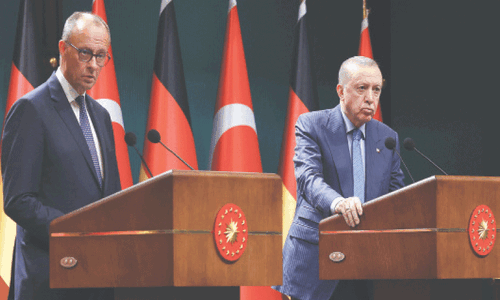
German Chancellor Friedrich Merz came under massive criticism from his own conservatives for the decision to partially suspend the deliveries, which he said was in response to Israel’s plan at the time to expand operations in Gaza.
According to the Stockholm International Peace Research Institute, Germany provided 30 per cent of Israel’s major arms imports in 2019-2023, primarily naval equipment including Sa’ar 6-class frigates (MEKO A-100 Light Frigates), which were used in the Gaza onslaught.
Israel calls on others to follow
Israeli Foreign Minister Gideon Saar on X lauded Germany for its decision to lift the order.
“I call on other governments to adopt similar decisions, following Germany,” he wrote.
German Foreign Minister Johann Wadephul said the decision, in which his ministry was closely involved, was “responsible and correct” and that the ceasefire appeared to be sustainable.