Mother Mary Comes to Me
By Arundhati Roy
Scribner Books
ISBN: 978-1668094716
352pp.
Our relationship with our mother is complicated; I dare say more than it is with our father. That is because, all over the world, the mother’s role is venerated as the provider of nurture and unconditional love. Anything that veers from that is vilified — think Mommie Dearest, the memoir, then movie, about Joan Crawford’s alleged abuse of her adopted daughter. That phrase conjures up the worst images about motherhood.
This notion of mothers and motherhood being perfect also explains why there is still a lot of taboo around postpartum depression. To admit you’re feeling anything other than perfect following childbirth brings about feelings of shame because society places a lot of unrealistic pressures on women.
Sure, things are changing and there are so many resources to help women with pregnancy, postpartum and parenting, but it takes a rare kind of no-holds-barred honesty to describe motherhood and/or mothers as complex, not perfect, maybe not even nice. I believe Arundhati Roy has done so with great aplomb in her memoir Mother Mary Comes to Me.
Look, all our mothers have some level of mean streak in them — they’re graduates in the chittar school of parenting or possessing that silent look that struck fear in your heart. But Roy’s mother, Mary Roy, was a whole different ball game.
Celebrated author and activist Arundhati Roy attempts to come to grips with her complex relationship with her mother after her passing — as well as the ways her mother shaped who she became
On the one hand she was a fierce feminist; a remarkable woman who took on injustice, such as Syrian Christian women’s inheritance rights. She won a landmark 1986 case in the Indian Supreme Court that struck down a discriminatory law as unconstitutional. She built a modest school in Kerala that grew to a successful one and was a role model for so many students and graduates. But she was also cruel to her children: her son LKC, who she once called ugly, and daughter Arundhati, with whom she butted heads.
Yet she also loved them.
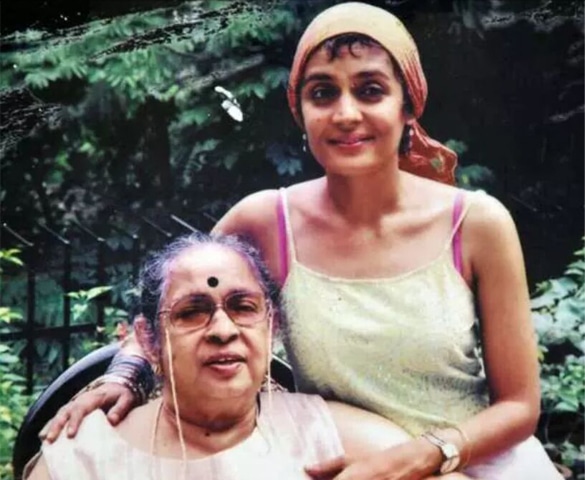
Arundhati was “heart-smashed” when her mother died in 2022 and began writing this memoir in a way to explore her relationship. We learn that, despite the flaws, her mother helped shaped the writer and activist that Arundhati is today. Mary Roy was, as the kids would say, the ‘OG’ (‘Original Gangster’ or pioneer) challenger of societal expectations.
She married to escape an abusive father, then left her alcoholic husband to raise her children by herself and then started a progressive school in Kerala and challenged all sorts of norms expected of women. When evicted out of her house by her family because the law was on their side, she waited and took on that discriminatory law to win rights for all women. She was a celebrity in her own right.
But, as Roy writes, “My mother unloaded the burden of her quarrels and the daily dose of indignity that she had to endure on to my brother and me.” While you cringe at some of the shocking ways she parented and punished her children, you can’t help but empathise with Mary Roy, both an inspiration and a person to fear.
As an aside, Arundhati’s description of her childhood near the Meenachil River in Kerala will feel eerily similar to her first novel, The God of Small Things, as will the characters of the twins. I thought the character Chako was based on Roy’s uncle G. Isaac. Art imitates life.
Arundhati left home at 18, “not because I didn’t love her, but in order to be able to continue to love her.” Here, we learn about the young Arundhati’s life in squalor, sometimes homeless and sleeping in shrines, navigating hairy situations that make for horror reading. This is her forging her own life and identity.
And while they went their separate ways, the two women’s lives remained intrinsically linked. A lot of the memoir isn’t about Mrs Roy, as the mother asked her children to address her so there wouldn’t be any feelings of favouritism at school. But her presence lingers throughout the book.
The memoir is also about Arundhati growing up and becoming the writer who would document changes in India’s political and cultural fabric. The way she documents the rise of Hindu nationalism or the resistance to the Narmada dam or the communist insurgents the Naxalites is exquisite. She herself asks: “I wanted to test myself… Could I write about irrigation, agriculture, displacement and drainage the way I wrote about love and death?”
Ultimately, this memoir is a testament to an honesty that is rare in today’s world, where everything comes with a filter or trigger warning. I’m thinking of self-proclaimed influencers on social media who profess honesty in their posts about intergenerational trauma or whatever new buzzword is being sold under the guise of wellness or self-care. It is hogwash. Honesty requires courage and reflection.
Roy called herself the “Hooker with the Booker” when she received that prize and recognised the complexity that came with being India’s finest “export” but also its most controversial. “The more I was hounded as an anti-national, the surer I was that India was the place I loved, the place to which I belonged. Where else could I be the hooligan that I was becoming?”
The hooligan notwithstanding, Roy is fiercely protective of Mrs Roy. She is not looking for your sympathy and doesn’t want to condemn her mother either. In writing this memoir, she demonstrates that people are not this or that.
After her passing, her mother’s spectre lingered in Arundhati’s mind and we learn that she carries Mrs Roy’s defiant spirit in her.
The writer is a journalism instructor.
X: @LedeingLady
Published in Dawn, Books & Authors, November 16th, 2025