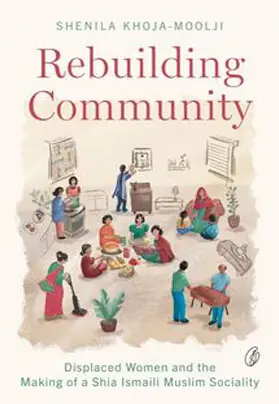
Shenila Khoja-Moolji’s insider ethnography, Rebuilding Community: Displaced Women and the Making of a Shia Ismaili Muslim Sociality, primarily examines intergenerational care work provided by women for co-religionists in the face of war, displacement and the trauma of forced migration.
The book’s focus is on diasporic Khoja Shia Ismaili women from the Subcontinent who faced multiple, often violent, displacements from India, East Africa and what was once known as East Pakistan.
This work of scholarship was made possible by the extensive time the author invested in building personal relationships with her interlocutors, whose stories and histories form the basis for the core argument that the work presents: that the community’s women have unceasingly performed undocumented and unacknowledged acts of service [seva] to steadfastly reproduce the ethical infrastructure necessary for a continued flourishing of their faith.
At the outset of the book, detailing the period from 1890 to 1970, the author frames the farmaans [diktats] of the imam [religious leader] as the impetus for the migratory routes that women, led by their patriarchs, took to access a safer future for themselves and their children, rooted firmly in their faith. It was this same faith that they drew strength from during arduous journeys with limited access to core necessities such as adequate food.
Across continents, Khoja Shia Ismaili women stitch together community, memory and belonging in this rich ethnographic account
Here, the reader is also introduced to early pro-female interventions by the imam in the examples of his encouragement of girls to pursue higher levels of educational and professional attainment, an offshoot of which was seen in women in the Zanzibar Khoja community of the time being empowered with bicycles that afforded them ease in commuting and enabling their professional quests.
In the early 20th century in Zanzibar, the book reveals that women from the community created makeshift shops in their homes’ porches to supplement their husbands’ meagre incomes. These women did not just perform acts of care for their families but also laboured long hours to add a source of income to their households, in addition to opening their homes to community members who had recently arrived on the shores and needed help settling into the alien country.
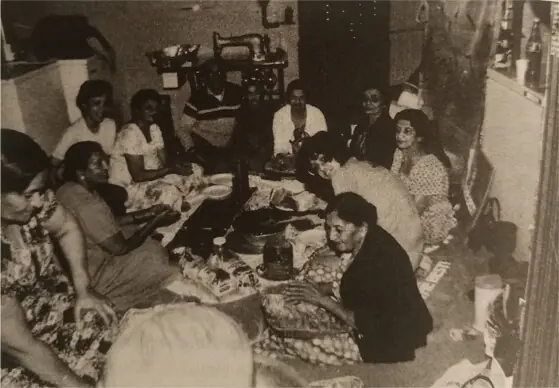
Moving through the chapters, we learn of the centrality of the jamaatkhana [community space for gathering and worship] to the community and of the vital role of women in creating makeshift jamaatkhanas within their small homes, to ensure the continuity of faith practices even in times of flux.
At the outset of the book, detailing the period from 1890 to 1970, the author frames the farmaans [diktats] of the imam [religious leader] as the impetus for the migratory routes that women, led by their patriarchs, took to access a safer future for themselves and their children, rooted firmly in their faith. It was this same faith that they drew strength from during arduous journeys with limited access to core necessities such as adequate food.
As Khoja Ismaili communities found their footing in the new lands that they were forced to make ‘home’, primal importance was given to the near-immediate establishment of a formal jamaatkhana. Within the formal jamaatkhana, the author spotlights communal work — such as cooking meals, washing dishes used in daily and communal feasts, sweeping floors and cleaning toilets — that became women’s work.
Through the retelling of the personal histories of the interlocutors, we learn that the women performing these acts of service did so not for any gain or acknowledgement, but from a place of devotion to their faith, which continued to carry them through the peaks and valleys of their lives — lives forged through continual challenges and upheavals.
By focusing on the daily ‘mundanities’ (cooking, cleaning) that allow sacred spaces such as the jamaatkhanas to operate, readers come to realise the impossibility of practising faith in familiar ways in the absence of the women who take proud ownership of their roles in the continuation of acts of service. These acts make the sacred spaces functional, so that other members of the community may experience within it all that falls within the domain of the spiritual.
As the book journeys through time and space, it reaches women from the community belonging to the North American diaspora. Here, the author explores culinary placemaking through cookbooks. These cookbooks, authored by Khoja Ismaili women, serve dual roles: as records of a sensorial history of the community through its foods, as well as serving future generations with a record of their roots, so they may, in turn, recreate a sense of communal belonging. This is provided through familiar foods that hold the history of a people that have traversed impossibly difficult terrains without ever losing sight of the faith that binds them.
The author includes second-generation accounts of the Shia Ismaili diasporic experience, again with the lens on women, towards the final pages of the book. Here, we see a dynamic display of this generation’s acts of seva manifesting through art, academia and technology in unique ways.
From digital seminars and academic dissertations that don’t shy away from the anti-Black racism of the community during its time in East Africa, to artwork that beautifully depicts the contemporary anti-Brown discrimination faced by women from the second generation, we see a complex tapestry of women from the community engaging with the faith tradition that they have inherited and proudly made their own.
Engaging with Shenila Khoja-Moolji’s work as an outsider to the Shia Ismaili community, as this reviewer has, enriches readers with insight into a faith group that, in our national context, is sometimes actively ostracised. To any Muslim interested in learning about the multitudinous ways Islam manifests in the times we live in, this book rewards the curious reader with a glimpse into the sacred material and non-material worlds through which the community continues to thrive.
Its focus on women’s acts of care as vehicles for communal continuity provides yet more evidence of the importance of women’s work in the arena of faith propagation, a space that has far too long been perceived as the domain of the masculine.
The reviewer is a communications professional with over 13 years of experience across publishing, advertising and television
Published in Dawn, Books & Authors, May 10th, 2026